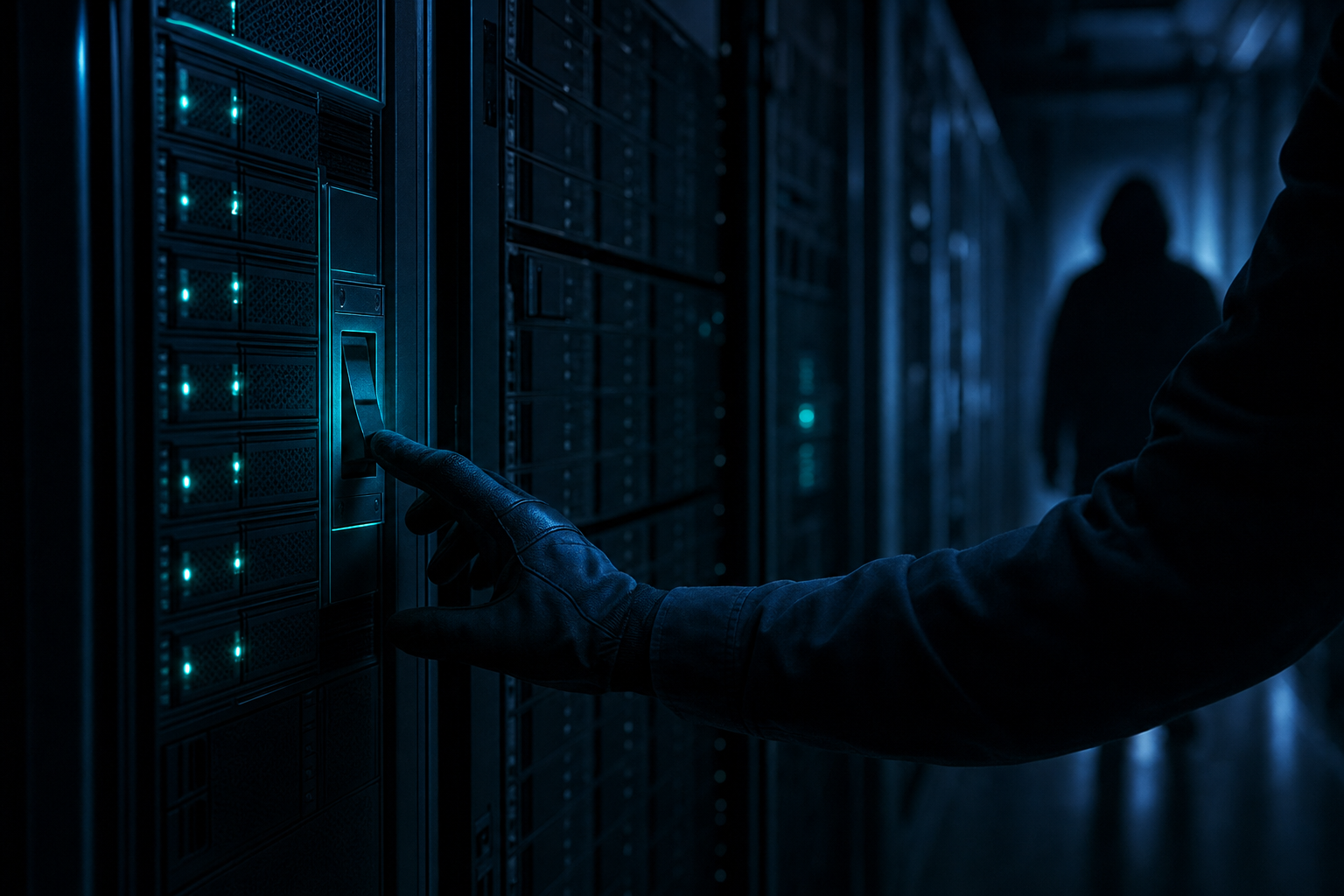
Managed file transfer provider Kiteworks — the company formerly known as Accellion — emailed customers to warn of a highly dangerous zero–day vulnerability and asked them to shut down their MFT servers as a precaution. The request applied worldwide for a six–hour window on Saturday 26 September, from 3am to 9am UK time, with the company suggesting customers switch off before the window even began. As of the warning there was no CVE assigned and no public technical detail about what the vulnerability affects or how it could be exploited.
Kiteworks CISO Frank Balonis said the company had “received credible threat intelligence from law enforcement indicating an attack on Kiteworks systems may be imminent this weekend”, while separately stating he was not aware of any actual compromise and describing the move as taken “out of an abundance of caution”. Both statements can be true simultaneously, and the combination is what makes this unusual. Jake Knott, head of threat intelligence at vulnerability management firm Watchtowr, put the oddity plainly: “nobody requests that their entire customer base to unplug production systems over the weekend because of a hunch.” He also noted that Kiteworks asked customers to power off systems that do not face the internet — a detail worth pausing on, because an internet–facing flaw does not require you to switch off an internal server.
For UK businesses the operational question is narrow and immediate, and it is not really about Kiteworks. It is this: if a vendor told you at two in the morning to turn off a production system for six hours with no explanation, could you? Would you know what depends on it, whose work stops, which client deliveries fail, and what regulated data sits on it? The businesses that found this weekend difficult were not the ones with the wrong product. They were the ones who could not answer those questions quickly enough to make a decision.
What Kiteworks has asked, and what it has not said
The request itself is simple and drastic: power down managed file transfer servers for a defined six–hour period, and ideally before it starts. What is absent is everything a defender would normally use to make that decision independently. There is no CVE identifier, so there is nothing to look up. There is no description of the affected component, so there is no way to establish whether a particular deployment, version or configuration is in scope. There is no indicator of compromise, so an organisation cannot check its own logs for signs it has already been hit. And there is no patch, so there is no action available other than the one being requested.
The two statements from Balonis are worth holding together rather than treating as a contradiction. “Credible threat intelligence from law enforcement indicating an attack may be imminent” and “not aware of any actual compromise” describe different things: the first is intelligence about intent or capability, the second is an observation about current state. A company can quite properly know that something is coming without being able to see that anything has arrived. That is, in fact, the best possible time to receive such a warning — and it also explains the absence of technical detail, because intelligence about an imminent attack does not necessarily come with a description of the flaw it will use.
Knott’s observation about non–internet–facing systems is the most technically informative part of the public record, precisely because it is an inference from the instruction rather than a disclosure. If the concern were purely a remotely exploitable flaw on an exposed service, switching off an internal MFT server would be unnecessary. Asking for internal systems to go down as well is consistent with several possibilities — a supply–chain or update–channel mechanism, a concern about an existing foothold moving laterally, or simply an extremely conservative posture adopted because the company does not yet know the answer itself. None of those can be distinguished from outside, and Knott was right to ask.
On attribution, the position should be stated carefully. There is no public evidence linking the Cl0p ransomware gang to this incident as of 25 September 2026. Cl0p is named in coverage because it remains one of the most prolific groups targeting MFT software and is currently embroiled in a rivalry with the ShinyHunters group, which raises the general temperature around this class of target. That is context, not attribution, and the distinction matters.
A vendor shutdown request converts an unknown technical risk into a known operational cost, and that is normally a good trade — six hours without file transfer is recoverable, a ransomware incident frequently is not. But making that trade requires information most organisations do not have to hand at two in the morning: what does this server actually do, who uses it, which client or supplier integrations depend on it, what automated jobs will fail silently while it is off, and crucially what data is sitting on it right now. Managed file transfer platforms accumulate content nobody meant to leave there — completed transfers, archived batches, test files with live data, exports that were only ever supposed to pass through. If you cannot answer the data question, you cannot assess your exposure if this turns out to be real, and you cannot tell a regulator or a client anything useful. The shutdown is the easy part. Not knowing what is on the box is the problem that outlasts the weekend.
Why managed file transfer keeps being the target
This weekend’s warning did not come out of nowhere. Managed file transfer has been one of the most productive categories of target for extortion groups for years, and the chronology explains why the reaction to a Kiteworks warning is as sharp as it is.
The reason this category attracts such concentrated attention is structural rather than technical. An MFT platform exists to move regulated data between organisations, which means by design it holds large volumes of exactly the material that carries the highest extortion value, and it sits at a junction point with reach into many parties at once. A single flaw therefore yields leverage over a long list of downstream victims from one point of entry — which is precisely the economics that made MOVEit produce victims like the BBC, Boots and British Airways from a product most of their customers had never heard of.
What concentrates the most risk in a business estate
The chart below is an indicative planning model — not measured data — ranking systems by how much leverage a successful compromise would give an attacker over a typical UK organisation and its clients.
MFT sits at the top of that ordering for a reason that is easy to miss: it is the only system on the list whose compromise routinely damages organisations that are not your own. A domain controller or backup platform being taken is catastrophic for you. An MFT platform being taken is a problem for you and for every client, supplier and partner whose files were passing through it — which converts a security incident into a contractual and reputational one simultaneously, with notification obligations running outward rather than just upward.
The workstation at the bottom is included as a reference point, and the gap is the argument for where attention belongs. A great deal of security effort in smaller organisations is distributed evenly across endpoints, because that is what endpoint tooling makes easy to do. The systems at the top of that chart are fewer in number, individually far more consequential, and typically owned by nobody in particular — an MFT server especially, since it is frequently procured to satisfy one client’s file–exchange requirement and then quietly becomes the route everyone uses.
The cost the vendor was prepared to impose
One way to gauge how seriously Kiteworks is treating the intelligence it received is to look at what it was willing to ask of its customers. Six hours is a quarter of a day, requested simultaneously across every time zone, on no notice, with no technical justification it could share.
Vendors are generally reluctant to ask customers to stop using their product. It is commercially painful, it invites exactly the scrutiny Watchtowr applied, and it publicly advertises a problem the company cannot yet describe. A request of this kind is therefore evidence about the internal assessment rather than about the vulnerability — not proof that the threat is real, but a reasonable indication that the people who saw the intelligence found it persuasive enough to accept a significant commercial cost rather than wait.
That reading cuts both ways, and Knott’s scepticism deserves its weight. “Nobody requests that their entire customer base to unplug production systems over the weekend because of a hunch” can be read as an endorsement of the seriousness of the intelligence, or as a demand that the seriousness be demonstrated. He also raised the substantive questions that remain unanswered: what specifically does the vulnerability affect, and how is it exploited? Without those, customers cannot verify whether they were ever in scope, cannot check whether they were already compromised before the window, and cannot decide what to do when they turn the servers back on — which is the decision that actually matters, since a shutdown without a patch defers a problem rather than resolving it.
The six–hour figure also has an uncomfortable implication worth naming. A defined window suggests the intelligence concerned a specific expected timeframe rather than an open–ended flaw. If that is right, then the shutdown was a way of not being available during a particular attack attempt, which is a sensible tactic and not a remediation. Organisations should treat their servers as having been protected from one event, not as having been fixed.
Where UK businesses are exposed on file transfer
Most UK SMEs do not run a dedicated MFT platform, and will read this as a story about larger organisations. The exposure is broader than that, because the function exists in every business whether or not a product was bought for it. The rows below reflect where it typically sits, with badges indicating how much attention each usually needs.
The first two rows compound into the single biggest avoidable problem in this category. A file transfer platform is designed as a conduit, but in practice it behaves as an archive, because deleting things requires someone to decide to delete them. Completed transfers stay, batch exports stay, and files uploaded for a one–off migration three years ago stay. The result is that a system whose purpose was to hold data briefly ends up holding the largest single concentration of regulated third–party data in the business — and its owner, if asked during an incident what was exposed, has to answer honestly that they do not know. Aggressive automatic deletion is the cheapest security control available here, because data that is not there cannot be stolen.
The sixth row is the one that determines how bad an incident becomes. Under UK GDPR, a compromise involving personal data may require notification to the ICO within 72 hours, and notification of affected individuals where the risk to them is high. The practical difficulty is never the deadline; it is being unable to characterise what happened. An organisation with detailed access and download logging can tell clients precisely which of their files were touched. An organisation without it has to tell every client that everything they ever sent might be affected, which is a materially worse conversation and a materially worse commercial outcome.
What getting this in order costs
The bands below are indicative planning figures for UK businesses hardening how they exchange files with clients and suppliers — not quotes.
| Business profile | Typical scope | Indicative cost | What you get for it |
|---|---|---|---|
| Small business using consumer or ad hoc sharing | Inventory of where files actually get exchanged, consolidation onto one managed platform, retention and auto–deletion configured, a named owner | £500 – £2,500 | One known route for file exchange instead of four unofficial ones, with data that clears itself down |
| SME running a self–hosted transfer or SFTP server | Exposure review, patching and version currency, access logging, segregation of client data, dependency map of what consumes the service | £2,000 – £8,000 | The ability to answer, during an incident, what was on the system and who reached it — which is what determines how bad the incident is |
| Business with an MFT platform and client integrations | Full data inventory and classification, aggressive retention, detailed access logging with alerting, documented shutdown and restart runbook, out–of–hours escalation | £8,000 – £30,000 | A rehearsed answer to a 2am “turn it off” instruction, and evidence good enough to tell clients something specific rather than something alarming |
| Regulated firm or supplier in a sensitive supply chain | All of the above plus contractual notification mapping, client–by–client data register, tested incident communications, independent backup of transfer records | £25,000 – £85,000 | A defensible position with the ICO, clients and insurers, built before it is needed rather than assembled during a weekend |
| Any business, ongoing | Automatic deletion after a defined period, a named owner with an out–of–hours contact, and a quarterly check of what has accumulated | £0 – £2,000 a year | The control that shrinks every future incident, because the volume of data at stake is the one variable you fully control |
The last row is deliberately the cheapest and it is the one that matters most. Every other control on this table improves your ability to detect, respond to or explain an incident. Retention reduces the size of the incident itself. A business that automatically deletes completed transfers after thirty days has, at any moment, thirty days of exposure instead of five years of it — and that reduction applies to a zero–day nobody has described yet, which is precisely the situation Kiteworks customers found themselves in this weekend.
Two ways to receive a 2am warning
Reactive posture
What this weekend looked like for most organisations
- The vendor email arrives in a shared inbox nobody monitors outside office hours
- Nobody can say what the platform holds, so the exposure question goes unanswered
- No dependency map, so the decision to power down is made without knowing what stops
- Automated jobs fail silently during the window and are discovered on Monday, or later
- Logging too thin to establish whether anything happened before the shutdown
- Restart performed with no additional checks, because there is no patch and nothing to verify against
- Clients told nothing, because there is nothing specific that can honestly be said
Proactive posture
Where Cyber Essentials discipline with Cloudswitched takes you
- A named owner with an out–of–hours route, so an urgent advisory reaches a decision–maker in minutes
- A current inventory of what the platform holds, so exposure can be scoped immediately
- Aggressive automatic deletion, so the volume of data at stake is small by default
- A dependency map naming every integration, batch job and client process that relies on the service
- Access and download logging detailed enough to reconstruct what was reached, and retained off the platform
- A documented shutdown and restart runbook, including what to check before bringing the service back
- Client notification obligations already mapped, so communications are a decision rather than a research project
Nothing in the right–hand column requires the organisation to have predicted this particular event, and that is the point. Every item is useful for an ordinary outage, a failed migration, a supplier query or an audit. An unannounced zero–day warning simply tests whether the preparation was done, and it tests it at the least convenient possible moment — which is, in fairness, when such tests always arrive.
This will happen again, to some vendor, on some weekend. Five answers written down now make the next occasion routine. One: who is the named owner of each system that could receive an urgent vendor advisory, and how is that person reached at 2am on a Saturday? Two: what data is on the platform today, and what is the oldest thing still there — if the answer is “we would have to look”, that is the finding. Three: what actually depends on it? List the client integrations, scheduled jobs, overseas partners and internal processes that would fail during a six–hour outage, because that list is what makes a power–down decision quick rather than agonising. Four: if you had to tell a client tomorrow which of their files might have been exposed, could you, and from which log? Five: what would you check before turning the service back on? The fifth is the one nobody prepares and everybody needs, because a shutdown with no patch available means the restart is a judgement call made with the same absent information.
What to do when a vendor cannot tell you why
The general principle is to comply promptly and investigate afterwards. The asymmetry of outcomes is stark: a six–hour outage on a Saturday morning is an inconvenience with a known, bounded cost, while a successful MFT compromise is a multi–party data breach with notification obligations, client contractual consequences and potentially months of remediation. When a vendor with visibility you lack asks for a precaution, the rational response is to take it and reserve scepticism for the follow–up, which is more or less the position Watchtowr took — act now, and expect a proper explanation later.
The harder question is what happens on restart, and it is the one this weekend’s advisory does not address. A shutdown protects a system during a window; it does not remediate anything, and no patch exists. Organisations bringing servers back online should treat the period before the shutdown as the period of genuine uncertainty, because if an attack had already begun there would be nothing in the public record to tell them. That argues for reviewing whatever authentication, access and transfer logs exist, looking for unexpected accounts or unusual download volumes, and keeping the platform under closer observation than usual until the vendor publishes detail. Pressing for that detail — a CVE, affected versions, indicators of compromise — is a reasonable thing for every customer to do.
For organisations pursuing or holding Cyber Essentials, this incident maps onto the scheme’s core logic rather neatly, and illustrates its real value. The scheme’s controls — knowing your assets, keeping software supported and patched, controlling access, securing configuration — are not what stops a zero–day, because by definition nothing does. What the enumeration discipline provides is the ability to answer the questions this weekend posed: which of our systems is this, who owns it, what version are we on, who can reach it, and what would we need to do. An organisation that has done that work experiences a warning like this as a defined task. One that has not experiences it as a research project conducted under time pressure with incomplete information.
There is also a backup dimension that is easy to overlook in a story about an attack that has not been confirmed. The realistic bad outcome for an MFT platform is not only data theft but encryption or destruction, and the transfer records themselves — the logs establishing who sent what to whom — are frequently held on the same system. Backing those up independently of the platform is what preserves your ability to reconstruct events afterwards. It is a small amount of work that determines whether a future incident is explicable or merely alarming.
The story at a glance
| Item | Detail |
|---|---|
| What happened | Kiteworks emailed customers warning of a highly dangerous zero–day and asked them to shut down their managed file transfer servers as a precaution |
| Who Kiteworks is | A managed file transfer provider, formerly known as Accellion |
| The shutdown window | Worldwide, six hours on Saturday 26 September, 3am to 9am UK time, with advice to power down before it began |
| Unusual detail | Customers were asked to power off systems that do not face the internet |
| The stated reason | CISO Frank Balonis: “credible threat intelligence from law enforcement indicating an attack on Kiteworks systems may be imminent this weekend” |
| Any known compromise | Balonis said he was not aware of any actual compromise, describing the move as “out of an abundance of caution” |
| Technical detail available | None. No CVE assigned, no description of the affected component, no indicators of compromise and no patch |
| Industry reaction | Watchtowr’s Jake Knott: “nobody requests that their entire customer base to unplug production systems over the weekend because of a hunch” |
| Unanswered questions | What the vulnerability specifically affects, and how it is exploited — neither disclosed publicly |
| Attribution | No public evidence links the Cl0p gang to this incident as of 25 September 2026 |
| Why Cl0p is mentioned | It remains one of the most prolific groups targeting MFT software, and is currently in a rivalry with the ShinyHunters group |
| Why MFT is targeted | It concentrates large volumes of sensitive, regulated data in one place, giving attackers leverage over many downstream organisations from a single flaw |
| Previous MFT victims | Accellion, Cleo, Fortra and Progress Software’s MOVEit |
| The MOVEit precedent | Its 2023 compromise hit UK targets including the BBC, Boots and British Airways |
| What a shutdown achieves | It removes availability during a window. With no patch, it defers rather than remediates — so the restart needs its own checks |
| Cheapest lasting control | Aggressive automatic deletion of completed transfers — it shrinks every future incident, including ones nobody has described yet |
This story connects to several we have covered recently, and the theme running through them is what you can establish about your own estate when someone else’s problem becomes yours. Cambium Networks entering administration is the same test applied to hardware: a vendor event, a short window, and an outcome determined by whether anyone had documented the estate beforehand. The reporting on UK police data held on Microsoft Azure is about the other half of this question — knowing which of your data would actually matter if it were exposed. Ofcom’s investigations into VoIP number misuse is a supply–chain story of the same shape, where the risk sits with a provider and the practical response is to understand your own dependency. The Citizens Advice research on chatbots blocking customers speaks to the escalation problem: knowing how to reach a human at a supplier matters most at two in the morning. And Vodafone’s copper switch–off is a reminder that out–of–hours reachability itself depends on infrastructure currently being rebuilt underneath everyone.
Could you answer “what is on that server?” at 2am on a Saturday?
Cloudswitched helps UK businesses achieve and maintain Cyber Essentials certification, and the part of that work which pays for itself is exactly what this weekend tested: knowing which systems you have, who owns them, what they hold, who can reach them, and what breaks if one goes away. Nothing prevents a zero–day. What determines how bad it is for your business is whether the inventory, the retention policy and the logging were in place before the email arrived.
Talk to us about Cyber Essentials CertificationFrequently asked questions
The inventory is the control you can actually build
There was no patch this weekend, no CVE and no way for any customer to verify whether they were in scope. What separated the organisations that handled it calmly from those that did not was work completed months earlier: a named owner reachable out of hours, a current record of what the platform held, retention that kept that volume small, a dependency map, and logging good enough to reconstruct events. Cloudswitched builds that foundation with UK businesses through Cyber Essentials certification and the practical security work around it.
Talk to us about Cyber Essentials Certification
CloudSwitched
London-based managed IT services provider offering support, cloud solutions and cybersecurity for SMEs.