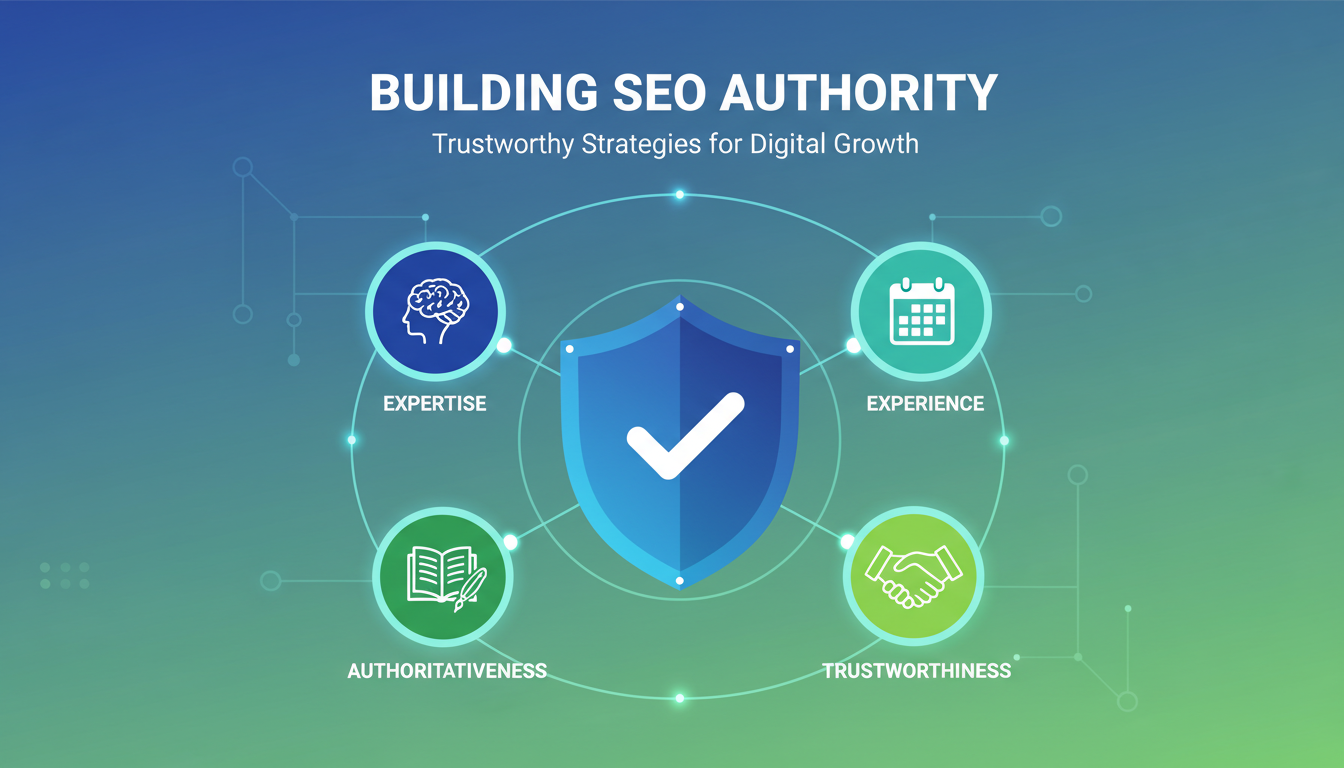
In the ever-evolving world of search engine optimisation, few concepts have generated as much discussion - and confusion - as Google's E-E-A-T framework. Standing for Experience, Expertise, Authoritativeness, and Trustworthiness, E-E-A-T represents Google's attempt to quantify the qualities that make online content genuinely valuable to users. For businesses across the United Kingdom seeking to improve their search visibility, understanding and implementing E-E-A-T principles is no longer optional - it is fundamental to sustainable SEO success.
The concept has its roots in Google's Search Quality Rater Guidelines, a document used by thousands of human evaluators who assess the quality of Google's search results. While E-E-A-T is not a direct ranking factor in the algorithmic sense - there is no single E-E-A-T score that Google assigns to your website - it represents the qualities that Google's algorithms are designed to reward. Websites that demonstrate strong E-E-A-T characteristics tend to rank higher, attract more traffic, and maintain their positions more consistently than those that do not.
This guide breaks down each component of E-E-A-T, explains why it matters for your SEO strategy, and provides actionable steps you can take to strengthen your website's trust and authority in the eyes of both Google and your audience.
Understanding the Four Pillars of E-E-A-T
Google added the extra "E" for Experience in December 2022, expanding what was previously known as E-A-T. This addition reflected Google's recognition that first-hand experience with a topic is a distinct and valuable quality, separate from formal expertise. Each pillar serves a specific purpose in evaluating content quality.
Experience: The Newest and Most Overlooked Pillar
Experience refers to the content creator's first-hand, personal involvement with the topic they are writing about. Google wants to know whether the person creating the content has actually done the thing they are describing, used the product they are reviewing, or lived through the situation they are discussing.
Consider two articles about starting a business in the UK. One is written by a freelance content writer who researched the topic online. The other is written by someone who actually registered a limited company with Companies House, navigated HMRC registration, opened a business bank account, and dealt with the practical challenges of year one. Both articles might contain similar information, but the second carries a weight of authenticity that the first cannot match.
This distinction matters enormously in practice. Google's algorithms are increasingly sophisticated at identifying content that reflects genuine experience - through specific details, practical insights, candid discussion of challenges, and the kind of nuanced understanding that only comes from direct involvement. For your website, this means involving real practitioners, real users, and real experts in your content creation process rather than outsourcing everything to generic content mills.
Expertise: Demonstrating Deep Knowledge
Expertise relates to the depth of knowledge the content creator possesses in their specific field. This is especially critical for what Google classifies as YMYL topics - "Your Money or Your Life" - which include health, finance, legal, and safety content. For these topics, Google expects content to be created by individuals with verifiable qualifications and credentials.
However, expertise is not exclusively about formal qualifications. For many topics, demonstrated skill and knowledge through years of practice constitutes legitimate expertise. A self-taught web developer with fifteen years of experience and a portfolio of successful projects demonstrates expertise differently from someone with a computer science degree but no practical experience. Google recognises both forms.
Formal Expertise Signals
Practical Expertise Signals
Authoritativeness: Being Recognised as a Leader
Authoritativeness is about reputation. It measures how well-regarded you, your content, and your website are within your field. While expertise is about what you know, authoritativeness is about whether others recognise and respect that knowledge.
Authority is built through a combination of signals. Backlinks from other reputable websites in your industry indicate that others consider your content valuable enough to reference. Mentions and citations in industry publications, news outlets, and professional forums contribute to your authoritative standing. Brand searches - people searching directly for your company name - suggest that you are known and trusted within your market.
For UK businesses, authoritativeness might also be demonstrated through partnerships with recognised institutions, contributions to industry standards, participation in government consultations, or membership of trade bodies like the Federation of Small Businesses, the Institute of Directors, or sector-specific organisations.
Trustworthiness: The Foundation of Everything
Google has stated explicitly that trustworthiness is the most important component of E-E-A-T. Experience, expertise, and authoritativeness all contribute to trust, but trust also encompasses factors like website security, transparency, accuracy, and honesty.
A website can demonstrate expertise and authority but still fail on trustworthiness if it has deceptive practices, hidden agendas, inaccurate information, or poor security. Conversely, a small local business with modest authority can score highly on trust through transparent practices, honest content, secure transactions, and genuine customer care.
Google's Search Quality Rater Guidelines explicitly state: "Trust is the most important member of the E-E-A-T family because untrustworthy pages have low E-E-A-T no matter how Experienced, Expert, or Authoritative they may seem." This means that building trust should be your primary focus.
Why E-E-A-T Matters More in 2025 and Beyond
Several converging trends are making E-E-A-T increasingly important for SEO. The proliferation of AI-generated content means that the internet is being flooded with technically competent but fundamentally generic content. Google needs reliable ways to distinguish between content that adds genuine value and content that merely occupies space. E-E-A-T signals provide exactly this differentiation.
Google's helpful content system, which rolled out progressively through 2023 and 2024, specifically targets content created primarily for search engines rather than for people. Websites that demonstrate strong E-E-A-T characteristics align naturally with what the helpful content system rewards: content created by knowledgeable people for a genuine audience, based on real experience and expertise.
The rise of Google's AI Overviews (formerly Search Generative Experience) is also reshaping the landscape. When Google generates AI summaries at the top of search results, it preferentially cites sources that demonstrate high E-E-A-T. If your content is not seen as trustworthy and authoritative, it will not be referenced in these AI-generated answers, and you will lose a significant source of visibility and traffic.
How to Build Experience Signals
Building experience signals requires a fundamental shift in how many businesses approach content creation. Rather than viewing content as a commodity to be produced cheaply and quickly, experience-driven content requires involving the right people in the creation process.
Start by identifying the people within your organisation who have genuine, first-hand experience with the topics your audience cares about. These might be your consultants, your technical team, your customer service staff, or your leadership. Their insights, stories, and practical knowledge are the raw material for experience-rich content.
If direct writing is not feasible - not everyone is a natural writer - consider interview-based content creation. A skilled content writer can interview a subject matter expert and produce content that authentically reflects their experience while being polished and well-structured. This approach scales effectively and ensures that the genuine voice and knowledge of your experts comes through.
Include specific, verifiable details in your content. Rather than writing "many businesses find that SEO takes time to deliver results," write "in our experience working with over 200 UK businesses since 2018, we typically see measurable improvements in organic traffic within four to six months of implementing a comprehensive SEO strategy." The specificity signals genuine experience in a way that vague generalisations cannot.
How to Build Expertise Signals
Demonstrating expertise on your website requires a multi-layered approach that goes beyond simply claiming to be an expert. Google's algorithms look for corroborating evidence across your entire web presence.
Author Pages and Bios
Every piece of content on your website should have a clearly identified author with a comprehensive biography. This biography should include relevant qualifications, professional experience, areas of specialisation, and links to external profiles that corroborate the claims. For YMYL topics, include professional registration numbers and links to regulatory body listings where applicable.
Create dedicated author pages that aggregate all content by each author, provide a detailed professional history, and link to external evidence of expertise such as LinkedIn profiles, published works, speaking engagements, or media appearances. These pages serve as expertise hubs that Google can use to assess the qualifications of your content creators.
Depth and Comprehensiveness
Expert content goes deep. It does not merely scratch the surface of a topic but explores nuances, addresses common misconceptions, provides context, and offers insights that only someone with genuine knowledge could provide. Thin, superficial content is the antithesis of expertise.
This does not mean every piece of content needs to be 5,000 words long. A concise, focused answer to a specific question can demonstrate expertise just as effectively as a comprehensive guide, provided it is accurate, insightful, and adds value that generic content does not. The key is matching the depth to the topic and the user's intent.
Keeping Content Current
Expertise also means staying current. Outdated content is a strong negative signal, particularly for topics where information changes frequently. Establish a regular content review cycle - we recommend quarterly for high-priority pages and annually for evergreen content - to ensure that all information on your website remains accurate and up-to-date.
When you update content, make the updates visible. Add "Last updated" dates, note significant changes, and explain why information has been revised. This transparency demonstrates both expertise and trustworthiness, showing that you actively monitor developments in your field and keep your audience informed.
How to Build Authority Signals
Authority is perhaps the most challenging pillar to build because it depends heavily on external perception. You cannot simply declare yourself authoritative - others must recognise you as such. However, there are concrete steps you can take to systematically build your authority over time.
Strategic Link Building
Earning backlinks from authoritative websites in your industry remains one of the strongest authority signals. Focus on creating content that genuinely merits citation - original research, unique data, comprehensive guides, and expert commentary on industry developments. Promote this content strategically to journalists, bloggers, and industry publications that might find it valuable.
In the UK context, links from .gov.uk domains, university websites, established news outlets like the BBC, The Guardian, or industry-specific trade publications carry significant authority. While these links are difficult to earn, they are enormously valuable and typically come from creating genuinely newsworthy or uniquely valuable content.
Digital PR and Media Presence
Position your experts as go-to sources for media commentary. Services like Response Source and Journo Requests connect businesses with journalists seeking expert quotes and insights. Consistently appearing as a quoted source in news articles and industry publications builds authority rapidly and generates high-quality backlinks naturally.
Contribute guest articles to respected industry publications. Write for trade magazines, professional body newsletters, and specialist online publications in your sector. Each contribution reinforces your position as an authority and creates a trail of evidence that Google's algorithms can follow.
How to Build Trust Signals
Trust is built through a combination of technical security, transparent practices, and consistent reliability. It is the pillar most directly within your control and should be your starting point when implementing E-E-A-T improvements.
Technical Trust Foundations
Ensure your website uses HTTPS with a valid SSL certificate. In 2025, this is table stakes, but a surprising number of UK business websites still have SSL issues - mixed content warnings, expired certificates, or incomplete HTTPS implementation. These issues signal carelessness and erode trust with both users and search engines.
Implement clear privacy policies that comply with UK GDPR and the Data Protection Act 2018. Your cookie consent mechanism should be transparent and easy to use. Your terms and conditions should be accessible and written in plain English. These legal pages are not just compliance requirements - they are trust signals that Google evaluates.
Content Accuracy and Transparency
Every claim on your website should be accurate and, where possible, supported by credible sources. Link to primary sources for statistics and factual claims. Cite studies, official data, and authoritative references. When expressing opinions, clearly distinguish them from facts.
Be transparent about who you are, where you are located, and how you can be contacted. A comprehensive "About" page, a physical address (even if you work primarily remotely), a phone number, and multiple contact options all contribute to trust. Anonymous or opaque websites struggle to build trust regardless of their content quality.
If you make mistakes - and every business does - own them transparently. Issue corrections, update inaccurate content, and be honest about limitations. This kind of intellectual honesty paradoxically increases trust rather than diminishing it.
Reviews and Social Proof
Third-party reviews on platforms like Google, Trustpilot, and industry-specific review sites provide independent verification of your trustworthiness. Actively encourage satisfied customers to leave reviews and respond professionally to all feedback, including negative reviews.
Display relevant certifications, accreditations, and partnerships on your website. ISO certifications, Cyber Essentials accreditation, membership of recognised trade bodies, and partnerships with established organisations all serve as trust signals that reinforce your credibility.
Create a dedicated "Trust Centre" or "Why Choose Us" page that consolidates all your trust signals in one place: certifications, accreditations, insurance details, data protection practices, client logos, and testimonials. This page serves both users and search engines, providing a clear summary of why your business can be trusted.
E-E-A-T for Different Industries
While E-E-A-T applies to all websites, its importance and application vary significantly by industry. Understanding how it applies to your specific sector is crucial for effective implementation.
For YMYL industries - healthcare, finance, legal services - the bar is set extremely high. Content in these areas can directly impact people's health, financial stability, or legal rights, so Google demands the strongest possible E-E-A-T signals. In these sectors, formal qualifications, regulatory compliance, and meticulous accuracy are essential.
For professional services - marketing, technology, consulting - E-E-A-T is demonstrated primarily through case studies, results, industry recognition, and thought leadership. Clients want to see evidence that you can deliver what you promise, and Google's algorithms reflect this expectation.
For e-commerce and retail, E-E-A-T manifests through product expertise, honest reviews, transparent pricing and returns policies, secure payment processing, and responsive customer service. Product pages that include detailed specifications, genuine user reviews, and expert recommendations outperform thin listings with minimal information.
For local businesses - restaurants, tradespeople, local services - E-E-A-T is closely tied to local reputation. Google Business Profile optimisation, local reviews, community involvement, and consistent NAP (Name, Address, Phone) information across the web all contribute to local E-E-A-T.
| Industry Type | E-E-A-T Priority | Key Signals to Focus On |
|---|---|---|
| Healthcare & Finance (YMYL) | Critical | Professional credentials, regulatory registrations, peer-reviewed sources |
| Legal Services | Critical | SRA registration, case outcomes, specialist accreditations |
| Professional Services | High | Case studies, client testimonials, industry awards, thought leadership |
| E-Commerce & Retail | High | Product expertise, genuine reviews, secure transactions, transparent policies |
| Technology & SaaS | Moderate to High | Technical depth, open-source contributions, certifications, partner status |
| Local Services | Moderate | Google Business Profile, local reviews, NAP consistency, community ties |
Common E-E-A-T Mistakes to Avoid
Many businesses make well-intentioned but ultimately counterproductive mistakes when trying to implement E-E-A-T improvements. Understanding these pitfalls will help you avoid wasting time and resources on approaches that do not work.
The first common mistake is treating E-E-A-T as a technical checklist. Adding author bios and an "About" page will not magically improve your rankings if the underlying content is thin, inaccurate, or unhelpful. E-E-A-T is a holistic quality assessment, not a series of boxes to tick.
The second mistake is fabricating credentials or exaggerating expertise. Google's algorithms and human evaluators are adept at identifying inflated claims. If your "industry-leading expert" has no verifiable credentials or external corroboration, the claims ring hollow and can actually harm trust.
The third mistake is ignoring negative signals while focusing on positive ones. A website with excellent author bios but broken links, outdated information, security warnings, and no privacy policy sends mixed signals that undermine its E-E-A-T. Address the negatives before investing heavily in the positives.
The fourth mistake is neglecting the "Experience" component. Many businesses have pivoted to AI-generated content to scale their output, but this content typically lacks the first-hand experience that Google increasingly values. AI can be a useful tool in the content creation process, but it should augment human expertise and experience, not replace it.
The fifth mistake is focusing exclusively on your own website. E-E-A-T is assessed across your entire web presence - your social media profiles, your mentions on other websites, your presence in directories, your media coverage, and your reputation on review platforms. A comprehensive E-E-A-T strategy addresses all of these touchpoints, not just your website.
Measuring E-E-A-T Impact
Because E-E-A-T is not a single metric, measuring its impact requires looking at multiple indicators. Track your organic search visibility and traffic trends, paying particular attention to whether you are gaining or losing positions for your most important keywords. Monitor your website's backlink profile for growth in high-quality referring domains. Track branded search volume as an indicator of growing authority and recognition.
Google Search Console provides valuable data on how Google perceives your content. Watch for changes in impressions, click-through rates, and average positions, particularly after implementing E-E-A-T improvements. Improvements often manifest gradually - over weeks and months rather than days - so patience and consistent measurement are essential.
User engagement metrics also serve as indirect E-E-A-T indicators. Content that demonstrates genuine expertise and experience tends to generate longer time-on-page, lower bounce rates, more pages per session, and higher rates of return visits. These behavioural signals reinforce to Google that your content is satisfying user intent.
A Practical E-E-A-T Improvement Plan
Implementing E-E-A-T improvements does not require a complete website overhaul. Start with a focused audit of your current position, identify the highest-impact opportunities, and implement changes systematically.
Begin with a trust audit. Check your SSL certificate, review your privacy policy, verify your contact information, and ensure your website clearly identifies who you are and where you are based. These foundational trust elements are quick to fix and have an outsized impact.
Next, audit your content for author attribution. Identify content that lacks clear authorship, particularly any YMYL content, and add proper author bios with verifiable credentials. Create author pages for your key contributors and ensure their external profiles (LinkedIn, professional directories) are complete and consistent.
Then, prioritise your most important content for experience enrichment. Add case studies, specific examples, practical insights, and first-hand observations. Replace generic advice with specific, experience-based recommendations that only someone with genuine involvement could provide.
Finally, develop an ongoing authority-building plan. This might include digital PR outreach, guest contribution targets, link-building campaigns, or industry event participation. Authority builds gradually, so set realistic expectations and focus on consistent, quality-driven efforts rather than quick wins.
Build Trust and Authority That Google Rewards
Our SEO team specialises in E-E-A-T strategies that strengthen your online reputation, improve search rankings, and build lasting trust with your audience. We will assess your current E-E-A-T standing and create a tailored improvement plan.
Explore Our SEO ServicesThe Long-Term View on E-E-A-T
E-E-A-T is not a trend or a temporary algorithmic preference. It represents Google's fundamental understanding of what makes content valuable, and its importance will only grow as AI-generated content proliferates and the challenge of identifying genuinely valuable information intensifies.
The businesses that invest in building genuine experience, expertise, authoritativeness, and trustworthiness today are building assets that will compound in value over time. Every piece of expert content, every earned backlink, every positive review, and every trust signal contributes to a foundation that becomes increasingly difficult for competitors to replicate.
In a digital landscape where anyone can publish anything, the ability to demonstrate that you are who you say you are, that you know what you claim to know, and that you can be trusted to provide accurate, helpful information is the ultimate competitive advantage. E-E-A-T is not just about SEO. It is about building a digital presence that genuinely serves your audience and earns the visibility it deserves.

CloudSwitched
London-based managed IT services provider offering support, cloud solutions and cybersecurity for SMEs.


