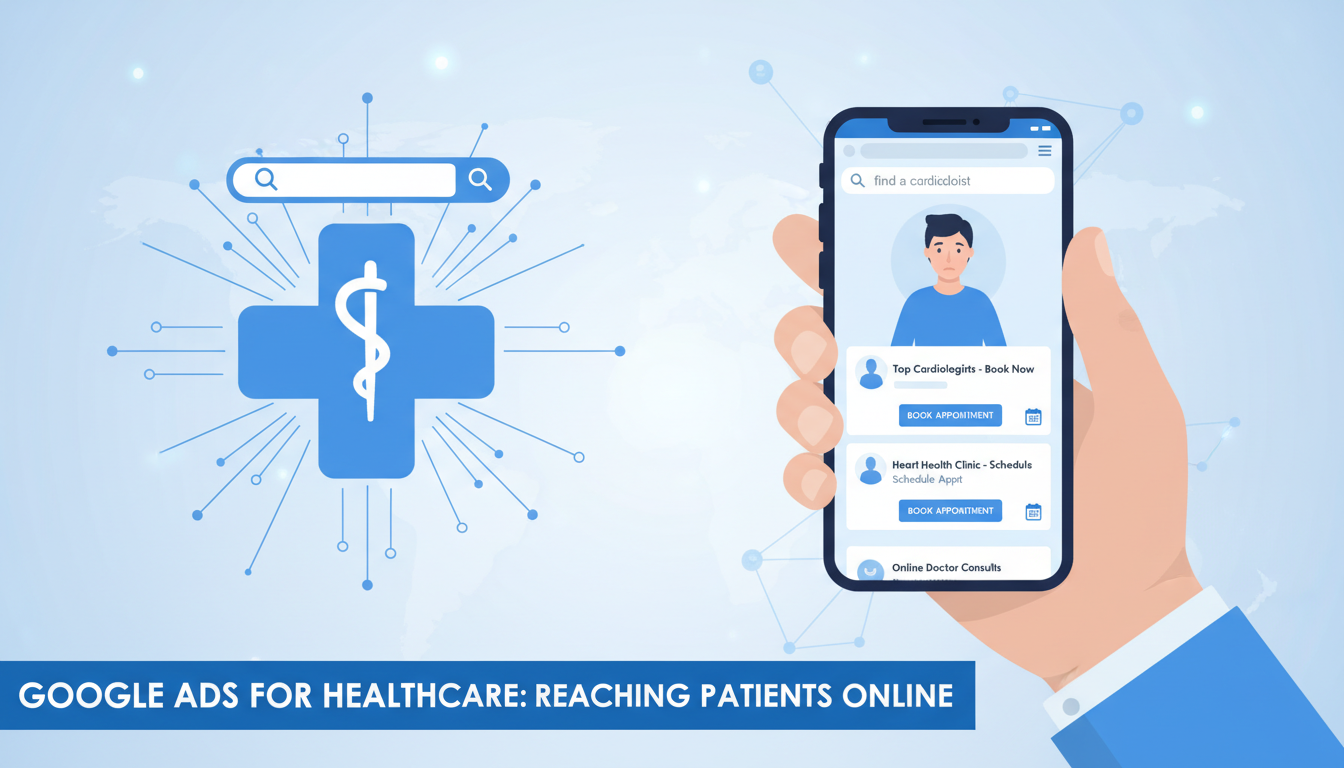
The healthcare sector faces unique challenges and opportunities in digital advertising. Patients increasingly turn to Google when seeking medical information, finding practitioners, and making healthcare decisions. Google Ads for healthcare providers - whether you're a private clinic, dental practice, physiotherapist, or specialist consultant - is one of the most effective ways to reach patients at the exact moment they need your services.
At Cloudswitched, we work with healthcare providers across the UK who need to navigate Google's strict healthcare advertising policies while still running effective campaigns. This guide covers the regulatory landscape, strategic approaches, and practical tips for healthcare PPC success.
The UK healthcare advertising landscape has evolved significantly in recent years. With private healthcare spending growing steadily and NHS waiting lists driving more patients to explore private options, the digital advertising opportunity for healthcare providers has never been larger. However, success requires a nuanced understanding of both the regulatory environment and patient behaviour. Unlike other industries where aggressive promotional tactics can work, healthcare PPC demands a careful balance of authority, empathy, and compliance that many general-purpose agencies struggle to deliver.
Understanding Healthcare Advertising Policies
Google has some of the strictest advertising policies for healthcare, and for good reason. These policies protect vulnerable users from misleading health claims. Understanding them is essential before launching any campaign.
| Category | Policy | Action Required |
|---|---|---|
| Prescription Medicines | Restricted - requires Google certification | Apply for healthcare advertiser certification |
| Cosmetic Procedures | Allowed with restrictions on before/after imagery | Follow creative guidelines carefully |
| Mental Health Services | Allowed - sensitive category with extra scrutiny | Use empathetic, non-exploitative language |
| Dental Services | Generally unrestricted | Standard compliance with healthcare policies |
| Health Claims | No cure/treatment guarantees allowed | Focus on expertise and care quality |
The UK regulatory framework for healthcare advertising is multi-layered and more complex than in many other countries. Beyond Google and ASA requirements, the Medicines and Healthcare products Regulatory Agency (MHRA) governs how pharmaceutical products and medical devices can be promoted. The Committee of Advertising Practice (CAP) and Broadcast Committee of Advertising Practice (BCAP) codes contain specific provisions for health and beauty claims, weight management, and clinical services. Healthcare providers must also consider the implications of the Consumer Protection from Unfair Trading Regulations 2008, which prohibits misleading commercial practices. Working with an agency experienced in UK healthcare compliance is essential to avoid costly mistakes, since a single regulatory misstep can lead to suspended campaigns and months of remediation work.
For providers advertising prescription-only medicines or certain restricted treatments, Google requires LegitScript certification. This involves a thorough review of your practice, licensing, and compliance history. The application process typically takes four to eight weeks and requires documentation including proof of registration with relevant UK bodies, evidence of appropriate licences, and confirmation that your website meets health information accuracy standards. While the process can feel onerous, it creates a significant competitive advantage - many competitors will not complete it, reducing the competition in your advertising space.
Start the LegitScript certification process at least two months before you plan to launch healthcare campaigns involving restricted categories. The approval timeline is unpredictable, and having certification ready before campaign build ensures you can launch on schedule. Keep all your CQC, GMC, or GDC registration documents readily accessible to speed up the process.
Keyword Strategy for Healthcare
Healthcare searches fall into distinct categories with very different intent levels. Understanding these helps you allocate budget effectively and write appropriate ad copy for each segment.
Symptom Searches: “persistent headache causes” - These are informational queries where the person may not yet be ready to book an appointment. They can be valuable for building awareness but typically have lower conversion rates.
Treatment Searches: “knee replacement surgery London” - These indicate the person has already identified their condition and is researching treatment options. Higher intent and moderate conversion rates.
Provider Searches: “private dentist near me” or “orthopaedic consultant Manchester” - These are the highest-intent searches. The person has decided to seek professional help and is looking for a provider. These should be your primary focus.
Emergency Searches: “emergency dentist open now” - Extremely high intent and urgency. These require prominent call extensions and after-hours messaging if applicable.
Negative keywords are particularly important in healthcare PPC. Without a comprehensive negative keyword list, your ads will appear for irrelevant queries that drain budget rapidly. Common negatives to add for most healthcare campaigns include terms related to NHS services (unless you are an NHS provider), DIY or home remedies, medical school or career-related searches, and general information queries that indicate the searcher is not looking for a provider. For example, a private physiotherapy clinic should exclude terms like “NHS physiotherapy waiting times”, “how to become a physiotherapist”, and “physiotherapy exercises at home”. Review your search terms report weekly to identify new negatives.
Match type strategy in healthcare requires careful consideration. Broad match keywords can expose your ads to a wide range of tangentially related health queries, many of which will be irrelevant. Phrase match and exact match provide more control, which is especially important when your ads must remain compliant with healthcare regulations. Start with phrase match for most healthcare terms, use exact match for your highest-value and most expensive keywords, and only expand to broad match once you have a robust negative keyword list in place. This conservative approach prevents compliance issues caused by your ads appearing alongside inappropriate search terms.
Campaign Structure for Healthcare Providers
An effective healthcare Google Ads account should be structured around your services and patient journey stages. For example, a dental practice might have separate campaigns for general dentistry, cosmetic dentistry, orthodontics, dental implants, and emergency dental services. Each campaign should have tightly themed ad groups with relevant keywords, dedicated ad copy, and specific landing pages.
Ad extensions are crucial for healthcare providers and can significantly improve both click-through rates and conversion rates. Location extensions show your practice address and make it easy for patients to find you. Call extensions with call tracking allow anxious patients to speak with your team directly. Sitelink extensions can link to specific service pages, practitioner profiles, patient testimonials, and your booking system. Structured snippet extensions let you highlight specialities, accreditations, or insurance acceptance. Callout extensions can emphasise key differentiators such as “CQC Outstanding Rating”, “Same-Day Appointments”, or “Free Initial Consultation”. Using all available extensions improves your ad rank and gives patients more reasons to choose your practice over competitors.
✅ Do in Healthcare Ads
- Highlight qualifications (CQC rated, GMC/GDC registered)
- Mention patient reviews and ratings
- Offer free initial consultations
- Include location and accessibility info
- Use empathetic, patient-focused language
- Prominently display contact information
❌ Don't in Healthcare Ads
- Make treatment guarantees or cure claims
- Use misleading before/after images
- Exploit patient fears or anxieties
- Advertise unapproved treatments
- Offer unlicensed medications
- Use pressure tactics or false urgency
Specialist Healthcare PPC Approach
Generic PPC Approach
Use Responsive Search Ads (RSAs) with at least 10 unique headlines and 4 descriptions for each healthcare ad group. Include compliance-safe variations that highlight credentials, patient outcomes (without guarantees), and convenience factors. Pin your most important compliance-related headline to position one to ensure it always appears. This ensures every ad impression meets regulatory standards while Google optimises the remaining combinations for performance.
Landing Pages for Patient Conversion
Healthcare landing pages have unique requirements compared to other industries. Patients are often anxious, unfamiliar with medical procedures, and looking for reassurance. Your landing pages should address these emotional needs while also providing practical information.
Essential elements include clear explanation of the service or treatment in plain language (avoid jargon), practitioner credentials and experience, patient testimonials and reviews, CQC or equivalent ratings and accreditations, clear information about the consultation process, multiple contact options (phone, form, online booking), transparent pricing or consultation fee information, and information about insurance acceptance and payment plans.
Trust signals carry particular weight in healthcare landing pages. Displaying your CQC rating badge, professional body registrations, and relevant accreditations (such as British Dental Association membership or BUPA recognised status) immediately establishes credibility. Patient testimonials should be genuine, specific, and ideally include the treatment type and outcome. Video testimonials are especially powerful in healthcare because they humanise the patient experience and reduce anxiety. Including practitioner photos and short biographies helps patients feel connected to their potential care provider before they ever step through your door.
Mobile optimisation is non-negotiable for healthcare landing pages. With nearly half of all healthcare searches happening on mobile devices, and many of those occurring during moments of discomfort or worry, your mobile experience must be flawless. Click-to-call buttons should be prominently visible, forms should be short and easy to complete on a small screen, and page load speed should be under three seconds. Consider implementing online booking systems that allow patients to select an appointment slot directly from the landing page without needing to make a phone call. This is particularly important for younger demographics who prefer digital self-service over telephone interactions.
Healthcare Campaign Quality Scorecard
Evaluating the overall health of your healthcare PPC campaigns requires looking beyond individual metrics. The following scorecard reflects the key areas we assess when auditing a healthcare Google Ads account. Most practices we encounter score below 60 in several categories, which represents significant room for improvement and untapped patient acquisition potential.
The most common weakness we see is conversion tracking. Many healthcare providers track form submissions but fail to implement call tracking, chat tracking, or offline conversion imports. This means their campaigns are optimising based on incomplete data, leading to suboptimal bidding decisions and missed opportunities. A comprehensive tracking setup captures every meaningful patient interaction and feeds that data back into the bidding algorithm for continuous improvement.
Budget Considerations for Healthcare PPC
Healthcare keyword costs vary dramatically depending on the specialty and treatment. Here are typical UK benchmarks:
The key metric for healthcare isn't cost-per-click but cost-per-patient-acquisition. A dental implant lead costing £50 to acquire from Google Ads that converts into a £3,000 treatment represents exceptional ROI. Focus your budget on the highest-value treatments and work backwards from the patient lifetime value.
Understanding patient lifetime value is essential for smart budget allocation. The chart below shows average patient lifetime values across common UK healthcare specialties, which should inform how aggressively you bid for keywords in each category.
When planning your budget allocation, consider that higher-value specialties can support higher cost-per-acquisition targets. A cosmetic surgery practice can afford to spend £200–£400 per lead because even a modest conversion rate delivers strong returns at an average treatment value of £5,800. Conversely, physiotherapy practices operating on tighter margins should focus on highly targeted local keywords with lower CPCs, ensuring every click has a realistic chance of converting into a paying patient. Geographic bid adjustments are especially valuable here - increasing bids within your immediate catchment area while reducing them for regions where patients are unlikely to travel.
Remarketing for Healthcare
Healthcare decisions are rarely impulsive. A patient considering a procedure may research for weeks or months before taking action. Remarketing keeps your practice visible throughout this decision-making process. However, healthcare remarketing requires extra sensitivity - you must never create remarketing lists based on health conditions, and your display ads should focus on your practice's general expertise rather than specific conditions.
Effective healthcare remarketing strategies within compliance boundaries include general brand awareness ads that highlight your practice reputation and patient satisfaction scores, educational content promotion that positions your practice as a trusted authority, seasonal campaigns tied to relevant health awareness months (such as Dental Health Month or Mental Health Awareness Week), and practice news updates such as new equipment, expanded services, or practitioner additions. The goal is to remain visible and build familiarity without referencing the specific health condition that brought the patient to your site originally. This approach respects patient privacy while maintaining the persuasive benefit of remarketing.
When running healthcare remarketing, always ensure your cookie consent mechanisms are fully GDPR-compliant. The Information Commissioner's Office (ICO) treats health-related browsing data as sensitive personal data under UK GDPR. Implement a clear cookie banner that requires explicit opt-in consent before any remarketing tags fire. Failing to do so risks not only regulatory penalties of up to £17.5 million but also reputational damage that is particularly harmful in healthcare.
Tracking Patient Acquisition
Effective conversion tracking for healthcare should capture online appointment bookings, phone calls (with minimum duration tracking), contact form submissions, and live chat interactions. Many healthcare providers find that phone calls are their most valuable conversion action, as patients often prefer to discuss health concerns verbally rather than through a form. Implement call tracking with dynamic number insertion to attribute calls back to specific campaigns and keywords.
Where possible, track the full patient journey from initial click to booked appointment to completed treatment. This allows you to optimise not just for enquiries but for actual patient acquisition and treatment revenue.
Integrating Google Ads with GA4 provides a more complete picture of how patients interact with your website before converting. Multi-touch attribution models reveal that many healthcare conversions involve multiple visits over days or weeks. A patient might first find you through a Google Ads click, return via organic search to read practitioner biographies, then come back a third time to book an appointment. Without proper tracking across all these touchpoints, you risk undervaluing the initial paid click that started the journey. Enhanced conversions in Google Ads help bridge the gap between online clicks and offline patient visits by matching hashed first-party data to improve attribution accuracy.
For practices using patient management systems, offline conversion imports are a powerful way to close the reporting loop. By uploading data about which leads actually became patients and what treatments they received, you enable Google's bidding algorithms to optimise for genuine patient acquisition rather than simply form submissions. This distinction is critical because not all enquiries are equal - a dental implant enquiry that converts into a £3,000 treatment is far more valuable than a routine check-up booking, and your bidding strategy should reflect this. Practices that implement offline conversion tracking typically see a 25–40% improvement in lead quality within the first three months.
Ready to Reach More Patients Online?
Cloudswitched helps healthcare providers across the UK grow their patient base through compliant, effective Google Ads campaigns. Our team understands healthcare advertising regulations and creates strategies that deliver results. Plans from £399/month.
View Google Ads ServicesReady to Grow Your Patient Base with Google Ads?
Cloudswitched specialises in healthcare PPC campaigns that comply with UK regulations while delivering exceptional patient acquisition results. Let our team handle the complexity of healthcare advertising so you can focus on what matters most - patient care.

CloudSwitched
London-based managed IT services provider offering support, cloud solutions and cybersecurity for SMEs.


