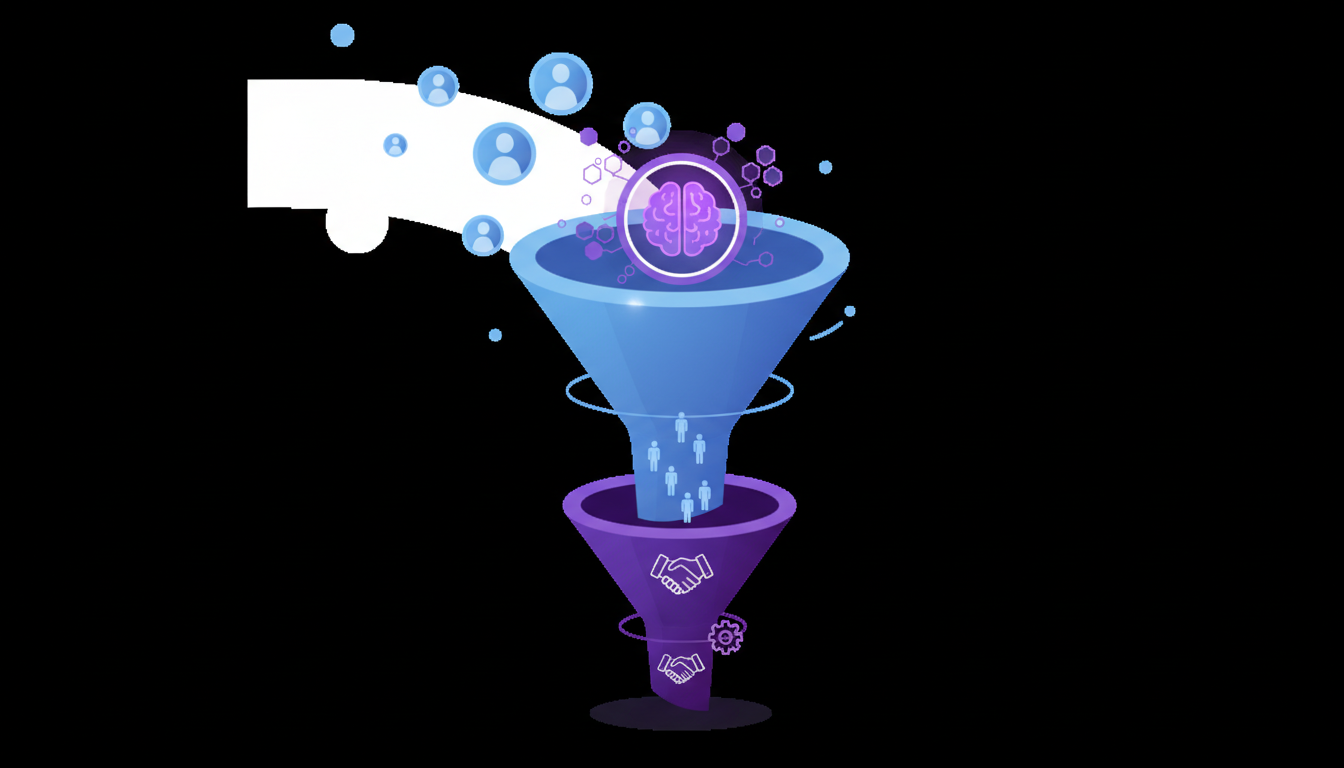
The way UK businesses hire is changing fundamentally. Artificial intelligence is now embedded across the recruitment lifecycle, from screening thousands of CVs in seconds to automating interview scheduling and delivering personalised onboarding experiences. For SMEs competing against larger organisations with dedicated HR departments, AI recruitment tools represent a genuine levelling of the playing field. But the technology brings serious questions about bias, fairness, and compliance with UK employment law.
The UK recruitment market is worth over £40 billion annually, yet most small businesses still rely on manual processes: sifting through email inboxes, coordinating interview times via back-and-forth messages, and onboarding new starters with paper forms. These processes are time-consuming, prone to unconscious bias, and can lead to costly hiring mistakes or discrimination claims.
This guide examines how AI is transforming HR and recruitment for UK SMEs, the tools available at accessible price points, and the critical legal and ethical considerations that should inform every decision.
How AI Screening Tools Work
AI-powered CV screening tools use natural language processing to analyse applications against job requirements far faster than any human reviewer. When a vacancy receives 200 applications, a hiring manager might spend 15-20 hours reviewing them manually. An AI screening tool processes the same volume in minutes, ranking candidates by skills match, experience relevance, and qualification alignment.
Modern tools go beyond simple keyword matching. They use semantic understanding, recognising that "managed a team of twelve" and "led a department of 12 staff" convey the same competency. More advanced platforms employ predictive analytics, drawing on historical hiring data to identify patterns associated with successful hires. However, this is precisely where bias risks emerge, as the system may perpetuate historical patterns that reflect discriminatory preferences rather than genuine performance predictors.
The technical architecture behind these screening tools typically involves multiple stages of analysis. First, the system parses the document structure to extract structured data - name, contact information, education history, work experience, skills, and certifications. Next, a natural language understanding model evaluates the semantic content of each section, identifying not just keywords but the context in which they appear. A candidate who "managed a budget of two million pounds" is evaluated differently from one who "assisted with budget reporting," even though both mention budgets. Finally, a scoring algorithm weighs each extracted signal against the job requirements to produce a ranked shortlist. The most sophisticated platforms also incorporate feedback loops, learning from hiring manager decisions to refine their scoring over time.
| Tool | Starting Price | Key Features | Best For |
|---|---|---|---|
| Applied | From £3,000/yr | Bias-reduced screening, anonymised applications | SMEs focused on diversity and fair hiring |
| Workable | From £99/mo | AI sourcing, CV parsing, automated screening | Growing businesses with regular hiring |
| Manatal | From £12/user/mo | AI recommendations, social enrichment | Budget-conscious SMEs with lean HR teams |
| Pinpoint | Custom pricing | Blind screening, talent pooling | SMEs building long-term talent pipelines |
AI-Enhanced Recruitment vs Traditional Manual Hiring
The contrast between AI-enhanced recruitment and traditional manual processes becomes stark when you examine each stage of the hiring lifecycle. While manual methods have served businesses for decades, they come with inherent limitations in consistency, speed, and scalability that AI tools are specifically designed to address. The comparison below illustrates how these two approaches differ across the factors that matter most to UK SMEs.
AI-Enhanced Recruitment
Traditional Manual Hiring
It is worth noting that the best recruitment outcomes combine AI efficiency with human empathy and judgement. AI handles the repeatable, data-intensive tasks - screening, scheduling, document collection - while human recruiters and hiring managers focus on relationship building, cultural fit assessment, and the nuanced conversations that ultimately determine whether a candidate will thrive in the role. This hybrid model delivers the speed and consistency of technology alongside the emotional intelligence that only human interaction can provide.
Addressing Bias in AI Recruitment
Bias in AI recruitment is a documented reality. Amazon famously scrapped an internal AI hiring tool after discovering it penalised CVs containing the word "women's" and systematically downgraded graduates of all-women's colleges. The system had been trained on a decade of hiring data that reflected historical gender imbalances.
For UK businesses, the Equality Act 2010 prohibits direct and indirect discrimination on the basis of protected characteristics. If an AI tool produces discriminatory outcomes, the employer bears legal responsibility. The ICO has been clear: automated decision-making that significantly affects individuals requires transparency and meaningful human oversight.
Individuals have the right not to be subject to decisions based solely on automated processing that produce legal or similarly significant effects. Recruitment decisions clearly fall within this scope. Businesses using AI screening must ensure meaningful human involvement in final hiring decisions, provide transparency about how AI is used, and be prepared to explain the logic involved when candidates request it.
AI-Powered Interview Scheduling
If CV screening saves the most time, interview scheduling eliminates the most frustration. The average UK SME spends 4-6 hours per vacancy coordinating interview times between candidates, hiring managers, and panel members. For businesses running multiple recruitment processes simultaneously, this administrative burden can consume a significant portion of an HR coordinator's week, leaving less time for the strategic aspects of talent acquisition that actually drive hiring quality.
AI scheduling tools integrate with calendar systems (Google Workspace, Microsoft 365, Outlook) to automatically identify available slots, send invitations to candidates, handle rescheduling requests, and send reminders. The best platforms learn from patterns: your technical director prefers morning interviews, panel meetings need 90-minute windows, and candidates who select earlier slots tend to have higher attendance rates.
Calendly, GoodTime, and Cronofy are among the most widely used platforms, with prices ranging from £8 to £25 per user per month. The AI features handle not just scheduling but also candidate communication, timezone management for remote interviews, and integration with video conferencing platforms like Zoom and Microsoft Teams. Businesses report a 35-50% reduction in scheduling administration and measurable improvements in candidate experience scores. In a competitive job market, the speed and professionalism of your scheduling process directly affects whether top candidates accept your interview invitation or move on to a competitor who responded faster.
Automating the Onboarding Experience
Onboarding is where many UK SMEs lose both time and talent. CIPD research consistently shows that poor onboarding is a leading cause of early attrition, with up to 20% of new hires leaving within their first 45 days. AI-powered platforms create structured, personalised experiences that run largely on autopilot.
Document Collection: AI tools automatically request right-to-work documents, collect bank details, distribute policy acknowledgements, and flag incomplete submissions. For UK employers, automated right-to-work checks are particularly valuable given post-Brexit complexity and penalties of up to £20,000 per illegal worker.
Personalised Learning Paths: Rather than subjecting every new starter to generic induction, AI platforms tailor training based on role and experience level. A senior hire skips foundational modules, whilst a graduate receives additional support during their first weeks.
Chatbot Support: Dedicated AI chatbots answer common new-starter questions around the clock, from holiday request forms to VPN setup, reducing the burden on HR teams and line managers.
Pre-Start Engagement: The period between accepting an offer and starting work is a vulnerable window during which candidates may receive counter-offers or reconsider their decision. AI onboarding platforms can automate a structured pre-start engagement programme - welcome messages from team members, early access to company resources, introductions to key colleagues - that maintains excitement and reduces the risk of last-minute dropouts. For UK SMEs where every hire matters, this pre-start engagement can significantly improve offer-to-start conversion rates.
UK employment law creates a complex regulatory environment that every business using AI in recruitment must navigate carefully. The intersection of the Equality Act 2010, UK GDPR, and the Data Protection Act 2018 creates overlapping obligations that require both legal awareness and practical compliance measures. Failure to meet these requirements can result in tribunal claims with unlimited compensation, ICO enforcement action with fines up to 17.5 million pounds, and reputational damage that undermines your employer brand for years.
UK Employment Law Considerations
| Legal Area | Requirement | Risk | Action |
|---|---|---|---|
| Equality Act 2010 | No discrimination in recruitment | Tribunal claims, unlimited compensation | Regular bias audits of AI outputs |
| UK GDPR Article 22 | Right against solely automated decisions | ICO fines up to £17.5M | Meaningful human oversight in hiring |
| Data Protection Act 2018 | Lawful basis for processing candidate data | ICO enforcement notices | DPIA before deploying AI recruitment tools |
| Right to Work legislation | Verify employment eligibility | Penalties up to £20,000 per worker | Automate checks with manual verification |
Building Your AI Recruitment Strategy
The most successful UK SMEs take an incremental approach, starting with the clearest ROI opportunity and expanding from there.
Phase 1 delivers the most immediate time savings. Choose a platform that integrates with your existing job board or ATS, configure criteria based on genuine job requirements, and run the system in parallel with manual screening for the first month. Phase 2 eliminates scheduling administration once screening is working. Phase 3 addresses the retention risk of poor onboarding. Each phase should be measured against baseline metrics before progressing to the next.
Cost-Benefit Analysis
A typical UK SME hiring 20-30 people per year spends £3,000-£5,000 per hire on internal recruitment costs. AI tools can reduce this by 25-40%. The subscription costs for a comprehensive stack covering screening, scheduling, and onboarding typically range from £200 to £800 per month.
Common Pitfalls to Avoid
Over-reliance on AI scoring: Treating AI candidate scores as definitive rather than one input among many leads to poor hiring decisions. Always maintain a human review stage before final decisions.
Ignoring bias monitoring: Bias can emerge gradually as the system learns from new data. Schedule quarterly bias audits at minimum and compare selection rates across demographic groups.
Poor candidate communication: Failing to disclose AI involvement risks legal non-compliance and reputational damage. Be upfront about AI use and frame it positively: AI helps ensure every application receives fair, consistent evaluation.
Neglecting the human element: AI should handle paperwork and logistics so that managers can focus on relationship-building and mentoring. Onboarding is fundamentally about human connection, and no amount of automation can replace a genuine welcome from colleagues and a supportive line manager during those critical first weeks.
Choosing tools that do not integrate: The value of AI recruitment tools diminishes significantly if they operate in isolation from your existing HR systems. Prioritise platforms that integrate with your payroll, HR information system, and communication tools to create seamless data flow and avoid duplicate data entry.
Candidate Experience and Employer Brand
One frequently overlooked benefit of AI recruitment tools is their impact on candidate experience and employer brand. In a competitive labour market, the quality of your recruitment process directly affects your ability to attract talent. Candidates who experience a smooth, responsive process are more likely to accept offers and recommend your organisation, even if not ultimately selected.
AI contributes in several ways. Automated acknowledgement emails confirm receipt immediately. Status updates keep candidates informed without manual communication. Intelligent scheduling offers genuine choice rather than dictating times. And personalised onboarding makes new starters feel valued from day one. Research from Glassdoor shows that 72% of candidates share negative recruitment experiences online, and 55% of job seekers avoid companies with poor employer reviews. For SMEs competing against larger employers, a well-executed AI-enhanced recruitment process can become a significant competitive advantage.
The Future of AI in UK Recruitment
Skills-based hiring will increasingly replace credential-based screening, with AI tools assessing demonstrated competencies rather than degree classifications. Video interview analysis, whilst controversial, is advancing rapidly, though its use raises significant ethical and legal questions in UK employment law. Regulatory frameworks will mature as the EU AI Act classifies recruitment AI as "high risk," influencing UK regulatory thinking even post-Brexit.
For UK SMEs, the message is clear: AI recruitment tools offer genuine, measurable benefits in efficiency and hiring quality. But these benefits can only be realised responsibly through careful tool selection, ongoing bias monitoring, robust compliance with employment law, and a commitment to keeping human judgement at the centre of every hiring decision. The technology is a powerful enabler, not a replacement for thoughtful, fair, and legally sound recruitment practice.
Transform Your Hiring with AI
Cloudswitched helps UK businesses implement AI-powered recruitment solutions that save time, reduce bias, and improve hiring quality. From tool selection and integration to compliance guidance and ongoing optimisation, our team provides end-to-end support tailored to your business needs and budget.

CloudSwitched
London-based managed IT services provider offering support, cloud solutions and cybersecurity for SMEs.


