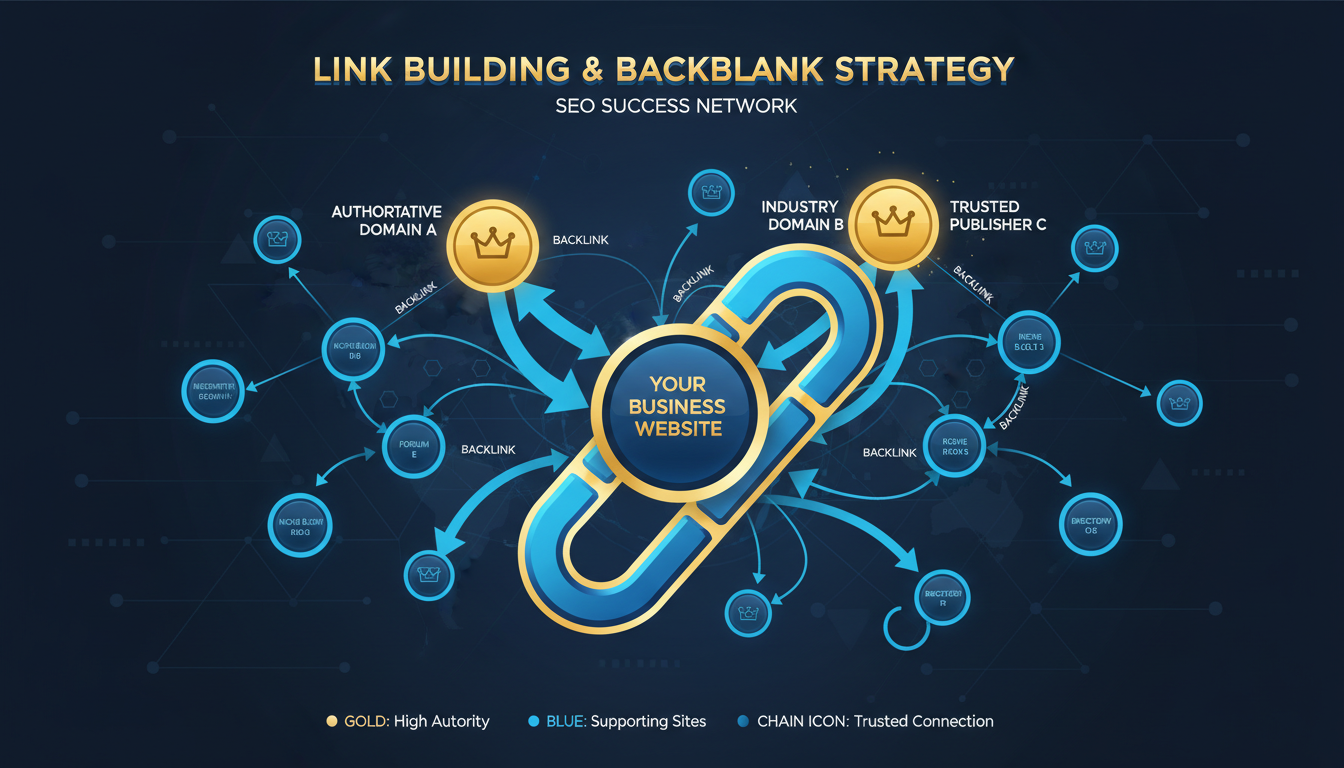
Backlinks remain one of the most powerful ranking factors in Google's algorithm. For UK businesses competing in crowded digital markets, building a portfolio of high-quality backlinks can be the difference between languishing on page three and securing a prominent position on page one. Yet many business owners still fall into the trap of chasing quantity over quality, deploying outdated tactics that can actively harm their search visibility.
In this comprehensive guide, we'll explore the strategies that genuinely work in 2025, the metrics that matter when evaluating link opportunities, and the pitfalls you absolutely must avoid. Whether you're running a local business in Manchester or an e-commerce operation shipping across the UK, these principles apply.
The UK digital landscape has become increasingly competitive across nearly every sector. With more businesses investing in SEO and content marketing, the bar for ranking on page one continues to rise. In this environment, backlinks serve as a critical differentiator - they signal to search engines that your website has earned genuine recognition from other authoritative sources within your industry. For UK businesses facing competition from both domestic rivals and international players targeting British consumers, a well-executed backlink strategy is not a luxury but a fundamental component of sustainable online growth.
Why Backlinks Still Matter in 2025
Google has consistently confirmed that backlinks are among its top three ranking signals. While the algorithm has evolved dramatically since the early days of PageRank, the fundamental principle remains: links from authoritative, relevant websites serve as endorsements of your content's quality and trustworthiness.
The concept of E-E-A-T - Experience, Expertise, Authoritativeness, and Trustworthiness - has become central to how Google evaluates content quality, and backlinks play a direct role in establishing these signals. When respected industry publications and established websites link to your content, they are effectively vouching for your expertise and authority within your field. For UK businesses in regulated industries such as finance, healthcare, and legal services, where demonstrating genuine authority is particularly important for search visibility, high-quality backlinks from recognised industry bodies and publications carry exceptional weight in search rankings.
What has changed, however, is how Google evaluates those links. The search engine is now remarkably sophisticated at distinguishing between genuine editorial links and manipulative link schemes. UK businesses that invest in sustainable, white-hat link building consistently outperform those relying on shortcuts.
Understanding What Makes a Backlink Valuable
Not all backlinks are created equal. A single link from a respected industry publication can deliver more ranking power than hundreds of links from low-quality directories. Understanding the attributes that make a link valuable is essential before you begin any outreach campaign.
Domain Authority and Trust
The authority of the linking domain is arguably the most important factor. Links from established, trusted websites - think BBC News, The Guardian, industry trade bodies, and well-known publications - carry significantly more weight than links from obscure blogs with minimal traffic. Tools like Ahrefs' Domain Rating (DR) and Moz's Domain Authority (DA) provide useful proxies for this metric, though they're not Google metrics themselves.
Topical Relevance
Google increasingly evaluates whether the linking site and page are topically relevant to your content. A link from a UK marketing blog to your digital agency's website carries far more value than a link from an unrelated cooking blog, even if both sites have similar authority scores. Google's understanding of topical clusters means relevance is no longer optional - it's essential.
Google has also become adept at understanding semantic relationships and entity associations. This means that links from websites covering closely related topics - even if not identical to your niche - can provide significant value. For example, a UK fintech company might benefit from links in accounting publications, banking industry blogs, and business technology review sites, all of which share semantic proximity to the financial technology space. Building links across these related verticals creates a natural, diverse link profile that signals broad industry recognition rather than narrow, potentially manipulative link acquisition.
Anchor Text Distribution
The clickable text of a link (anchor text) helps Google understand what the linked page is about. However, over-optimised anchor text - where every link uses your exact target keyword - is a well-known spam signal. Natural backlink profiles feature a diverse mix of branded anchors, naked URLs, generic terms like "click here," and occasionally keyword-rich variations.
Link Placement and Context
Where a link appears on a page also influences its value. Links embedded naturally within the main body content of an article carry significantly more weight than links buried in footers, sidebars, or author bios. Google's algorithms can distinguish between editorial links placed by choice and structural links that appear on every page of a site.
The freshness of a link also carries weight in modern search algorithms. A link acquired recently from a page that itself receives regular updates tends to pass more value than a stale link buried in an archived article that has not been modified in years. This temporal dimension reinforces the importance of ongoing link building rather than one-off campaigns - UK businesses that maintain consistent outreach and content creation programmes build link profiles that remain fresh and authoritative over time.
Proven Link Building Strategies for UK Businesses
Now that we understand what constitutes a quality backlink, let us explore the strategies that consistently deliver results for businesses operating in the UK market.
| Backlink Strategy | Difficulty | Impact | Time to Results |
|---|---|---|---|
| Guest Posting | Medium | High | 2-4 weeks |
| Broken Link Building | Medium | Medium-High | 1-3 weeks |
| Resource Page Outreach | Low-Medium | Medium | 1-2 weeks |
| Digital PR | High | Very High | 4-8 weeks |
| Competitor Analysis | Low | Medium | 1-2 weeks |
1. Create Linkable Assets
The most sustainable approach to link building is creating content so valuable that other websites naturally want to reference it. This could include original research and surveys with UK-specific data, comprehensive industry guides, interactive tools and calculators, infographics presenting complex data visually, or detailed case studies with measurable results.
For example, a UK accountancy firm might publish an annual survey of small business tax challenges, featuring data from hundreds of British SMEs. Journalists, bloggers, and industry commentators would naturally reference this data, generating high-quality editorial links without any outreach required.
When designing linkable assets for the UK market, consider formats that naturally attract citations. Original data and statistics are among the most linked-to content types because they provide unique value that other content creators cannot replicate. Interactive tools - such as tax calculators, ROI estimators, or compliance checkers - generate sustained link acquisition over months and years as they continue to provide utility. Long-form definitive guides that comprehensively cover a topic also perform well, particularly when they are regularly updated to reflect the latest UK regulations, market conditions, and industry developments.
2. Digital PR and Journalist Outreach
Digital PR has become one of the most effective link building strategies for UK businesses. By creating newsworthy stories, commissioning original research, or providing expert commentary on trending topics, you can earn coverage and links from high-authority news sites and industry publications.
Platforms like ResponseSource and HARO (Help A Reporter Out) connect businesses with journalists seeking expert sources. UK-specific platforms are particularly valuable because they connect you with British journalists writing for UK publications - exactly the kind of relevant, authoritative links that move the needle.
When responding to journalist requests, speed matters enormously. Set up email alerts and aim to respond within 30 minutes. Journalists often work to tight deadlines, and the first quality response they receive frequently gets published. Keep your responses concise, quotable, and backed by specific data or experience.
3. Guest Posting on Relevant UK Publications
Guest posting, when done properly, remains a legitimate and effective strategy. The key distinction is between genuine guest contributions that provide real value to the publication's audience and mass-produced, low-quality articles placed solely for links.
Target publications that your ideal customers actually read. For a B2B software company, this might mean contributing thought leadership articles to publications like Business Leader, Startups Magazine, or The Drum. For a local business, contributing to regional business publications or community websites can be equally effective.
The key to successful guest posting lies in building genuine relationships with editors and publication teams rather than treating each placement as a transaction. UK publications receive dozens of pitches daily, and those that come from established relationships consistently receive preferential treatment. Attend industry events, engage thoughtfully with publications on social media, and demonstrate your expertise before making your first pitch. This relationship-first approach takes longer to yield results but produces higher-quality placements on more authoritative platforms than any mass-outreach campaign could achieve.
4. Broken Link Building
This strategy involves finding broken links on relevant websites and offering your content as a replacement. It works because you're helping webmasters fix a problem on their site - the broken link - whilst simultaneously earning a link to your content.
Use tools like Ahrefs or Check My Links (a Chrome extension) to identify broken outbound links on relevant UK websites. Then create or identify content on your site that serves as a suitable replacement, and reach out to the webmaster with a helpful notification about the broken link and your suggested replacement.
5. Resource Page Link Building
Many UK organisations maintain resource pages - curated lists of useful tools, guides, and websites for their audience. Universities, trade associations, local councils, and industry bodies frequently maintain such pages. Getting listed on a relevant resource page can provide both a valuable backlink and direct referral traffic from genuinely interested visitors.
Search for phrases like "[your industry] resources UK," "[your topic] useful links," or "recommended [your service type] providers" to identify relevant resource pages. Then reach out with a genuine pitch explaining why your resource would be valuable to their audience.
6. Local Link Building for UK Businesses
For businesses targeting local customers, building links from local and regional sources is particularly powerful. Consider the following opportunities:
- Local business directories: Ensure listings on Yell, Thomson Local, FreeIndex, and Cylex UK are claimed and consistent
- Chamber of Commerce membership: Most UK Chambers provide member directories with links
- Local news coverage: Regional newspapers like the Manchester Evening News, Birmingham Mail, or Edinburgh Evening News actively cover local business stories
- Sponsorships and community involvement: Sponsoring local events, charities, or sports clubs often generates links from their websites
- Local business awards: Entering and winning regional business awards generates press coverage and links
Consistency across local citations is critical for maximising the SEO benefit of local link building. Ensure that your business name, address, and phone number (NAP) are identical across every directory, membership page, and local listing. Even minor variations - such as "Street" versus "St" or different phone number formats - can dilute the signals that search engines use to verify your business information. Conduct a quarterly audit of all local citations to identify and correct any inconsistencies, and use structured data markup on your own website to reinforce your accurate business details to search engines.
Link Building Mistakes That Can Destroy Your Rankings
Understanding what not to do is equally important. Google's Penguin algorithm specifically targets manipulative link building, and the penalties can be devastating - in some cases removing a website from search results entirely.
Risky Tactics to Avoid
Sustainable Strategies
Measuring Your Backlink Profile's Health
Regularly auditing your backlink profile is crucial for maintaining and improving your search performance. Several key metrics deserve your attention.
Referring Domains Growth
The number of unique domains linking to your site is often more important than the total number of links. Gaining ten links from ten different websites is typically more valuable than gaining ten links from a single website. Monitor your referring domain count monthly and ensure it is growing steadily.
Link Velocity
The rate at which you acquire new links should appear natural. A sudden spike from zero to hundreds of new links in a week looks suspicious to Google's algorithms. Aim for consistent, gradual growth that reflects genuine interest in your content.
Seasonal patterns in link acquisition are normal and expected for many UK industries. Retailers may see spikes around Black Friday and Christmas content, while B2B firms might experience increased link activity during industry conference seasons or around the publication of annual reports. Understanding your natural link velocity patterns helps you distinguish between healthy seasonal variation and genuine anomalies that warrant investigation. Tracking these patterns over multiple years builds a baseline against which future link activity can be measured with greater precision.
Toxic Link Identification
Use tools like Ahrefs, SEMrush, or Google Search Console to identify potentially toxic links pointing to your site. These might include links from spammy websites, irrelevant foreign-language sites, or known link networks. Google's Disavow Tool allows you to tell Google to ignore these links, though it should be used carefully and only for genuinely problematic links.
According to a study of over 11,000 UK business websites, the average small business has just 44 referring domains. Businesses ranking on page one for competitive terms typically have 150 or more quality referring domains. This gap represents a significant opportunity for businesses willing to invest in strategic link building.
Building a Link Building Workflow
Successful link building requires consistency and organisation. Here is a practical workflow that UK businesses can implement:
Week 1-2: Audit and Strategy
Begin by auditing your existing backlink profile using tools like Ahrefs or SEMrush. Identify your strongest links, spot any toxic links that need addressing, and analyse your competitors' link profiles to identify opportunities they've found that you haven't.
Week 3-4: Content Creation
Develop your linkable assets based on the gaps and opportunities identified during your audit. This might involve creating an original research report, building a useful tool, or writing the definitive guide on a topic your industry cares about. Quality is paramount - this content needs to be genuinely better than anything else available.
Month 2 Onwards: Outreach and Promotion
With your assets in place, begin systematic outreach. Personalise every email - generic templates are instantly recognisable and routinely ignored. Reference specific content on the recipient's site, explain clearly why your resource would benefit their audience, and make it easy for them to link to you by providing the specific URL and suggested context.
Ongoing: Monitor and Refine
Track your new links using Google Search Console and third-party tools. Monitor which strategies are delivering the best results and allocate more resources to those channels. Regularly check for broken links, lost links, and new opportunities.
As your link building programme matures, consider documenting your processes into standard operating procedures (SOPs) that your team can follow consistently. This systematisation reduces dependency on any single team member, ensures quality standards are maintained regardless of who executes the outreach, and makes it far easier to onboard new team members or scale your efforts. A well-documented link building SOP should cover prospect identification criteria, email templates (with personalisation guidelines), follow-up cadences, relationship management protocols, and link quality assessment checklists tailored to the UK market.
The ROI of Quality Link Building
Many UK business owners question whether link building is worth the investment. The data consistently shows that it is - when done properly. Organic search typically delivers the highest ROI of any digital marketing channel, and backlinks are a primary driver of organic rankings.
Consider that a single page one ranking for a competitive commercial keyword can drive hundreds of qualified visitors per month. At a typical cost-per-click of £2-£15 for paid advertising, the equivalent traffic value of strong organic rankings quickly runs into thousands of pounds monthly. A quality link building programme costing £1,000-£3,000 per month can generate returns many times that figure within six to twelve months.
The compounding effect is also worth noting. Unlike paid advertising, which stops delivering the moment you stop paying, backlinks continue to provide value for years. A link earned today will still be driving authority and traffic to your site in 2027 and beyond, making link building one of the most cost-effective long-term investments a UK business can make.
To accurately measure the return on your link building investment, implement proper attribution tracking from the outset. Use UTM parameters on any links you can control, monitor referral traffic from earned placements using Google Analytics, and track keyword ranking improvements correlated with new backlink acquisition using tools like Ahrefs or SEMrush. For UK businesses operating in multiple markets or product lines, segment your analysis to understand which types of links deliver the greatest impact for each area of your business. This granular attribution data not only justifies ongoing investment but also informs strategic decisions about where to focus future link building resources for maximum return.
Getting Professional Help
While the strategies outlined above can be implemented in-house, many UK businesses find that working with an experienced SEO agency delivers faster and more consistent results. Professional link builders have established relationships with publishers, access to premium tools, and the expertise to navigate Google's ever-evolving guidelines.
When choosing an agency, look for transparency about their methods, realistic timescales (quality link building takes months, not days), and a portfolio of case studies demonstrating measurable results for UK businesses. Avoid any agency promising specific link quantities or guaranteed rankings - these are red flags indicating potentially risky tactics.
Ready to Build a Stronger Backlink Profile?
Cloudswitched helps UK businesses develop and execute strategic link building campaigns that drive lasting organic growth. Our SEO specialists combine data-driven outreach with creative content strategies to earn the high-quality backlinks your business needs to compete.

CloudSwitched
London-based managed IT services provider offering support, cloud solutions and cybersecurity for SMEs.


