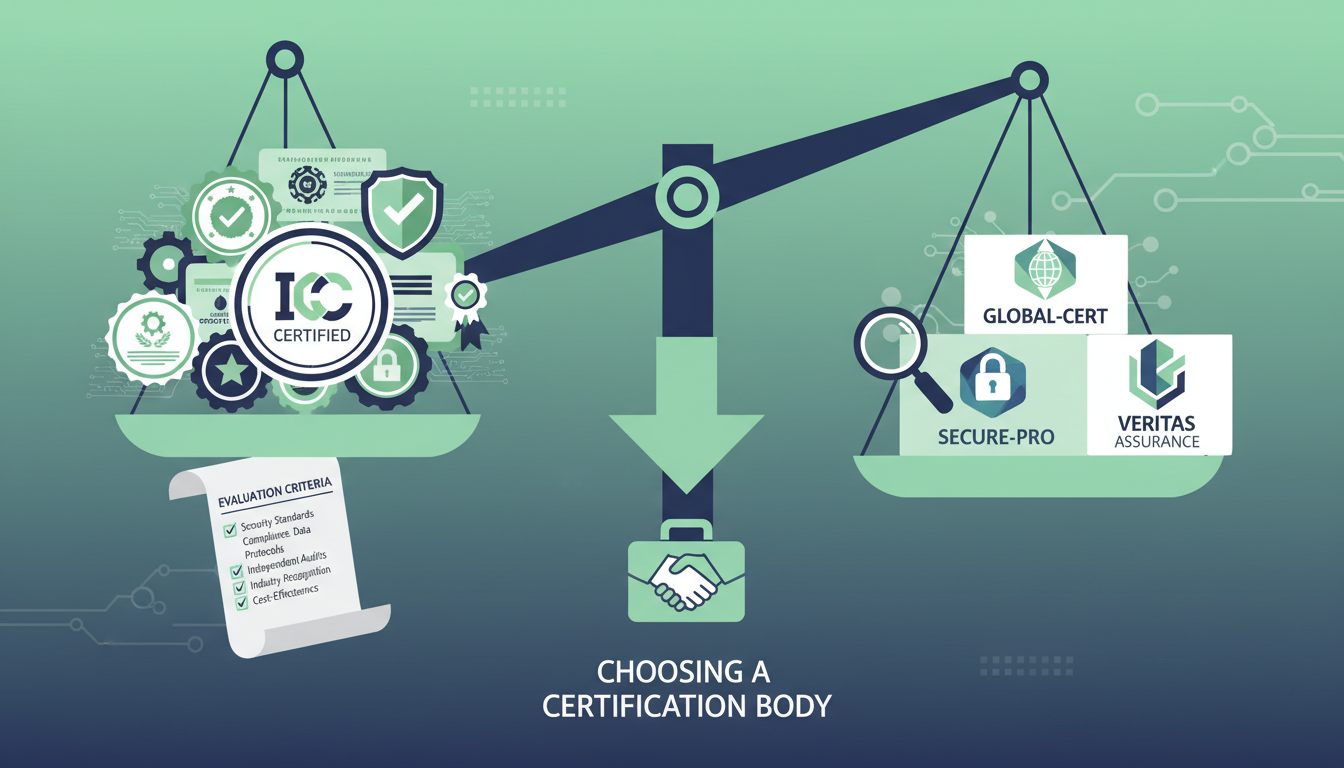
Choosing the right certification body for your Cyber Essentials Plus assessment is one of the most important decisions you will make in your certification journey. The certification body you select directly influences the quality of your assessment experience, the likelihood of achieving a first-time pass, and the value you extract from the process. With dozens of accredited certification bodies operating across the United Kingdom, making an informed choice requires understanding what differentiates them and what matters most for your specific circumstances.
This guide walks you through every factor you should consider when selecting a Cyber Essentials Plus certification body, from accreditation verification to pricing transparency and post-certification support.
Understanding the Certification Body Landscape
Cyber Essentials Plus certification bodies must be accredited by IASME (the Information Assurance for Small and Medium Enterprises consortium), which acts as the sole accreditation body under contract from the National Cyber Security Centre (NCSC). This means that every legitimate Cyber Essentials Plus certification body has undergone IASME's own accreditation process and is subject to ongoing quality assurance checks.
However, accreditation creates a baseline - it does not guarantee that all certification bodies deliver the same experience. The quality of assessors, the depth of guidance provided, pricing structures, turnaround times, and customer service vary significantly from one provider to another.
As of 2026, there are approximately 150 accredited certification bodies in the UK. They range from large multinational IT consultancies to specialist cyber security firms and small independent assessors. Each brings different strengths to the table, and the best choice depends on your organisation's size, sector, technical complexity, and budget.
The NCSC Annual Review 2025 reported that over 38,000 UK organisations now hold an active Cyber Essentials certification, with approximately 12,500 of those holding the Plus level. Demand for Cyber Essentials Plus has grown by 29% year on year, driven by increasing requirements from government procurement frameworks, NHS supply chain mandates, and Ministry of Defence contracting. This surge in demand means certification bodies are busier than ever, making early engagement and careful selection even more important.
Chart: Average UK Cyber Essentials Plus assessment costs by organisation size and first-time pass rates (2025–2026 market data)
Key Factors to Evaluate
1. IASME Accreditation Verification
Before engaging any certification body, verify their accreditation status on the IASME website. The IASME portal lists all currently accredited certification bodies along with their contact details and the specific schemes they are authorised to assess. Accreditation can be revoked, so checking the current list - rather than relying on a provider's claim - is essential.
Be cautious of organisations offering Cyber Essentials Plus certification that are not listed on the official IASME accredited body register. Certificates issued by non-accredited providers are not recognised by the NCSC, government procurement frameworks, or the NHS. Always verify before paying.
Some certification bodies hold multiple accreditations - for example, they may also be accredited for ISO 27001, SOC 2, or PCI DSS assessments. While this does not directly affect their Cyber Essentials Plus capability, it can indicate a deeper security expertise and may be relevant if your organisation plans to pursue additional certifications in the future.
2. Assessor Experience and Sector Knowledge
The individual assessor assigned to your assessment matters as much as the organisation they work for. Experienced assessors understand the practical realities of implementing security controls in different environments and can provide proportionate, helpful guidance rather than rigid, unhelpful interpretations of the requirements.
Ask prospective certification bodies about their assessors' qualifications, experience levels, and sector familiarity. An assessor who has conducted hundreds of assessments across multiple sectors will handle edge cases - such as legacy systems, BYOD policies, or complex cloud architectures - far more competently than someone with limited experience.
For organisations in regulated sectors like healthcare, financial services, or legal, sector-specific knowledge is particularly valuable. An assessor who understands NHS Data Security and Protection Toolkit requirements, FCA expectations, or SRA obligations can contextualise the Cyber Essentials Plus controls within your broader compliance landscape.
3. Pre-Assessment Support
The best certification bodies do not simply arrive to assess you - they help you prepare. Pre-assessment support can range from a basic readiness checklist to a comprehensive gap analysis with detailed remediation guidance.
Basic Certification Body
Premium Certification Body
Some certification bodies offer a pre-assessment readiness check - essentially a dry run of the assessment that identifies issues before the formal test. This is invaluable for organisations certifying for the first time. It reduces the risk of failure, avoids the cost of re-testing, and significantly lowers the stress of the formal assessment day.
Be aware that there are independence requirements. A certification body cannot provide consultancy to help you fix issues and then assess you - this would be a conflict of interest. However, they can offer general guidance on what the requirements mean and how they apply to your environment. Some organisations address this by using separate providers for consultancy and assessment.
4. Pricing and Transparency
Cyber Essentials Plus pricing varies considerably across the market. As of 2026, typical pricing for the assessment itself ranges from approximately £1,500 to £4,500 depending on the size and complexity of the organisation. Some certification bodies charge additional fees for pre-assessment support, re-tests, or expedited processing.
When comparing quotes, ensure you understand exactly what is included. Key questions to ask include:
- Does the price include the IASME licence fee?
- Is the Cyber Essentials self-assessment (required before Plus) included or separate?
- What is the cost if a re-test is required?
- Are there additional charges for organisations with multiple sites?
- Is pre-assessment support included or charged separately?
- Are there any hidden fees for certificate issuance or badge usage?
The cheapest option is rarely the best value. A certification body that charges £1,200 but provides no pre-assessment support, resulting in a failed assessment and a £600 re-test fee, ends up costing more than a provider that charges £2,500 with comprehensive preparation included.
5. Turnaround Time and Scheduling
If you have a procurement deadline or contract renewal date driving your certification timeline, turnaround time is critical. Some certification bodies can schedule assessments within one to two weeks, whilst others have waiting lists of four to six weeks or longer.
Ask about typical lead times and whether expedited assessments are available. Also clarify the timeline for receiving results and certificates after the assessment is complete. Some providers issue certificates within 48 hours of a successful assessment, whilst others may take one to two weeks.
For organisations in competitive procurement situations, every day matters. A certification body that can deliver quickly and reliably can be the difference between winning and losing a contract.
6. Assessment Methodology
While all certification bodies must follow the IASME assessment methodology, there is room for variation in how the assessment is delivered. Understanding the process helps you prepare effectively and reduces surprises on assessment day.
The Cyber Essentials Plus assessment typically includes:
External vulnerability scanning - the assessor scans your internet-facing IP addresses and domains for known vulnerabilities, open ports, and configuration weaknesses. This is usually conducted remotely before the main assessment day.
Internal device assessment - a representative sample of devices (usually around 10% or a minimum of five devices) is examined to verify patch levels, secure configuration, malware protection, and access controls. This can be conducted on-site or remotely depending on the certification body and your preference.
Simulated phishing test - test emails are sent to a sample of users to verify that email filtering controls prevent malicious content from reaching inboxes. The assessment checks whether the emails are blocked, quarantined, or rendered safe.
Evidence review - the assessor reviews supporting documentation such as network diagrams, access control policies, and patch management records to corroborate the technical findings.
Certification Body Types Compared
Understanding the different types of certification bodies operating in the UK market helps you narrow your search to the category most likely to meet your needs. Each type brings distinct advantages and trade-offs.
| Certification Body Type | Typical Cost Range | Strengths | Best For |
|---|---|---|---|
| Large IT consultancy | £2,500–£4,500 | Multi-framework expertise, enterprise processes, global reach | Enterprise organisations needing multiple certifications |
| Specialist cyber security firm | £1,800–£3,500 | Deep security knowledge, experienced assessors, sector focus | Regulated sectors (finance, healthcare, legal) |
| Independent assessor | £1,200–£2,200 | Personal service, flexible scheduling, competitive pricing | Small businesses seeking value and accessibility |
| Managed service provider | £1,500–£3,000 | Combined assessment and ongoing IT support, existing relationship | Businesses already using the MSP for IT services |
| Industry body affiliated | £1,600–£2,800 | Sector-specific insight, member discounts, compliance alignment | Organisations in specific verticals (defence, construction) |
The specialist cyber security firms tend to deliver the most thorough assessments with the most actionable feedback, whilst independent assessors often provide the best value for straightforward environments. Large consultancies are best suited to complex, multi-site enterprises where the breadth of their experience justifies the premium pricing. Managed service providers can be a convenient choice if independence requirements are carefully managed - ensure there is a clear separation between any remediation work they perform and the formal assessment itself.
7. Remote vs On-Site Assessment
Since the pandemic, most certification bodies offer fully remote assessments. This is conducted using screen-sharing tools and remote access technologies. Remote assessments are generally quicker, cheaper, and more convenient than on-site visits.
However, some organisations - particularly those with complex physical network infrastructure, air-gapped systems, or manufacturing environments - may benefit from an on-site assessment. An on-site visit allows the assessor to observe the physical security environment and understand the network topology more holistically.
Ask whether the certification body offers both options and whether there is a price difference. For most office-based organisations, remote assessment works perfectly well and is the standard approach.
Red Flags to Watch For
During your evaluation process, watch for warning signs that may indicate a certification body will deliver a poor experience.
Guaranteed pass promises - no legitimate certification body can guarantee you will pass. The assessment is a genuine test, and guaranteeing the outcome undermines its integrity. Providers who promise a pass may cut corners during the assessment.
Unusually low pricing without clear explanation may indicate a superficial assessment that does not properly test your controls. While competitive pricing is reasonable, significantly undercutting the market raises questions about thoroughness.
Poor communication during the sales process often foreshadows poor communication during the assessment. If a certification body takes days to respond to enquiries or cannot clearly explain their process, consider whether they will provide adequate support when you need it.
No evidence of ongoing IASME accreditation - if a provider cannot point you to their listing on the IASME website, or their accreditation appears to have lapsed, do not proceed. Using a non-accredited provider wastes your money and time.
Pressure to purchase bundled services you do not need - while additional services like consultancy or managed security can be valuable, a certification body that aggressively upsells during the assessment process may not have your best interests at heart.
Questions to Ask Before Committing
Prepare a list of questions for each certification body you are evaluating. The following are essential:
- How many Cyber Essentials Plus assessments has your organisation conducted in the past 12 months?
- What is your first-time pass rate?
- Can you provide references from organisations in our sector?
- What pre-assessment support do you include?
- What is the process and cost if we need a re-test?
- How quickly can you schedule our assessment?
- Will the same assessor handle our assessment from start to finish?
- What format will our assessment report take?
- Do you offer renewal reminders and support for annual re-certification?
The responses to these questions will quickly differentiate between certification bodies that are genuinely invested in your success and those that view the assessment as a transactional commodity.
Certification Body Evaluation Scorecard
Use this framework to score each certification body you are considering. Rate each criterion on a scale of 0–100 based on your conversations, references, and research. A total weighted score provides an objective basis for comparison and helps you avoid being swayed by a single impressive factor while overlooking weaknesses elsewhere.
Example scorecard: A specialist cyber security firm with strong assessor experience but limited post-certification support. Use this template to compare up to three shortlisted certification bodies side by side.
Common Assessment Failures and How to Avoid Them
Understanding why organisations fail their Cyber Essentials Plus assessment helps you prepare effectively and choose a certification body that addresses these risk areas proactively. Data from IASME and industry sources suggests the following are the most common causes of failure.
Unpatched software on sampled devices: This is the single most common failure point. The assessment checks that operating systems, browsers, and key applications are running supported versions with all critical patches applied within 14 days of release. Organisations with BYOD policies or decentralised IT management are particularly vulnerable. A good certification body will flag this risk during pre-assessment scoping and recommend a patch audit before the formal test.
Exposed administrative interfaces: Remote Desktop Protocol (RDP), administrative web panels, or database management interfaces accessible from the internet without multi-factor authentication are immediate failures. External vulnerability scanning will identify these, and a thorough certification body will conduct this scan well before the assessment day to give you time to remediate.
Email filtering gaps: The phishing simulation component tests whether malicious attachments and links reach end-user inboxes. Organisations relying on basic email filtering without dedicated security gateways frequently fail this element. Solutions such as Microsoft Defender for Office 365, Mimecast, or Proofpoint significantly improve pass rates.
Inconsistent access controls: Users with administrator privileges on their workstations, shared credentials, or accounts without multi-factor authentication where required all lead to failure. Access control is one of the five core Cyber Essentials controls, and assessors examine it rigorously. A certification body that provides a detailed checklist of access control requirements during preparation significantly reduces this risk.
Scope definition errors: Defining the scope of your assessment incorrectly - either too broadly (including systems you cannot control) or too narrowly (excluding systems that should be in scope) - creates problems. Experienced certification bodies help you define an appropriate scope during the pre-assessment phase, ensuring all internet-connected systems and devices are accounted for without unnecessary complexity.
The Value of a Long-Term Relationship
Cyber Essentials Plus certification must be renewed annually. Establishing a good relationship with a certification body from the outset pays dividends over time. An assessor who knows your environment, understands your challenges, and has tracked your progress year on year can provide far more valuable insights than starting fresh with a new provider each year.
Many certification bodies offer multi-year packages with preferential pricing and guaranteed assessment slots. If your first experience with a provider is positive, consider committing to a longer-term arrangement. Consistency also simplifies your internal processes - your team knows what to expect, preparation becomes routine, and the administrative burden decreases significantly.
The Annual Renewal Process
Cyber Essentials Plus certificates are valid for exactly 12 months from the date of issue. Unlike some certifications that offer grace periods, an expired Cyber Essentials certificate means you are immediately non-compliant. For organisations relying on certification for government procurement or supply chain requirements, a lapse can have immediate commercial consequences.
Planning for renewal should begin at least eight weeks before expiry. This allows time to schedule the assessment, conduct any necessary preparation, and accommodate potential delays. Many certification bodies will proactively remind you of upcoming renewals and pre-book your assessment slot, but relying solely on your provider for reminders is not advisable. Set your own internal calendar reminders at 12 weeks, 8 weeks, and 4 weeks before expiry.
The renewal assessment is the same scope and rigour as the initial certification. It is not a rubber stamp. You must demonstrate that all five core controls are still implemented and effective. Organisations that treat renewal as a formality sometimes fail because standards have drifted since the previous year - new devices have been added without proper configuration, patches have lapsed, or access controls have loosened as staff have joined and left.
A 2025 survey by the UK Cyber Security Council found that 18% of organisations experienced a lapse in their Cyber Essentials certification at least once, with the primary causes being poor planning (42%), changes in IT infrastructure that were not accounted for (31%), and switching certification bodies at the last minute (27%). Maintaining a consistent relationship with your certification body and implementing an internal renewal calendar are the most effective preventive measures.
Industry-Specific Considerations
Different sectors face different challenges in the Cyber Essentials Plus assessment, and some certification bodies have developed particular expertise in specific industries.
Healthcare and NHS supply chain: Organisations supplying to the NHS must hold Cyber Essentials Plus to meet Data Security and Protection Toolkit requirements. Healthcare environments often include medical devices, clinical systems, and legacy software that present unique challenges. Look for a certification body with specific NHS and healthcare experience who understands how to scope these environments appropriately.
Financial services: FCA-regulated firms face additional scrutiny on access controls, data protection, and incident response. A certification body familiar with financial services can align the Cyber Essentials Plus assessment with broader regulatory expectations, providing more contextually relevant feedback.
Defence and government supply chain: Ministry of Defence contractors frequently require Cyber Essentials Plus as a baseline, often alongside additional standards such as Cyber Essentials Plus with NIST or specific MOD requirements. Certification bodies with defence sector experience understand these layered requirements and can advise on how to structure your compliance programme efficiently.
Legal sector: Law firms handle highly sensitive client data and face Solicitors Regulation Authority expectations regarding information security. Certification bodies with legal sector clients understand the confidentiality requirements and the particular challenges of securing document management systems and client communication platforms.
Education: Schools, colleges, and universities often manage complex mixed environments with student devices, BYOD policies, and limited IT resources. Certification bodies experienced in education understand how to scope assessments pragmatically and provide guidance suited to constrained budgets.
How Cloudswitched Can Help
At Cloudswitched, we work alongside your chosen certification body to ensure you are fully prepared for assessment. We provide the consultancy and remediation support that certification bodies themselves cannot offer due to independence requirements. This means you get expert preparation from our team and an independent assessment from your certification body - the ideal combination for a first-time pass.
We can also recommend reputable certification bodies from our network of trusted partners, based on your specific requirements, budget, and timeline. Our recommendations are based on years of experience supporting UK organisations through the certification process, and we have direct insight into which providers consistently deliver excellent results.
Need Help Choosing a Certification Body?
Cloudswitched provides independent guidance on selecting the right Cyber Essentials Plus certification body for your organisation, plus comprehensive preparation support to ensure a first-time pass.
Summary Checklist
Before making your final decision, run through this checklist:
- Verified IASME accreditation on the official register
- Clear pricing with no hidden fees
- Pre-assessment support included or available
- Experienced assessors with relevant sector knowledge
- Acceptable turnaround time for your deadline
- Remote assessment option available
- Good communication during the evaluation process
- Positive references from similar organisations
- Clear re-test policy and pricing
- Renewal support and reminders offered
Taking the time to evaluate certification bodies properly is a small investment that pays significant returns. The right partner will make your Cyber Essentials Plus journey smoother, faster, and more valuable - protecting both your organisation and the certification's integrity.

CloudSwitched
London-based managed IT services provider offering support, cloud solutions and cybersecurity for SMEs.


