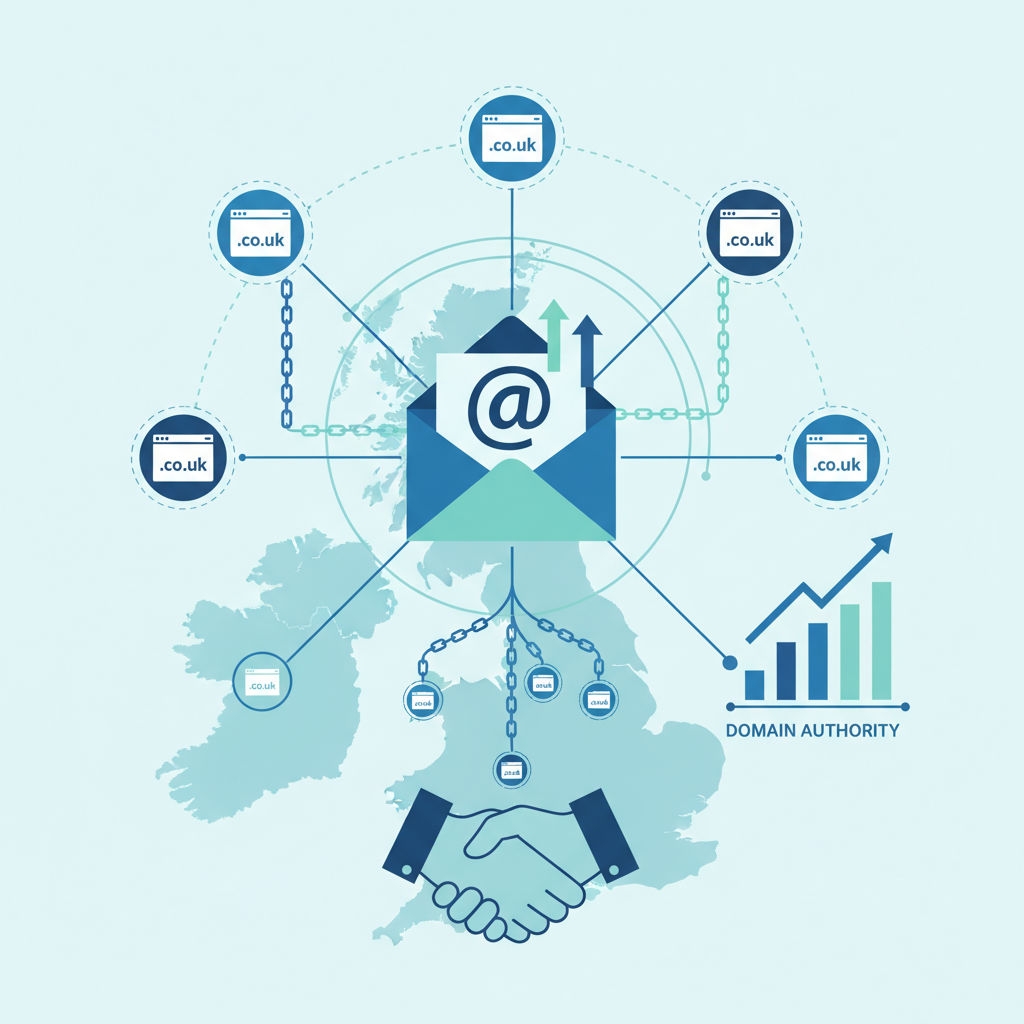
For UK businesses competing in an increasingly crowded digital landscape, few SEO strategies deliver the kind of sustained, compounding returns that link building outreach does. Backlinks remain one of Google’s most heavily weighted ranking signals - and yet the vast majority of British businesses either ignore link building entirely or approach it with outdated, risky tactics that do more harm than good.
The reality is straightforward: if your competitors have more high-quality backlinks than you do, they will almost certainly outrank you for the keywords that matter most to your business. A 2025 study by Ahrefs found that the top-ranking page on Google has an average of 3.8 times more backlinks than pages ranking in positions two through ten. For UK businesses - particularly those targeting competitive local and national search terms - building a robust, ethical link profile is not optional. It is essential.
This guide covers everything you need to know about link building outreach in 2025, from white-hat strategies and digital PR techniques to outreach email templates you can use today. Whether you are a small business in Manchester, a growing agency in London, or an e-commerce brand targeting customers across the UK, these strategies will help you earn backlinks that genuinely move the needle on your search rankings.
Why Link Building Still Matters for UK Businesses in 2025
Despite years of speculation that Google would eventually reduce the importance of backlinks, the evidence in 2025 tells a different story. Google’s own leaked documents and multiple large-scale correlation studies continue to confirm that backlinks are a top-three ranking factor alongside content quality and user experience signals.
For UK businesses specifically, link building carries additional strategic importance. The UK search market is one of the most competitive in the world, with British consumers conducting an estimated 4.4 billion searches per month on Google alone. Competition for high-value commercial keywords - from “managed IT services London” to “accountants near me” - is fierce, and the businesses that invest in building genuine authority through quality backlinks are the ones that consistently appear at the top of search results.
Beyond raw rankings, backlinks from authoritative UK websites also drive direct referral traffic, build brand credibility, and strengthen your domain authority over time. A single link from a respected publication like The Guardian, TechRadar, or a prominent industry body can deliver more long-term SEO value than months of on-page optimisation alone.
White-Hat Link Building Strategies That Actually Work
The foundation of any successful link building campaign is a commitment to white-hat, ethical practices. Google’s algorithms - particularly the SpamBrain system introduced in 2022 and significantly upgraded since - are now remarkably effective at identifying and penalising manipulative link schemes. The only sustainable approach is to earn links through genuine value, relevance, and relationship building.
1. Digital PR for UK Businesses
Digital PR is arguably the most powerful link building strategy available to UK businesses today. It involves creating newsworthy content - data studies, surveys, expert commentary, and trend analyses - and pitching it to journalists, bloggers, and online publications who will link back to your site as a source.
The UK has a particularly rich media landscape for digital PR. National outlets like the BBC, The Telegraph, The Independent, and Metro regularly pick up well-crafted pitches. Regional publications across England, Scotland, Wales, and Northern Ireland are often even more receptive, particularly to stories with a local angle. Trade publications in sectors from fintech to construction provide excellent opportunities for niche authority building.
To succeed with digital PR in the UK market, focus on these principles:
- Lead with data. Journalists want statistics, survey results, and quantifiable findings. Commission original research or analyse publicly available datasets (ONS, Companies House, Ofcom) to create genuinely newsworthy stories.
- Localise your angles. A story about “UK businesses” is good. A story about “businesses in the West Midlands” with region-specific data is better for securing regional press coverage.
- Build journalist relationships. Use tools like Roxhill Media, Muck Rack, or X (formerly Twitter) to identify and follow relevant UK journalists. Engage with their work before pitching.
- Time your pitches. Align content with the UK news cycle, seasonal events (Budget announcements, HMRC deadlines, Back to School), and trending topics.
2. Guest Posting Best Practices
Guest posting remains a legitimate and effective link building tactic when done properly. The key distinction is between high-quality guest contributions that genuinely serve the host site’s audience and low-effort, mass-produced articles placed solely for link value.
For UK businesses, the best guest posting opportunities typically come from industry blogs, professional association websites, regional business publications, and complementary (non-competing) businesses in your sector. A managed IT services company might contribute articles to accounting industry blogs, HR technology publications, or local Chamber of Commerce websites.
Best practices for guest posting in 2025 include:
- Target relevant, authoritative sites. Check the site’s Domain Rating (DR 30+ is a reasonable minimum) and ensure it has genuine organic traffic.
- Write genuinely useful content. Your guest post should be at least as good as the content on your own blog. Invest the same level of research, expertise, and editorial quality.
- Limit self-promotional links. One contextual link to a relevant page on your site is sufficient. Over-linking looks spammy and most editors will reject it.
- Include an author bio with credentials. This builds E-E-A-T (Experience, Expertise, Authoritativeness, Trustworthiness) for both you and the host site.
- Avoid “write for us” sites. Pages that openly solicit guest posts are often low-quality link farms. Target sites that publish guest content selectively.
3. Resource Page Link Building
Resource page link building is one of the most underused yet effective tactics for UK businesses. Many organisations - universities, local councils, industry bodies, and professional associations - maintain resource pages that link to helpful tools, guides, and services in their sector.
UK universities are particularly valuable targets. Websites ending in .ac.uk carry significant authority, and many university departments maintain resource pages for students, researchers, and local businesses. Similarly, local council websites (.gov.uk) often list approved suppliers, useful business resources, and community organisations.
To find resource page opportunities, use search operators such as:
- site:.ac.uk “useful links” [your industry]
- site:.gov.uk “resources” [your topic]
- “useful resources” + [your keyword] + UK
- intitle:“recommended links” [your sector]
Once you identify relevant resource pages, reach out to the page owner with a concise email explaining why your content would be a valuable addition to their list. Personalisation is critical - generic outreach emails to resource page managers have an abysmal response rate.
4. Broken Link Building
Broken link building involves finding dead links on other websites and suggesting your own content as a replacement. It works because you are offering genuine value to the site owner - you are helping them fix a poor user experience while earning a backlink in the process.
This strategy is particularly effective in the UK market because many British business and institutional websites have not been regularly maintained. Government reorganisations, company closures, and domain changes during the post-Brexit period have left a trail of broken links across thousands of UK websites.
The process is straightforward:
- Use a tool like Ahrefs, Check My Links (Chrome extension), or Screaming Frog to identify broken outbound links on authoritative UK websites in your niche.
- Check what the broken link originally pointed to using the Wayback Machine (web.archive.org).
- Create content on your own site that covers the same topic - ideally with more depth and updated information.
- Contact the website owner, alerting them to the broken link and suggesting your content as a replacement.
Always personalise your outreach emails with the recipient’s name, reference specific content on their site, and explain the clear benefit to their audience. Keep emails under 150 words. Follow up once after 5–7 business days, but never more than twice. The most successful UK link builders report a 12–18% response rate when emails are genuinely personalised, compared to under 2% for templated mass outreach.
HARO and Journalist Outreach
HARO (Help A Reporter Out) - now rebranded as Connectively - along with similar platforms like Qwoted, SourceBottle, and the UK-specific ResponseSource, provides one of the most accessible routes to earning high-authority backlinks. These platforms connect journalists seeking expert sources with professionals who can provide quotes, data, and commentary.
For UK businesses, ResponseSource deserves special attention. It is the dominant journalist request service in the British market, used by reporters at the BBC, Sky News, The Times, and hundreds of trade publications. A premium subscription costs approximately £1,800–£3,000 per year, but the ROI from a handful of high-DR links can be substantial.
To maximise your success with journalist outreach:
- Respond quickly. Journalists work to tight deadlines. Aim to respond within 30 minutes to one hour of a request going live.
- Be genuinely expert. Provide unique insights, original data, or contrarian viewpoints. Generic, boilerplate responses get ignored.
- Include credentials. Mention your job title, years of experience, and any relevant qualifications. Journalists need to verify expertise.
- Keep it concise. Two to three well-crafted paragraphs are ideal. Journalists will edit and trim your response regardless.
- Do not ask for a link. Simply provide great quotes. Most journalists will include a link to your site as a source credit naturally.
Local Link Building for UK Regions
For businesses targeting specific UK regions, local link building is enormously valuable and often far less competitive than national campaigns. Every region in the UK has its own ecosystem of local newspapers, business directories, chambers of commerce, networking groups, and community organisations that can provide authoritative, geographically relevant backlinks.
Regional Opportunities Across the UK
London and the South East: London’s business ecosystem offers thousands of link building opportunities through tech meetup groups, co-working space directories, borough council business pages, and publications like City A.M., London Business News, and Tech London Advocates.
The Midlands: Birmingham, Nottingham, and the wider Midlands region have a growing digital economy. Target the Greater Birmingham Chambers of Commerce, East Midlands Business Link, and regional publications like TheBusinessDesk.com (Midlands edition).
The North: Manchester, Leeds, Liverpool, and Newcastle all have thriving business communities with strong digital presences. Prolific North, TheBusinessDesk.com (North West and Yorkshire editions), and regional tech communities like Manchester Digital provide excellent opportunities.
Scotland: Scottish Enterprise, Business Gateway, Scottish Chambers of Commerce, and publications like The Scotsman and Scottish Business News offer strong .co.uk and .scot domain backlinks with genuine authority.
Wales: Business Wales, South Wales Chamber of Commerce, and local development agencies maintain business directories and resource pages that accept quality submissions.
For all UK regions, focus on these local link building tactics:
- Sponsor or participate in local events and ensure the event website links to your business.
- Join your local Chamber of Commerce - membership typically costs £200–£1,200 per year and includes a directory listing with a backlink.
- Contribute articles or expert commentary to regional business publications.
- Get listed in local council business directories and approved supplier lists.
- Partner with local charities for co-branded campaigns that earn press coverage.
Creating Linkable Assets
The most efficient link building strategies start with creating content that naturally attracts backlinks. These “linkable assets” serve as magnets for links because they provide unique value that other websites want to reference, share, and cite.
The most effective types of linkable assets for UK businesses include:
- Original research and surveys. Commission a survey of your industry’s UK customer base and publish the findings. Data-driven content earns links because journalists and bloggers need statistics to support their articles. Budget £500–£2,000 for a professionally conducted survey via platforms like Censuswide or OnePoll.
- Comprehensive guides and glossaries. In-depth, authoritative resources that cover a topic more thoroughly than anything else available become natural reference points. This very guide is an example.
- Free tools and calculators. Interactive tools - cost calculators, ROI estimators, compliance checklists - earn links because they provide ongoing utility. A UK tax calculator or GDPR compliance checker, for instance, would attract links from businesses, accountants, and advisory sites.
- Infographics and data visualisations. Visual content is highly shareable and often earns links when embedded on other sites. Ensure infographics include an embed code with an attribution link.
- Industry benchmarking reports. Annual reports that benchmark performance, salaries, pricing, or trends within a UK industry vertical become go-to references that accumulate links year after year.
Outreach Email Templates That Get Responses
The success of any link building campaign ultimately depends on the quality of your outreach. Below are three proven email templates adapted for the UK market. Personalise every email - use the recipient’s name, reference their specific content, and explain clearly why linking to your resource benefits their audience.
Template 1: Guest Post Pitch
Subject: Article idea for [Site Name] - [Specific Topic]
“Hi [First Name],
I have been reading [Site Name] for a while now - your recent piece on [specific article] was particularly insightful, especially the section about [specific detail].
I am [Your Name], [Your Title] at [Your Company]. We work with UK businesses on [your area of expertise], and I had an idea for an article your readers might find valuable:
[Proposed Title] - a practical guide covering [2–3 bullet points summarising the content].
I have written for [mention 1–2 other publications if applicable] and can have a polished draft ready within a week. Happy to adapt the angle to fit your editorial style.
Would this be of interest?
Best regards,
[Your Name]”
Template 2: Broken Link Outreach
Subject: Quick heads-up - broken link on [Page Title]
“Hi [First Name],
I was reading your excellent resource on [topic] at [URL] and noticed that the link to [anchor text/description] appears to be broken - it returns a 404 error.
I recently published a comprehensive guide on [same topic] that covers similar ground with updated 2025 data: [Your URL]
It might make a suitable replacement, but either way I thought you would want to know about the dead link.
Cheers,
[Your Name]”
Template 3: Resource Page Outreach
Subject: Suggested addition to your [Topic] resources page
“Hi [First Name],
I came across your [topic] resources page and found it genuinely useful - I have bookmarked several of the links you have listed.
I wanted to suggest a resource that might be a good fit for the page: [Your Resource Title]. It covers [brief description of what it covers and why it is useful], and it has been referenced by [mention any notable sites or publications].
Here is the link: [Your URL]
If it is not the right fit, no worries at all. Keep up the excellent work on the site.
Best,
[Your Name]”
Buying links: Paying for backlinks from link farms, PBNs (Private Blog Networks), or “guaranteed link” services violates Google’s guidelines and can result in a manual penalty that tanks your rankings overnight. In 2024, Google issued over 12,000 manual actions against UK sites for unnatural link patterns.
Excessive link exchanges: “I will link to you if you link to me” schemes at scale are flagged by SpamBrain. Occasional, natural reciprocal links between genuinely related sites are fine - systematic exchanges are not.
Low-quality guest posts: Mass-producing thin, 300-word articles on irrelevant sites with exact-match anchor text is a red flag. Google’s 2025 spam update specifically targets scaled guest posting abuse.
Automated link building tools: Software that creates forum profiles, blog comments, or directory submissions automatically is easily detected and penalised. These links carry zero value and significant risk.
Foreign language link schemes: Purchasing cheap links from non-English websites with no topical relevance is a common shortcut that Google identifies instantly.
Black-Hat vs White-Hat Link Building
Understanding the difference between legitimate and manipulative link building practices is critical for protecting your UK business from Google penalties. Here is a clear comparison of the two approaches.
Black-Hat Link Building
White-Hat Link Building
Link Building Strategy Comparison
Choosing the right mix of link building tactics depends on your budget, timeline, and competitive landscape. The table below compares the most effective strategies across key metrics relevant to UK businesses.
| Strategy | Typical Cost (Monthly) | Time to Results | Link Quality | Scalability | Best For |
|---|---|---|---|---|---|
| Digital PR | £2,000–£8,000 | 1–3 months | Very High (DR 50–90+) | High | National brands, e-commerce |
| Guest Posting | £800–£3,000 | 2–4 months | Medium–High (DR 30–70) | Medium | B2B, professional services |
| Broken Link Building | £500–£1,500 | 1–2 months | Medium–High (DR 30–80) | Medium | Content-rich businesses |
| Resource Page Outreach | £400–£1,200 | 1–3 months | Medium–High (DR 40–80) | Low–Medium | Educational, B2B, SaaS |
| HARO/Journalist Outreach | £200–£3,000 | 2–8 weeks | Very High (DR 60–90+) | Low | Expert-led businesses |
| Local Link Building | £300–£1,500 | 1–2 months | Medium (DR 20–50) | Medium | Local/regional businesses |
| Linkable Asset Creation | £1,000–£5,000 | 3–6 months | Very High (DR 40–90+) | High | Long-term authority building |
Measuring Link Building ROI
Link building requires meaningful investment, so measuring return on investment is essential for justifying spend and optimising your strategy. Unlike paid advertising where results are immediate and directly attributable, link building ROI manifests over weeks and months through improved rankings, increased organic traffic, and higher conversion rates.
Key Metrics to Track
The most important metrics for evaluating your link building programme include:
- Number of referring domains: Track the total number of unique websites linking to your domain over time. Use Ahrefs, Moz, or SEMrush to monitor this metric monthly. Growth in referring domains is the most direct measure of link building success.
- Domain Rating / Domain Authority: While not a Google ranking factor, these third-party metrics (Ahrefs DR and Moz DA respectively) provide a useful proxy for your site’s overall link profile strength. A steady upward trend indicates your link building is working.
- Organic keyword rankings: Track position changes for your target keywords. Link building should correlate with ranking improvements for competitive terms, typically within 4–12 weeks of acquiring quality backlinks.
- Organic traffic growth: Ultimately, link building should drive more visitors from search engines. Compare month-on-month and year-on-year organic traffic using Google Analytics 4 and Google Search Console.
- Referral traffic: Quality backlinks also drive direct clicks. Monitor referral traffic in GA4 to identify which backlinks are sending engaged visitors to your site.
- Cost per link: Calculate your total link building spend (including tools, staff time, and agency fees) divided by the number of quality links acquired. UK averages range from £150–£800 per quality link depending on the strategy and target DR.
- Revenue impact: The ultimate measure. Track organic conversions and revenue attributed to pages that received link building support, comparing performance before and after the campaign.
Calculating Link Building ROI
A practical framework for calculating link building ROI:
- Measure incremental organic traffic to pages targeted by link building (comparing to baseline).
- Apply your average organic conversion rate to estimate additional leads or sales.
- Multiply by average customer lifetime value to estimate revenue impact.
- Subtract total link building costs to determine net ROI.
For example, if a £3,000 monthly link building investment drives an additional 2,000 organic visits per month at a 2.5% conversion rate, that generates 50 extra leads. If your average customer value is £1,200, that represents £60,000 in potential revenue - a 20:1 return on your link building investment.
Avoiding Google Penalties
Google’s approach to link spam has become increasingly sophisticated. The SpamBrain algorithm, combined with regular manual reviews, means that manipulative link building tactics carry more risk than ever before. UK businesses are not exempt - in fact, the UK market has been a particular focus of Google’s anti-spam efforts due to the historically high volume of link manipulation in competitive British industries like finance, gambling, legal services, and insurance.
Signs Your Link Profile May Be at Risk
- A sudden spike in backlinks from unrelated or foreign-language websites
- A high percentage of links with exact-match commercial anchor text (e.g., “cheap accountants London”)
- Multiple links from the same IP range or hosting provider (indicating a PBN)
- Links from sites with no organic traffic of their own
- A manual action notification in Google Search Console
How to Protect Your Site
- Audit your backlink profile quarterly. Use Ahrefs or SEMrush to review new and lost backlinks. Identify any suspicious links that you did not earn through legitimate outreach.
- Use the Google Disavow Tool when necessary. If you identify toxic backlinks that you cannot get removed through direct outreach, submit a disavow file through Google Search Console. Use this tool sparingly and only for clearly harmful links.
- Document your outreach. Keep records of all link building activities, outreach emails, and editorial relationships. If Google ever questions your link profile, documentation of legitimate outreach efforts is your best defence.
- Diversify your link profile. A natural link profile includes a mix of followed and nofollowed links, branded and non-branded anchor text, links from various domain types (.co.uk, .com, .org, .ac.uk), and links to different pages across your site - not just the homepage.
Building a Link Building Programme: Practical Steps
For UK businesses ready to invest in link building, here is a practical month-by-month framework for building a sustainable programme.
Month 1: Foundation
- Audit your existing backlink profile using Ahrefs or SEMrush (plans start from approximately £80/month)
- Analyse your top three competitors’ link profiles to identify gaps and opportunities
- Create your first linkable asset - a comprehensive guide, data study, or free tool
- Set up tracking in GA4 and Google Search Console to measure baseline metrics
Month 2: Outreach Launch
- Begin guest post outreach to 10–15 relevant UK publications
- Sign up for ResponseSource or HARO/Connectively and start responding to journalist requests daily
- Identify 20–30 broken link opportunities on authoritative UK sites
- Join your local Chamber of Commerce and relevant industry associations
Month 3: Scale and Optimise
- Launch a digital PR campaign around your linkable asset
- Follow up on all outstanding outreach from Month 2
- Begin resource page outreach to universities and government websites
- Review initial results and double down on the tactics producing the best response rates
Months 4–6: Compound and Expand
- Create a second linkable asset based on learnings from the first
- Expand digital PR to regional publications across multiple UK regions
- Develop ongoing journalist relationships for regular source opportunities
- Begin tracking ROI using the framework outlined above and report to stakeholders
Common Mistakes UK Businesses Make With Link Building
Having worked with hundreds of UK businesses on their SEO strategies, we see the same mistakes repeated again and again. Avoiding these pitfalls will save you time, money, and potential ranking penalties.
- Prioritising quantity over quality. One link from a DR 70 UK publication is worth more than 50 links from obscure, low-traffic websites. Always focus on quality first.
- Neglecting anchor text diversity. If 40% of your backlinks use the exact same commercial anchor text, Google will notice. Aim for a natural mix of branded anchors (your company name), naked URLs, generic phrases (“click here”, “this guide”), and topic-relevant terms.
- Not tracking results. Link building without measurement is gambling. Set up proper tracking from day one so you can identify what works and eliminate what does not.
- Giving up too early. Link building is a long-term strategy. Most campaigns take 3–6 months to show meaningful ranking improvements. Businesses that abandon their programme after 6 weeks never see the compounding returns that make link building so powerful.
- Ignoring internal linking. External backlinks drive authority to your domain, but internal links distribute that authority across your site. A strong internal linking structure ensures that the value from your backlinks reaches the pages you most want to rank.
- Using the same agency as competitors. If your link building agency is placing guest posts for you and three of your competitors on the same websites, the value of those links is significantly diluted. Ask agencies about client exclusivity within your niche.
The Future of Link Building in the UK
As Google’s algorithms continue to evolve, the fundamentals of link building remain constant: earn links through genuine value, relevance, and relationships. However, several trends are shaping the future of link building for UK businesses:
- Brand mentions as ranking signals. Google is increasingly able to recognise and credit unlinked brand mentions. While linked mentions remain more valuable, building overall brand visibility through PR and content marketing supports SEO even when not every mention includes a hyperlink.
- E-E-A-T and author authority. Links from pages written by recognised experts carry more weight. Investing in personal brand building for key team members amplifies the value of link building efforts.
- AI content detection. As AI-generated content floods the web, links from websites with genuine human-written, expert content are becoming more valuable. Quality editorial standards are a competitive advantage.
- Digital PR convergence. The lines between traditional PR, digital PR, and link building continue to blur. UK businesses that integrate their PR and SEO strategies will earn more high-authority links more efficiently.
Link building outreach is not a quick fix or a one-time project. It is an ongoing investment in your business’s digital authority that compounds over time, strengthening your position in search results and driving sustainable organic growth. For UK businesses willing to commit to ethical, relationship-driven link building, the returns are substantial and enduring.
Build Quality Backlinks
Ready to strengthen your business’s online authority with a professional, white-hat link building strategy? Our SEO specialists help UK businesses earn high-quality backlinks that drive real results - more visibility, more traffic, and more customers.
Get Your Free SEO Assessment
CloudSwitched
London-based managed IT services provider offering support, cloud solutions and cybersecurity for SMEs.


