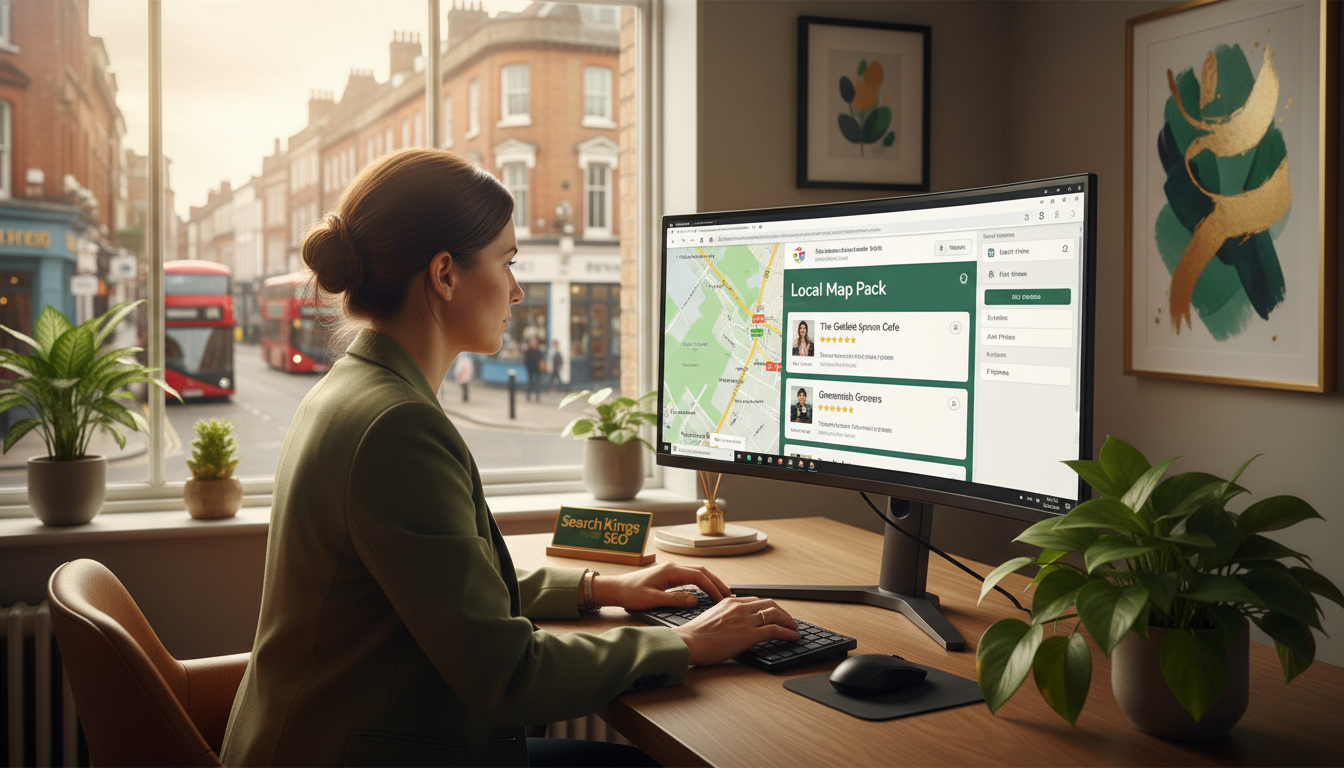
For the vast majority of small businesses across the United Kingdom, the customers who matter most are those within driving distance. Whether you run a plumbing company in Bristol, a dental practice in Manchester, or an accountancy firm in Edinburgh, the people searching for your services on Google are overwhelmingly located in your local area. This is precisely why local SEO has become the single most important digital marketing discipline for small and medium-sized enterprises. Unlike traditional search engine optimisation, which focuses on ranking nationally or internationally, local SEO targets the geographic-specific queries that drive footfall, phone calls, and appointment bookings from customers in your immediate vicinity. Understanding and mastering this discipline is no longer optional; it is the difference between thriving and merely surviving in an increasingly competitive marketplace.
The shift towards local search intent has accelerated dramatically over the past five years, driven by the proliferation of mobile devices and the growing sophistication of Google's location-aware algorithms. When someone types "accountant near me" or "best Italian restaurant Birmingham" into their phone, Google draws upon a complex web of signals to determine which businesses appear in the coveted local pack and map results. These signals include your Google Business Profile completeness, the consistency of your business information across the web, the volume and quality of your customer reviews, your proximity to the searcher, and dozens of other ranking factors that local SEO services professionals work to optimise. Businesses that invest in these factors consistently outperform competitors who rely solely on word-of-mouth or traditional advertising channels. When a homeowner searches for SEO services near me or a restaurant owner types a similar query, they are looking for a local provider who understands their market - and the businesses that rank for those terms have invested in exactly the local signals described throughout this guide.
The commercial impact of local search visibility cannot be overstated. Research consistently demonstrates that local searches have the highest conversion intent of any search category, with nearly 80 percent of local mobile searches resulting in an offline purchase within 48 hours. For UK small businesses operating on tight margins and limited marketing budgets, this makes local SEO arguably the highest-return marketing investment available. A well-optimised local presence can generate a steady stream of qualified leads without the ongoing cost-per-click expenditure that makes paid advertising unsustainable for many smaller enterprises. Organisations like Cloudswitched have helped numerous UK small businesses transform their local search visibility, turning Google into their most reliable source of new customer enquiries.
This guide is designed to be the most comprehensive resource available on local SEO for UK small businesses. We cover every aspect of local search optimisation, from foundational elements like Google Business Profile setup and citation building through to advanced strategies including local schema markup, geo-targeted content creation, and voice search optimisation. Whether you are a complete beginner who has never claimed your Google listing or an experienced marketer looking to refine your local search strategy, this guide provides actionable, UK-specific advice that you can implement immediately. Every recommendation is grounded in current best practice as of 2026 and tailored specifically for the UK market, where local search dynamics differ meaningfully from those in the United States and other regions.
The State of Local Search in the UK: 2026 Statistics
Before diving into tactical recommendations, it is essential to understand the scale and significance of local search behaviour across the United Kingdom. The data paints an unambiguous picture: local search is not a niche channel but the primary way British consumers discover and evaluate local businesses. These statistics should inform every strategic decision you make regarding your local search presence and help you build the business case for investing in professional local SEO services if you have not already done so.
The growth trajectory of local search has been particularly steep since 2022, when Google significantly upgraded its local search algorithms to better understand natural language queries and searcher intent. "Near me" searches have increased by over 400 percent in the UK over the past four years, and voice-activated local searches through devices like Google Home, Amazon Alexa, and Siri have added an entirely new dimension to local discovery behaviour. These trends show no sign of slowing, making investment in local SEO more important now than at any point in the history of search marketing.
Perhaps the most striking statistic is the gap between consumer behaviour and business preparedness. While 87 percent of UK consumers use online reviews and local search results to find businesses, fewer than half of UK small businesses have fully optimised their Google Business Profile. This represents an enormous opportunity for businesses willing to invest time and resources into their local search presence. The competitive landscape in local SEO is far less saturated than national organic search, meaning that relatively modest investments in optimisation can yield disproportionately large returns. A dedicated local SEO company can help you capitalise on this gap, positioning your business ahead of competitors who have neglected their local digital presence.
Why Local SEO Matters More Than Ever for UK SMEs
The combination of rising local search volume, high purchase intent, and relatively low competition among small businesses creates a window of opportunity that will not remain open indefinitely. As more businesses recognise the value of local search optimisation and invest accordingly, the cost and effort required to achieve top positions will increase. Businesses that establish strong local search foundations now will benefit from the compounding nature of SEO authority, making it progressively harder for late-arriving competitors to displace them. Acting sooner rather than later is not merely advisable; it is strategically imperative.
Google Business Profile: The Foundation of Local SEO
Your Google Business Profile (formerly Google My Business) is the single most influential factor in your local search visibility. It is the centrepiece of Google's local ecosystem, powering your appearance in the local pack, Google Maps, and the knowledge panel that displays when someone searches for your business by name. A fully optimised Google Business Profile can be the difference between appearing prominently for local searches and being invisible to potential customers. This is the first area that any competent local SEO company will address when taking on a new client, and it should be your starting point if you are managing your own local search strategy.
Claiming and verifying your Google Business Profile is straightforward but critical. Navigate to business.google.com and either claim an existing listing or create a new one. Google will verify your ownership through a postcard sent to your business address, a phone call, or an email verification, depending on the verification methods available for your business category. Once verified, you gain full control over the information displayed in your listing, including your business name, address, phone number, website URL, opening hours, business description, service areas, and the categories that determine which searches trigger your listing.
The business categories you select deserve particular attention, as they are one of the strongest ranking signals in local search. Your primary category should be the most specific and accurate description of your core business activity. A plumber should select "Plumber" rather than the broader "Home Services," while a personal injury solicitor should choose "Personal Injury Solicitor" rather than simply "Solicitor." Google allows you to add up to nine secondary categories, and you should use all available slots to describe the full range of services you offer. Research your top-ranking local competitors' categories using tools such as GMBspy or Pleper to identify categories that may be contributing to their visibility.
Your business description is a 750-character opportunity to communicate your value proposition while naturally incorporating relevant keywords. Describe what your business does, what makes you different, and the areas you serve. Avoid keyword stuffing, but ensure that your primary service terms and location names appear naturally within the description. For example, a Manchester-based electrician might write: "Serving residential and commercial clients across Greater Manchester, we provide expert electrical installations, rewiring, and emergency repairs. With over fifteen years of experience, our NICEIC-approved engineers deliver safe, compliant electrical work at competitive prices." This description communicates services, location, experience, and credentials without sounding artificially optimised.
Visual content on your Google Business Profile significantly impacts both engagement metrics and ranking signals. Businesses with more than 100 photos receive 520 percent more phone calls than average, and 2,717 percent more direction requests. Upload high-quality images of your premises, team, products, and completed work. Ensure photos are properly geotagged with your business location metadata. Add new photos regularly, as Google favours profiles with fresh visual content. Video content, while still underutilised by most UK small businesses, generates particularly strong engagement signals and should be incorporated wherever possible.
Google Business Profile Optimisation Checklist
| Element | Best Practice | Common Mistake |
|---|---|---|
| Business Name | Use your exact legal/trading name only | Adding keywords or locations to the name (violates guidelines) |
| Address | Match exactly to Royal Mail PAF database format | Using abbreviations or alternate formats across listings |
| Phone Number | Use a local area code number as primary | Using 0800/0345 numbers or mobile numbers as primary |
| Opening Hours | Set accurate regular and special hours, update bank holidays | Leaving hours blank or failing to update seasonal changes |
| Categories | Select most specific primary; use all 9 secondary slots | Choosing overly broad categories or missing relevant ones |
| Description | 750 chars with services, locations, and USPs mentioned naturally | Keyword stuffing or using generic, uninformative text |
| Photos | 100+ geotagged, high-quality images; add new ones monthly | No photos, stock images, or low-resolution phone snapshots |
| Posts | Publish weekly with offers, updates, events, or tips | Never posting or posting inconsistently |
| Reviews | Respond to every review within 24 hours; generate reviews actively | Ignoring negative reviews or never soliciting feedback |
| Services | Add all services with descriptions and pricing where applicable | Leaving services section empty |
Google Posts are an underutilised feature that provides a direct channel for communicating with potential customers through your Business Profile. Posts appear in your listing and can include text, images, call-to-action buttons, and links. Publish at least one post per week covering topics such as special offers, seasonal services, company news, tips and advice, or case studies. Posts expire after seven days for most categories, so maintaining a consistent publishing cadence ensures your profile always has fresh, engaging content. This activity signals to Google that your business is active and engaged, which can positively influence your local ranking position.
Local Pack Rankings: How Google Decides Who Appears
The local pack, that prominent box of three business listings accompanied by a map that appears at the top of search results for local queries, is the most valuable real estate in local search. Appearing in the local pack generates significantly more clicks, calls, and website visits than appearing in the standard organic results below. Understanding the factors that determine local pack rankings is essential for any business seeking to improve its local visibility. Google has confirmed that three primary factors govern local pack rankings: relevance, distance, and prominence. However, the interplay between these factors and the dozens of secondary signals that influence them is considerably more nuanced.
Relevance refers to how well your Google Business Profile matches the intent behind a searcher's query. This is influenced primarily by your business categories, the services listed in your profile, the keywords in your business description, and the content of your Google Posts and reviews. Ensuring that your profile comprehensively describes your offerings using the language that customers actually use when searching is critical. Analyse the specific terms your potential customers type into Google using keyword research tools, and ensure these terms appear naturally throughout your profile content. A business that describes itself as offering "property maintenance" may miss searches from customers looking for "handyman services," even though they offer the same thing.
Distance is the factor over which you have the least control, as it refers to the physical proximity of your business to the searcher's location. Google uses the searcher's GPS coordinates on mobile devices and their IP-derived location on desktop to calculate distance. While you cannot change your physical location, you can influence how Google perceives your service area through proper service area configuration in your Google Business Profile, creation of location-specific landing pages on your website, and consistent citation of your address across the web. Service-area businesses that travel to customers rather than receiving them at a fixed location should configure their service areas carefully to ensure they appear in searches across their entire operating region.
Prominence encompasses everything else: the overall strength and authority of your business's online presence. This includes the volume, quality, and recency of your Google reviews; the number and accuracy of your citations across business directories; the authority of your website; the quality and quantity of your backlink profile; your social media presence; and your overall digital footprint. Prominence is where the bulk of local SEO services effort is focused, as it represents the largest opportunity for competitive differentiation. Two businesses equidistant from a searcher with similar relevance signals will be differentiated primarily by prominence, making it the decisive factor in most competitive local markets.
Behavioural signals represent an increasingly important, though often overlooked, ranking factor. Google monitors how users interact with your listing in the local pack: do they click through to your website, request directions, call your phone number, or scroll past without engaging? High click-through and engagement rates send positive signals that reinforce your ranking position, while low engagement can cause your visibility to decline over time. This creates a virtuous cycle for businesses with well-optimised, attractive listings: more engagement leads to better rankings, which leads to more visibility, which leads to more engagement. Conversely, businesses with incomplete or unappealing listings can enter a downward spiral of declining visibility.
Citation Building: Establishing Your Digital Footprint
Citations are online mentions of your business's name, address, and phone number (NAP) on websites other than your own. They are one of the foundational pillars of local SEO, serving as independent verification of your business's existence, location, and legitimacy. Google uses citations as trust signals, cross-referencing the information it finds across dozens or hundreds of sources to build confidence in the accuracy of the data it displays in search results. The more consistent and widespread your citations, the more confident Google becomes in your business information, and the more prominently it will display your listing in local search results.
Citation building for UK businesses follows a structured hierarchy that prioritises the most authoritative and widely referenced data sources. The first tier includes the major data aggregators that feed information to hundreds of smaller directories: these are the sources that any reputable local SEO company will address first. In the UK, the primary data aggregators are Thomson Local, Central Index, Factual, and Localeze. Ensuring your business information is accurate and consistent across these aggregators cascades correct information downstream to hundreds of smaller directories, creating a multiplier effect on your citation-building efforts.
| Citation Tier | Examples | Priority | Estimated Impact |
|---|---|---|---|
| Tier 1: Data Aggregators | Thomson Local, Central Index, Factual, Localeze | Essential | High - feeds hundreds of downstream directories |
| Tier 2: Major Directories | Yell, Yelp, Scoot, FreeIndex, Cylex, Hotfrog | High | Medium-High - strong domain authority, widely crawled |
| Tier 3: Industry Directories | Checkatrade, TrustATrader, Bark, MyBuilder, Rated People | High for trades | Medium-High - strong relevance signals for specific sectors |
| Tier 4: Local Directories | Local chamber of commerce, council business directories, local news sites | Medium | Medium - strong geographic relevance signals |
| Tier 5: Social & Map Platforms | Facebook, Apple Maps, Bing Places, Waze, TomTom | High | Medium - cross-platform visibility and trust signals |
| Tier 6: Niche & Emerging | Industry-specific platforms, local community sites, blog directories | Low-Medium | Low-Medium - incremental authority and diversity |
The UK citation landscape differs from the US market in several important ways that businesses and local SEO services providers must understand. British directories such as Yell.com, Thomson Local, FreeIndex, and Scoot carry significantly more weight for UK-based searches than American-centric platforms. Similarly, industry-specific UK platforms like Checkatrade, TrustATrader, and Bark provide powerful citation and review signals for tradespeople and service providers. A citation strategy that simply replicates American best practices without adapting to the UK directory ecosystem will miss critical opportunities and produce suboptimal results.
NAP Consistency: The Non-Negotiable Foundation
NAP consistency, the uniformity of your business name, address, and phone number across every online mention, is arguably the single most important technical factor in local SEO. Even minor inconsistencies can erode Google's confidence in your business data and negatively impact your local ranking position. Common inconsistencies include using "Street" in some listings and "St." in others, listing different phone numbers, using a trading name in some directories and a legal company name in others, or having outdated addresses from a previous business location. A systematic audit of your existing citations to identify and correct inconsistencies should be among the first tasks undertaken when beginning any local SEO campaign.
Name: Smith & Sons Plumbing Ltd
Address: 42 High Street, Manchester, M1 4BT
Phone: 0161 234 5678
Result: Google cross-references multiple sources, builds high confidence, rewards with better local pack positioning and map visibility.
Name: Smith and Sons Plumbing / Smiths Plumbing / Smith & Sons Ltd
Address: 42 High St, Manchester / 42 High Street, M1 4BT / Unit 3, 42 High Street
Phone: 0161 234 5678 / 07700 900123 / 0161 234 5679
Result: Google cannot confidently verify business data, may treat variations as separate entities, ranking signals are diluted across multiple perceived businesses.
Conducting a citation audit involves systematically searching for your business across every major directory, aggregator, social platform, and industry-specific site, documenting every instance where your NAP data appears, and flagging any inconsistencies for correction. Tools such as BrightLocal, Whitespark, and Moz Local can automate much of this process, scanning hundreds of directories simultaneously and producing detailed reports of inconsistencies. For businesses with complex histories involving name changes, address moves, or phone number changes, the audit process can be extensive but is absolutely essential. Every inconsistency you correct strengthens the aggregate signal that tells Google your business data is trustworthy.
Review Management: Building Trust and Authority
Online reviews are the lifeblood of local business reputation and one of the strongest ranking signals in local SEO. Google's algorithms give substantial weight to review signals, including the total number of reviews, the average star rating, the velocity at which new reviews are generated, the recency of your latest reviews, and the presence of relevant keywords within review text. Beyond their ranking impact, reviews directly influence consumer purchasing decisions, with 93 percent of UK consumers reporting that online reviews affect their buying choices. A robust review management strategy is therefore both a ranking factor and a conversion optimiser, making it one of the highest-impact activities in any local SEO programme.
Generating a steady stream of authentic reviews requires a systematic approach rather than occasional, ad-hoc requests. The most effective review generation strategies integrate the request into your standard customer journey, making it a natural part of the service delivery process rather than an awkward afterthought. Send a follow-up email or SMS within 24 to 48 hours of service completion, including a direct link to your Google review form. This link can be generated from your Google Business Profile dashboard and significantly reduces the friction involved in leaving a review. Consider using QR codes on receipts, invoices, business cards, and signage to provide an immediate, friction-free pathway to your review page.
Responding to reviews, both positive and negative, is a critical component of review management that many businesses neglect. Google has confirmed that business responses to reviews are a ranking signal, and prompt, thoughtful responses demonstrate engagement and customer care that influences prospective customers reading your reviews. For positive reviews, thank the reviewer by name, reference specific aspects of the service they mentioned, and express genuine appreciation. For negative reviews, respond professionally and empathetically, acknowledge the customer's experience, offer to resolve the issue offline, and avoid defensive or argumentative language. Potential customers pay particular attention to how businesses handle criticism, and a well-managed negative review can actually enhance your reputation more than a positive review.
Review diversity across multiple platforms strengthens your overall local SEO profile. While Google reviews carry the most direct ranking influence, reviews on platforms such as Trustpilot, Facebook, Yelp, and industry-specific sites like Checkatrade or TrustATrader contribute to your broader prominence signals. They also capture customers who prefer to research on platforms other than Google. Aim to build review presence across at least three to four platforms, with your primary focus remaining on Google. Some businesses find it effective to rotate their review solicitation efforts, directing customers to Google for one month, Trustpilot the next, and a sector-specific platform the following month, ensuring balanced growth across all platforms.
Local Link Building: Earning Geographic Authority
Link building for local SEO differs fundamentally from traditional link building in that the geographic relevance of linking domains is as important as their domain authority. A link from a local newspaper, a regional business association, or a nearby complementary business sends a powerful geographic relevance signal that tells Google your business is a legitimate, established part of the local community. These locally relevant links are often more valuable for local pack rankings than links from nationally authoritative but geographically distant sources. Building a portfolio of high-quality, locally relevant backlinks is therefore a core focus of effective local SEO services programmes.
Local link building opportunities in the UK are abundant for businesses willing to invest time in community engagement and relationship building. Local newspapers and online news sites are consistently looking for expert commentary, data-driven stories, and local business news. Position yourself as a local expert by offering journalists insightful quotes on topics within your field, sponsoring local community data projects, or providing newsworthy announcements about your business's growth, hiring, or community involvement. Building relationships with local journalists and bloggers takes time but yields links that carry exceptional local ranking value.
Sponsoring local events, sports teams, charities, and community organisations is one of the most reliable and sustainable sources of local links. Most organisations provide a link to their sponsors on their website, often from high-authority .org.uk or .co.uk domains. Beyond the direct link value, sponsorship builds genuine community connections that generate word-of-mouth referrals and brand awareness. Consider sponsoring school events, local football or cricket teams, charity runs, community festivals, or business networking groups. The cost is often modest, typically ranging from £100 to £1,000 per year, and the combined benefit of link value, brand exposure, and community goodwill makes it one of the highest-return local marketing investments available.
Chamber of Commerce memberships are particularly valuable for local link building in the UK. Most local chambers maintain online member directories that provide followed links from high-authority .co.uk domains. The British Chambers of Commerce network encompasses over 50 chambers across the country, each maintaining active websites with member listings, news sections, and event pages that offer multiple link opportunities. Annual membership fees typically range from £200 to £800 depending on the chamber and your business size, making this one of the most cost-effective link-building strategies available to UK small businesses. Beyond the link value, chamber membership provides genuine networking opportunities, business support services, and credibility that extend far beyond SEO.
Creating locally relevant content that naturally attracts links is the most sustainable long-term local link-building strategy. This includes publishing original research about your local market, creating guides to local services or attractions that complement your business, developing resources for local residents, or curating data about local economic trends. A Manchester accountant who publishes an annual "Cost of Running a Business in Greater Manchester" report will naturally attract links from local business publications, bloggers, and news sites. A Bristol wedding photographer who creates a comprehensive "Guide to Wedding Venues in the South West" generates a linkable resource that venue owners, wedding planners, and local bloggers will reference and share.
Local Schema Markup: Speaking Google's Language
Schema markup, also known as structured data, is a code vocabulary that you add to your website to help search engines understand the content and context of your pages more precisely. For local businesses, implementing the correct schema markup is an essential technical optimisation that provides Google with explicit, machine-readable information about your business, services, location, and operating details. While schema markup is not a direct ranking factor, it significantly enhances how your listing appears in search results through rich snippets, knowledge panels, and enhanced local results, which in turn improves click-through rates and user engagement signals that do influence rankings.
The LocalBusiness schema type and its more specific subtypes form the foundation of local schema implementation. Google recommends using the most specific subtype available for your business. A solicitor should use LegalService, a restaurant should use Restaurant, a dentist should use Dentist, and a plumber should use Plumber. Each subtype inherits all properties from LocalBusiness while adding type-specific properties that provide additional context. Your schema implementation should include, at minimum: business name, address (using PostalAddress schema), telephone number, opening hours (using OpeningHoursSpecification), geographic coordinates, business URL, and service area.
Essential Schema Properties for UK Local Businesses
Beyond the basic LocalBusiness properties, UK businesses should implement several additional schema elements that provide valuable context to search engines. Include areaServed with specific geographic areas to define your service territory, priceRange to set pricing expectations, paymentAccepted to list accepted payment methods, currenciesAccepted set to GBP, and hasOfferCatalog to describe your services in structured format. For businesses with customer reviews, implementing AggregateRating schema can trigger star-rating rich snippets in organic results, significantly increasing click-through rates. Always validate your schema using Google's Rich Results Test tool before deploying to production.
Service schema markup deserves particular attention for service-based businesses that want to rank for specific service queries in their local area. Use the Service schema type to describe each service you offer, including the service name, description, provider (your business), service area, and pricing information. Nest these service descriptions within your LocalBusiness schema using the hasOfferCatalog or makesOffer properties. This provides Google with a detailed, structured understanding of exactly what services you provide and where, enabling more precise matching to specific local service queries. Providers of professional Google ranking services UK businesses rely on will always ensure comprehensive service schema is implemented alongside core business schema.
FAQ schema markup on your local landing pages and service pages can trigger rich FAQ snippets in search results, significantly increasing the visual footprint of your listing and providing answers to common questions directly in the search results. Implement FAQPage schema with individual Question and Answer items addressing the most common queries your potential customers have. Focus on location-specific questions such as "How much does a boiler replacement cost in Manchester?" or "What are the parking regulations for businesses in Central London?" These location-specific FAQs serve double duty: they provide useful content for visitors and generate enhanced search result appearances that drive higher click-through rates.
Geo-Targeted Content: Ranking for Local Searches
Creating content that is genuinely relevant to your local audience is one of the most effective strategies for improving local organic rankings. Geo-targeted content goes beyond simply mentioning your city name on a few pages; it involves creating substantive, valuable content that addresses the specific needs, questions, and concerns of people in your geographic area. This content serves multiple purposes: it establishes your business as a knowledgeable local authority, provides natural opportunities to incorporate location-specific keywords, generates locally relevant internal linking opportunities, and attracts local backlinks from other websites in your area.
Local landing pages are the primary vehicle for geo-targeted content and are essential for businesses that serve multiple locations or areas. Each major service area should have its own dedicated landing page with unique, substantive content that addresses the specific characteristics and needs of that area. A solicitor serving the West Midlands might create separate pages for Birmingham, Wolverhampton, Coventry, and Solihull, each containing unique content about legal services relevant to that specific area. Crucially, these pages must contain genuinely different, valuable content rather than being template pages with only the city name swapped out. Google's algorithms are highly effective at detecting and penalising thin, duplicative location pages, and the practice of creating hundreds of near-identical pages targeting different postcodes is both ineffective and risky.
Blog content with a local focus provides ongoing opportunities to target long-tail local search queries and demonstrate local expertise. Topics might include commentary on local business conditions, guides to local regulations and compliance requirements, case studies featuring local clients (with permission), coverage of local events your business participates in, or analysis of local market trends relevant to your industry. A Bristol estate agent might publish content about neighbourhood guides, local school catchment areas, transport link developments, or property market trends specific to different Bristol postcodes. This content attracts local visitors through organic search, builds topical and geographic authority, and provides valuable material for social media sharing and local link building.
Unique content: 800+ words of original, location-specific information per page
Local details: References to local landmarks, neighbourhoods, regulations, and market conditions
Customer focus: Addresses real questions and concerns of local customers
Supporting media: Local photos, maps, testimonials from area clients
Natural keywords: Location terms woven naturally into informative content
Template pages: Same content with only the city name changed
Thin content: Under 300 words with no substantive local information
Keyword stuffing: Unnatural repetition of location names and service terms
No local relevance: Generic content that could apply to any location
Mass production: Hundreds of pages for every town, village, and postcode
Content localisation should extend to your core service and product pages as well, not just dedicated location pages. Weave local references, case studies, and examples naturally into your main website content. Mention specific projects you have completed in named locations, reference local regulations or standards that affect your industry, and include testimonials from clients identified by their area. This distributed local relevance creates a cohesive signal across your entire website that reinforces your geographic authority, rather than isolating it to a few dedicated location pages. When people search for SEO services near me, Google increasingly considers the overall local relevance of your entire website rather than assessing individual pages in isolation.
Mobile Local Search Optimisation
Mobile devices now account for approximately 78 percent of all local searches in the UK, making mobile optimisation not just a nice-to-have but an absolute prerequisite for local search success. The mobile local search experience differs fundamentally from desktop in ways that demand specific optimisation attention. Mobile searchers exhibit stronger immediate intent, expect faster page load times, interact through touch rather than mouse, and are more likely to take immediate actions such as calling, requesting directions, or visiting a business. Your website must be designed to accommodate these behaviours seamlessly, or you will lose a significant majority of your potential local search traffic.
Page speed is the single most critical mobile optimisation factor for local businesses. Google's mobile-first indexing means your mobile site speed directly impacts your search rankings, and local searchers are particularly impatient, with more than half abandoning a page that takes longer than three seconds to load. Achieve fast load times by compressing images using modern formats like WebP and AVIF, implementing lazy loading for below-the-fold content, minimising CSS and JavaScript files, leveraging browser caching, and using a content delivery network (CDN) with UK-based edge servers. Test your mobile page speed regularly using Google's PageSpeed Insights tool and aim for a performance score of 90 or above.
Click-to-call functionality is arguably the most important conversion element on a local business's mobile website. Your phone number should be prominently displayed in the header of every page as a tappable link using the tel: protocol. On service pages and contact pages, include multiple click-to-call buttons positioned at natural decision points throughout the content. Track click-to-call events using Google Analytics 4 to measure the volume and quality of phone leads generated through your mobile website. Businesses that implement prominent, well-designed click-to-call functionality consistently report 30 to 50 percent increases in phone enquiries from mobile visitors, representing a significant uplift in lead generation from the same traffic volumes.
Mobile-friendly forms are essential for local businesses that generate leads through online enquiry forms. Design forms specifically for thumb-based interaction, with large input fields, adequate spacing between form elements, clear labels, and minimal required fields. Auto-fill support through proper input type attributes (tel for phone numbers, email for email addresses) reduces friction significantly. Use the browser's geolocation API, with the user's permission, to auto-populate location fields, further simplifying the enquiry process. Every additional field you add to a mobile form reduces completion rates by approximately 7 percent, so ruthlessly eliminate any non-essential fields from your mobile forms.
Voice Search and Local SEO
Voice search has emerged as an increasingly significant channel for local business discovery, with an estimated 58 percent of UK consumers having used voice search to find a local business in the past twelve months. Voice queries differ fundamentally from typed queries in their structure, intent, and the way results are delivered. While a typed search might be "plumber Manchester," a voice query is more likely to be "Who is the best plumber near me?" or "Find an emergency plumber open right now." These conversational, question-based queries require specific optimisation approaches that complement but differ from traditional keyword-based local SEO strategies.
Optimising for voice search begins with understanding how voice assistants select and deliver local business results. When a user asks a voice assistant for a local business recommendation, the assistant typically returns a single result or a short list of three options drawn from Google's local pack. This means that ranking in the top three positions for local queries is even more critical for voice search than for traditional search, where users can scroll through multiple pages of results. The selection criteria heavily favour businesses with complete, accurate Google Business Profiles, high review scores, close proximity to the searcher, and websites that load quickly and provide clear, structured information.
FAQ content structured around natural language questions is the most effective content format for capturing voice search traffic. Analyse the questions your customers ask during initial consultations, phone enquiries, and customer service interactions, then create comprehensive answers on your website. Use the exact phrasing that customers use naturally rather than formal industry terminology. For example, "How much does it cost to replace a boiler in Leeds?" is more likely to match a voice query than "Boiler replacement pricing." Implement FAQPage schema markup on these FAQ sections to help search engines understand the question-and-answer structure, increasing the likelihood of being selected as a featured snippet or voice search result.
The growing prevalence of voice search reinforces the importance of appearing in the top local results. When a user asks their smart speaker to find SEO services near me or an equivalent query, the device typically reads out only one or two results - making top-three positioning even more critical than for typed searches. Conversational keyword research for voice search involves identifying the long-tail, question-based phrases that people speak rather than type. Tools like AnswerThePublic, AlsoAsked, and Google's "People Also Ask" feature provide valuable insight into the questions people ask about your services and locations. Incorporate these conversational phrases into your content naturally, particularly in headings, subheadings, and the opening sentences of paragraphs. Focus on the question words that dominate voice search: who, what, where, when, why, and how. Phrases beginning with "near me," "open now," "best," and "cheapest" are particularly common in voice-activated local searches and should feature prominently in your content strategy.
Local Landing Pages: Best Practices
Local landing pages are dedicated website pages designed to rank for location-specific search queries and convert local visitors into enquiries, calls, or visits. For businesses serving multiple geographic areas, a well-structured portfolio of local landing pages is one of the most powerful weapons in the local SEO arsenal. Each page targets a specific location and service combination, providing Google with clear relevance signals and potential customers with locally specific information that builds trust and drives action. Creating effective local landing pages requires a balance between providing genuine local value and incorporating the on-page optimisation elements that signal relevance to search engines.
The structural hierarchy of your local landing pages should reflect your business's geographic coverage in a logical, search-engine-friendly manner. For most UK small businesses, a structure that groups pages by region, then city, then specific service works well. For example, a cleaning company serving South East England might have a structure of /areas/london/, /areas/london/office-cleaning/, /areas/london/domestic-cleaning/, with equivalent pages for other cities in their service area. This hierarchical structure creates natural internal linking opportunities and helps Google understand the geographic scope and depth of your service coverage. Use breadcrumb navigation with schema markup to reinforce this geographic hierarchy.
Each local landing page should contain a minimum of 800 to 1,200 words of unique, locally relevant content. This content should include a description of the specific services you provide in that area, local case studies or project examples, information about the local area that demonstrates genuine familiarity, locally specific pricing or offers where applicable, testimonials from clients in that location, an embedded Google Map showing your service area or premises, locally optimised title tags and meta descriptions, and clear call-to-action elements including phone numbers with local area codes and enquiry forms. Businesses using the expertise of a specialist local SEO company typically see the best results when each landing page is crafted with genuinely unique content that addresses the specific characteristics and needs of each local market.
| Element | Requirement | SEO Impact |
|---|---|---|
| Title Tag | [Service] in [Location] | [Business Name] - under 60 characters | Primary keyword relevance signal for local queries |
| Meta Description | Unique, compelling description with location and CTA - under 155 characters | Improves click-through rate from search results |
| H1 Heading | Service and location naturally combined, matching user search intent | Strongest on-page relevance signal |
| Body Content | 800-1,200+ words of unique, locally specific information | Topical depth and local relevance |
| Local Testimonials | 2-3 reviews from customers in the specific area | Trust signal and local relevance |
| Embedded Map | Google Maps embed showing your service area or premises location | Geographic relevance signal |
| LocalBusiness Schema | Complete structured data including areaServed for the specific location | Enhanced search result appearances |
| Internal Links | Links to related service pages and nearby location pages | Distributes page authority and reinforces geographic structure |
| Images | Locally relevant, geotagged photos with descriptive alt text | Image search visibility and geographic signals |
| CTA Elements | Local phone number, contact form, and directions link | Conversion rate optimisation |
Building a Local SEO Strategy: The Complete Timeline
Implementing a comprehensive local SEO strategy is not an overnight process. It requires sustained effort across multiple disciplines over a period of months before the full impact becomes apparent in your rankings and traffic. Understanding the typical timeline helps set realistic expectations and ensures you allocate resources appropriately across the different phases of implementation. The following timeline represents a typical twelve-month local SEO programme for a UK small business starting from a basic or unoptimised position, the kind of structured approach that professional Google ranking services UK providers follow to deliver measurable, sustainable results.
Month 1: Foundation & Audit
Claim and fully optimise Google Business Profile. Conduct comprehensive citation audit. Perform technical SEO audit of website. Identify all NAP inconsistencies. Research local competitors and keyword opportunities. Establish baseline rankings and traffic metrics. Set up Google Analytics 4 and Google Search Console tracking.
Month 2-3: Citation Building & Technical Fixes
Submit to all Tier 1 data aggregators. Build citations across 40-60 high-authority directories. Correct all identified NAP inconsistencies. Implement LocalBusiness schema markup. Fix technical SEO issues (speed, mobile, crawlability). Optimise existing service and location pages with local keywords.
Month 4-6: Content & Reviews
Create geo-targeted landing pages for primary service areas. Launch systematic review generation programme. Begin publishing locally relevant blog content (2-4 posts per month). Implement FAQ schema on service pages. Start Google Posts publishing cadence (weekly). Build first wave of local links through chambers and sponsorships.
Month 7-9: Authority Building & Expansion
Intensify local link building through PR, guest posting, and community engagement. Expand location page coverage to secondary service areas. Optimise for voice search with conversational content. Monitor and respond to all reviews. Analyse ranking progress and adjust strategy based on data. Add new Google Business Profile photos and posts consistently.
Month 10-12: Refinement & Competitive Advantage
Conduct competitive gap analysis and target remaining opportunities. Create advanced content assets (local guides, original research, tools). Pursue higher-authority local link opportunities. Optimise conversion rates on landing pages based on accumulated data. Review and update all citations for accuracy. Plan year-two strategy based on performance insights and emerging trends.
The timeline above represents a disciplined, methodical approach to local SEO implementation. Most UK small businesses begin to see measurable improvements in local pack visibility within three to four months, with significant ranking gains typically materialising between months six and nine. The full impact of a comprehensive local SEO strategy usually becomes apparent after ten to twelve months of sustained effort. It is critically important to maintain consistency throughout this period, as local SEO authority builds incrementally through the cumulative effect of hundreds of small optimisations rather than through any single dramatic action. Businesses that abandon their efforts after a few months of modest results often quit just before the compounding effect would have delivered substantial gains.
Local SEO for Multi-Location UK Businesses
Managing local SEO for a business with multiple locations across the UK introduces a layer of complexity that single-location businesses do not face. Each location needs its own Google Business Profile, its own set of consistent citations, its own local landing page, its own review generation strategy, and its own locally relevant content. Scaling these efforts across five, ten, fifty, or more locations while maintaining quality and consistency requires systematic processes, centralised oversight, and often specialised tools. A local SEO company with experience managing multi-location businesses can provide the infrastructure and expertise to manage this complexity efficiently.
The Google Business Profile structure for multi-location businesses should feature a separate, fully verified profile for each physical location. Each profile must have its own unique phone number (ideally with a local area code), its own specific address, its own set of opening hours, and its own localised business description. Resist the temptation to use identical descriptions across all locations; instead, craft unique descriptions that reference specific local details, nearby landmarks, or location-specific services. Use Google's location groups feature to organise and manage multiple profiles efficiently from a single dashboard, enabling bulk updates while maintaining per-location customisation.
Website architecture for multi-location businesses should include a central locations hub page that links to individual location pages, each with unique, substantive content. Avoid creating sub-domains for each location unless your locations operate as genuinely independent businesses; sub-directories (/locations/manchester/, /locations/birmingham/) are preferred as they consolidate domain authority under a single domain. Each location page should feature unique content about that specific area, local testimonials, location-specific service offerings, an embedded map, a local phone number, and full LocalBusiness schema markup with the specific location's details. The hub page should feature an interactive map and a searchable directory of all locations.
Measuring Local SEO Performance
Effective measurement is essential for understanding the impact of your local SEO efforts and making data-driven decisions about where to invest future resources. Local SEO measurement involves tracking a broader range of metrics than traditional SEO, as the goals extend beyond website traffic to include phone calls, direction requests, in-store visits, and other offline conversions. Establishing a comprehensive measurement framework from the outset ensures you can demonstrate return on investment, identify which activities are delivering the greatest impact, and quickly detect any declines in performance that require corrective action.
Google Business Profile Insights provides the most direct window into your local search performance. It shows how many times your profile appeared in search results (impressions), what search queries triggered your appearance, how many users clicked through to your website, requested directions, called your phone number, or messaged you, and how these metrics trend over time. Tracking these metrics monthly provides a clear picture of your local visibility trajectory and helps identify which optimisation activities are having the greatest impact. Pay particular attention to the "search queries" report, which reveals the exact terms people used when your listing appeared, as these insights can inform your keyword strategy and content creation priorities.
Google Analytics 4 and Google Search Console provide complementary data that rounds out your local SEO measurement framework. In Google Search Console, filter your Performance report by pages to see which location pages are generating impressions and clicks, and filter by queries to identify the local search terms driving traffic. In GA4, create segments for traffic from specific geographic areas, set up conversion events for phone clicks, form submissions, and direction requests, and track the user journey from local search landing page through to conversion. Use UTM parameters on the links in your Google Business Profile to differentiate traffic coming from your GBP versus organic search, enabling more granular attribution analysis.
Common Local SEO Mistakes UK Businesses Make
Despite the wealth of information available about local search optimisation, UK small businesses consistently make a number of avoidable mistakes that undermine their local visibility. Understanding these common pitfalls is as important as understanding best practices, as a single significant error can negate months of positive optimisation work. The following mistakes are among the most frequently encountered by local SEO services professionals when auditing new clients' local search presence, and correcting them often produces rapid, visible improvements in local ranking positions.
The most damaging mistake is inconsistent or incorrect NAP information across the web. As discussed in the citation building section, even minor variations in your business name, address format, or phone number can fragment your local search signals and undermine Google's confidence in your business data. This issue is compounded when businesses move premises, change phone numbers, or rebrand without systematically updating every directory listing. The second most common mistake is neglecting Google Business Profile management after the initial setup. Your profile requires ongoing attention, including regular posts, prompt review responses, photo uploads, and information updates. A stale, neglected profile signals to Google that your business may be inactive, which depresses your visibility in local results.
Keyword stuffing in Google Business Profile names remains surprisingly prevalent despite being a clear violation of Google's guidelines and a practice that can result in profile suspension. Adding geographic terms, service keywords, or marketing slogans to your business name (for example, "Smith Plumbing - Best Plumber in Manchester - 24/7 Emergency") may provide a short-term ranking boost but creates a significant suspension risk that can remove your listing from search results entirely. Other common mistakes include neglecting mobile optimisation, failing to implement schema markup, creating thin or duplicative location pages, ignoring negative reviews, building links from irrelevant or low-quality sources, and attempting to game the system with fake reviews or spammy citation-building tactics.
Local SEO Services: DIY vs. Professional Management
One of the most important decisions UK small business owners face is whether to manage their local SEO in-house or engage professional local SEO services. Both approaches can be effective, but the optimal choice depends on your available time, technical competence, competitive landscape, and budget. Understanding the true costs, benefits, and limitations of each approach enables a more informed decision that aligns with your business circumstances and growth objectives.
Managing local SEO yourself is viable if you have the time to dedicate approximately five to ten hours per week, a willingness to learn the technical aspects of search optimisation, and a competitive landscape that is not exceptionally fierce. The foundational elements of local SEO, claiming and optimising your Google Business Profile, building basic citations, soliciting reviews, and publishing locally relevant content, can be executed by a motivated business owner with access to good educational resources. The primary advantage of the DIY approach is cost savings; the primary disadvantages are the time investment required, the risk of making costly mistakes, and the difficulty of staying current with Google's constantly evolving algorithms and best practices.
Professional local SEO management becomes increasingly worthwhile as competition intensifies, the number of locations increases, and the technical complexity of your optimisation requirements grows. A specialist local SEO company brings dedicated expertise, established processes, professional tools, and accumulated experience from managing campaigns across multiple clients and industries. Cloudswitched, for example, provides comprehensive local SEO management for UK businesses that recognises the unique characteristics of the British search landscape and delivers measurable improvements through a structured, data-driven methodology. The cost of professional services, typically ranging from £500 to £2,000 per month for a single-location small business, should be evaluated against the revenue generated by the additional leads, calls, and customers that improved local visibility delivers.
Cost: £0-200/month (tools only)
Time: 5-10 hours per week
Best for: Low-competition markets, single location, technically confident owners
Pros: Cost effective, deep knowledge of own business, immediate implementation
Cons: Steep learning curve, time intensive, risk of costly errors, limited tools access
Cost: £500-2,000+/month
Time: 1-2 hours/month for communication and approvals
Best for: Competitive markets, multi-location, businesses focused on core operations
Pros: Expert knowledge, professional tools, scalable, faster results, ongoing algorithm adaptation
Cons: Monthly cost, need to find trustworthy provider, less direct control
When evaluating potential local SEO providers, look for demonstrated experience with UK businesses in your industry, transparent reporting on specific local metrics (not just generic traffic numbers), a clear explanation of their methodology, realistic timelines and expectations, and case studies showing measurable results for comparable businesses. Be cautious of providers who guarantee specific rankings (no legitimate provider can guarantee Google ranking positions), who use opaque proprietary methods they will not explain, who require long-term contracts with no performance benchmarks, or who offer suspiciously low prices that suggest automated, low-quality work. The best providers of Google ranking services UK businesses choose are those who treat the relationship as a partnership, educate you about what they are doing and why, and demonstrate their value through measurable business outcomes rather than vanity metrics.
Advanced Local SEO Techniques
Once you have established a strong foundation through the core local SEO activities described above, a range of advanced techniques can provide additional competitive advantages and help you capture local search traffic that competitors miss. These advanced strategies require more technical sophistication and ongoing effort but can deliver disproportionate returns for businesses willing to invest in them, particularly in competitive urban markets where basic optimisation alone may not be sufficient to achieve top-three local pack positions.
Local Entity Optimisation
Google's understanding of local search has evolved from simple keyword matching to sophisticated entity recognition. Your business is treated as an entity within Google's Knowledge Graph, and the strength and completeness of your entity profile influences your local ranking potential. Strengthening your entity signals involves creating and linking verified profiles across all Google properties (Search, Maps, YouTube, Google Sites), ensuring consistent entity information across all structured data sources, building mentions and references from authoritative local sources that reinforce your entity identity, and developing content that positions your business as a recognised authority within your geographic area and industry niche.
Hyperlocal Content Marketing
Hyperlocal content targets extremely specific geographic areas, such as individual neighbourhoods, streets, or postcodes, rather than city-wide terms. This strategy is particularly effective in large urban areas where city-level competition is intense. A London estate agent might create content targeting "property prices in Clapham" or "best streets to live in Islington" rather than competing for the broadly competitive "London estate agent" term. Hyperlocal content attracts highly targeted traffic with extremely strong local intent, generates natural links from neighbourhood blogs and community groups, and accumulates to build comprehensive geographic authority that eventually supports broader city-level rankings.
Local Competitive Intelligence
Systematically analysing your local competitors' SEO strategies provides actionable insights that can inform and improve your own approach. Use tools like BrightLocal, SEMrush, or Ahrefs to analyse competitors' citation profiles, backlink sources, content strategies, keyword targeting, and Google Business Profile optimisation. Identify the citations and links they have that you do not, the content topics they cover that you have neglected, and the review generation tactics that are working for them. Understanding what queries like SEO services near me and Google ranking services UK trigger for your competitors helps you identify the exact content and optimisation gaps you need to address. This competitive intelligence enables you to close gaps, exploit opportunities your competitors have missed, and develop strategies that create genuine competitive differentiation rather than simply matching what everyone else is doing.
Ready to Dominate Your Local Search Results?
Cloudswitched provides expert local SEO services for UK small businesses, combining deep technical expertise with proven strategies tailored to the British search landscape. Whether you need a comprehensive local SEO audit, ongoing optimisation management, or strategic guidance for your in-house team, our specialists can help you achieve the local visibility your business deserves.
Get Your Free Local SEO AuditFrequently Asked Questions About Local SEO
The Future of Local SEO in the UK
The local search landscape continues to evolve at an accelerating pace, driven by advances in artificial intelligence, changes in consumer behaviour, and Google's ongoing refinement of its local algorithms. Staying ahead of these trends is essential for businesses that want to maintain and strengthen their local search dominance. Several developments are shaping the future of local SEO and should inform your strategic planning for the years ahead.
Artificial intelligence is transforming how Google interprets and ranks local search results. Google's AI systems, including the Search Generative Experience (SGE), are increasingly capable of understanding complex, conversational queries and delivering synthesised answers that draw on local business data. This means that the structured data, reviews, and content associated with your business are being used in new ways to generate AI-powered summaries and recommendations. Businesses with comprehensive, accurate, and well-structured online information are best positioned to benefit from these AI-driven search experiences. Investing in detailed service descriptions, comprehensive FAQ content, and rich structured data is becoming more important, not less, as AI assumes a larger role in search result generation.
Zero-click searches, where users find the information they need directly within search results without clicking through to a website, are increasing in local search. Users can see your phone number, address, opening hours, reviews, and photos directly in the local pack and knowledge panel, often completing their research and making contact without ever visiting your website. This trend reinforces the importance of Google Business Profile optimisation as the primary local SEO activity, since your GBP listing is increasingly the final touchpoint before a customer makes contact. Ensure every piece of information in your profile is complete, accurate, and compelling, as it may be the only interaction a potential customer has with your business online before picking up the phone.
The integration of local search with other Google services, including Google Shopping, Google Maps, and Google Assistant, is creating new opportunities and challenges for local businesses. Google Maps is evolving from a navigation tool into a comprehensive local discovery platform, with features such as "Nearby" recommendations, community feeds, and business messaging. Businesses that maintain active, engaging Google Business Profiles with regular posts, fresh photos, and responsive messaging are positioned to benefit from these expanded surfaces. Meanwhile, the continued growth of voice search through smart speakers and voice assistants means that conversational content optimisation will become an increasingly important component of local search strategy.
Take the First Step Towards Local Search Dominance
Whether you are just beginning your local SEO journey or looking to take your existing strategy to the next level, expert guidance can accelerate your results and help you avoid costly mistakes. Cloudswitched offers comprehensive local SEO audits, strategic consulting, and full-service management for UK small businesses ready to invest in sustainable local growth.
Book a Free Consultation
Cloudswitched
London-based managed IT services provider offering support, cloud solutions and cybersecurity for SMEs.


