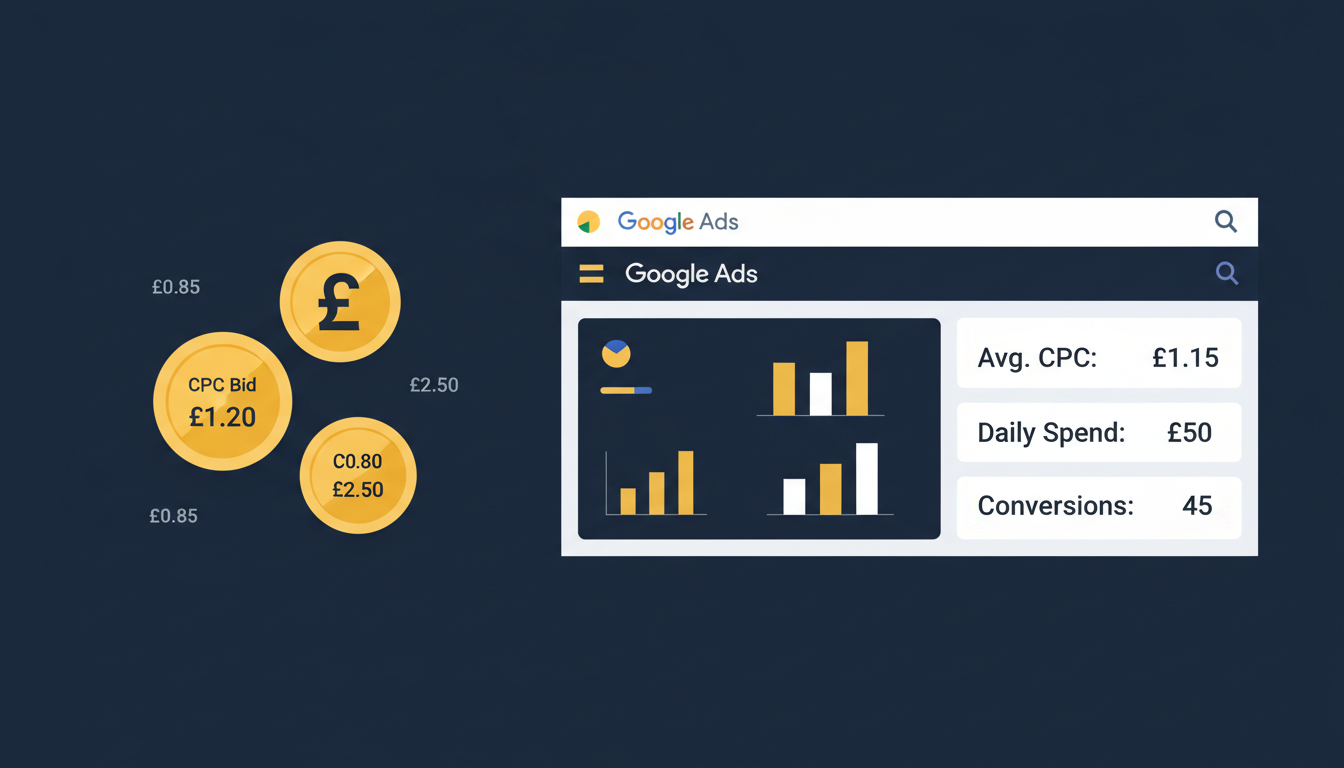
If you are a UK business owner trying to understand what Google Ads will actually cost you in 2026, you are not alone. Google Ads cost UK queries have surged by over 40% year-on-year as more small and medium enterprises recognise the power of paid search, yet struggle with the opacity of pricing. Whether you are considering PPC management for the first time or reviewing your existing spend, this guide gives you the comprehensive, data-driven breakdown you need to make informed decisions.
We have spent over a decade managing campaigns for UK businesses across every sector - from high-street retailers in Manchester to fintech startups in Shoreditch. At Cloudswitched, our London-based team handles PPC management services for companies of all sizes, and we have distilled everything we know about 2026 pricing into this single, definitive resource.
This guide covers every dimension of cost: from the click-level pricing you will pay Google, to the Google Ads management cost UK businesses should expect when hiring professional help. We will examine agency fees, freelancer rates, in-house team costs, hidden expenses most guides never mention, and practical budgeting frameworks tailored specifically for UK businesses operating in pounds sterling.
Table of Contents
- How Google Ads Pricing Works in the UK
- Average CPC by Industry in the UK (2026 Data)
- Monthly Budget Recommendations by Business Size
- PPC Management Pricing: Fee Structures Explained
- Agency vs Freelancer vs In-House: Full Cost Comparison
- What Affects Your Google Ads Costs
- Hidden Costs Most Guides Do Not Mention
- How to Calculate ROI and ROAS
- Practical Budgeting Advice for UK SMEs
- How to Choose the Right PPC Management Service
- Timeline: From Setup to Results
- Frequently Asked Questions
How Google Ads Pricing Works in the UK
Before diving into specific numbers, it is essential to understand the mechanics behind Google Ads cost UK pricing. Google Ads operates on an auction system, but it is not a simple highest-bidder-wins model. The platform uses a combination of your maximum bid and your Quality Score to determine both your ad position and the actual price you pay per click.
The Auction System Explained
Every time someone in the UK searches for something on Google, an instantaneous auction takes place. Your Ad Rank - the product of your maximum CPC bid multiplied by your Quality Score - determines whether your ad appears and in which position. Crucially, you do not pay your maximum bid. You pay just enough to beat the Ad Rank of the advertiser below you, often significantly less than your ceiling.
For UK advertisers, this means the actual Google Ads cost UK businesses pay is influenced by the competitive landscape in their specific market. A plumber in Plymouth will face very different auction dynamics compared to a corporate law firm in the City of London.
Google charges UK advertisers in GBP by default, but the exchange rate between USD and GBP can affect costs if you are competing against international advertisers bidding in dollars. Always ensure your billing currency is set to GBP to avoid unexpected conversion fees.
Cost-Per-Click (CPC) vs Other Bidding Models
While CPC is the most common model for search campaigns, UK advertisers can also use:
- CPM (Cost Per Mille): Pay per 1,000 impressions. Common for Display Network and YouTube campaigns. Typical UK CPMs range from £2 to £15.
- CPA (Cost Per Acquisition): Set a target cost per conversion and let Google optimise bids automatically. Requires conversion tracking and historical data.
- ROAS-based bidding: Target a specific return on ad spend. Ideal for e-commerce businesses with clear revenue-per-conversion data.
- Maximise Clicks: Google automatically sets bids to get the most clicks within your budget. Useful during the data-gathering phase.
For most UK SMEs starting out, manual CPC or Enhanced CPC bidding provides the best balance of control and performance. As your campaign matures and accumulates conversion data, transitioning to automated strategies like Target CPA can improve efficiency, though this is where professional PPC management expertise becomes particularly valuable.
VAT Considerations for UK Advertisers
A critical point many guides overlook: Google charges 20% VAT on all advertising costs for UK-based businesses. If you are VAT-registered, you can reclaim this through your VAT return, but it still affects your cash flow. When you see a £1,000 monthly budget, remember that your actual invoice from Google will be £1,200 including VAT. All figures in this guide are quoted exclusive of VAT unless otherwise stated.
Average CPC by Industry in the UK (2026 Data)
The Google Ads cost UK advertisers face varies enormously by sector. Based on our analysis of campaigns managed across multiple industries, combined with aggregated UK market data for 2026, here are the average cost-per-click figures UK businesses should expect.
| Industry | Average CPC (GBP) | Typical Range | Competition Level |
|---|---|---|---|
| Legal Services | £6.75 | £3.50 – £15.00 | Very High |
| Finance & Insurance | £5.90 | £2.80 – £12.00 | Very High |
| Medical & Healthcare | £4.20 | £1.80 – £9.50 | High |
| Home Services (Plumbing, Electrical) | £3.80 | £1.50 – £8.00 | High |
| B2B / SaaS | £3.50 | £1.80 – £7.50 | High |
| Education & Training | £2.90 | £1.20 – £6.00 | Medium-High |
| Real Estate | £2.70 | £1.00 – £5.50 | Medium-High |
| E-commerce (General Retail) | £1.80 | £0.50 – £4.00 | Medium |
| Travel & Hospitality | £1.60 | £0.60 – £3.50 | Medium |
| Food & Restaurants | £1.20 | £0.40 – £2.80 | Low-Medium |
| Arts & Entertainment | £0.90 | £0.30 – £2.00 | Low |
Why Do CPCs Vary So Much?
The disparity in Google Ads cost UK figures comes down to one factor: customer lifetime value. Legal firms routinely generate £5,000 to £50,000 per client engagement, so paying £6.75 per click to acquire leads is easily justifiable. A local restaurant generating £15 per cover has far less margin to work with, hence the lower competitive pressure and CPC.
Regional differences also play a significant role. London-based campaigns typically command a 15–25% premium over national averages due to higher competition density. Campaigns targeting cities like Birmingham, Leeds, and Edinburgh tend to sit close to the national average, while rural targeting can reduce CPCs by 20–30%.
London vs Rest of UK Pricing
If your business is based in London or targets London customers specifically, expect to pay materially more per click. For highly competitive sectors like legal services, London CPCs can exceed £10.00 per click, compared to £4.00–£5.00 in less competitive regions. This is a critical consideration when budgeting your Google Ads cost UK spend and is one reason why professional PPC management services can add significant value through geo-targeting optimisation.
Monthly Budget Recommendations by Business Size
One of the most common questions we hear is “How much should I spend on Google Ads?” The answer depends on your business size, industry, objectives, and competitive landscape. Here are our recommended monthly budgets for UK businesses in 2026, broken down by company size.
| Business Size | Monthly Ad Spend | Monthly Management Fee | Total Monthly Investment | Expected Monthly Clicks |
|---|---|---|---|---|
| Sole Trader / Micro (1–5 staff) | £500 – £1,500 | £300 – £600 | £800 – £2,100 | 200 – 600 |
| Small Business (6–25 staff) | £1,500 – £5,000 | £600 – £1,500 | £2,100 – £6,500 | 600 – 2,000 |
| Medium Business (26–100 staff) | £5,000 – £20,000 | £1,500 – £3,500 | £6,500 – £23,500 | 2,000 – 8,000 |
| Larger SME (100–250 staff) | £20,000 – £50,000 | £3,500 – £7,000 | £23,500 – £57,000 | 8,000 – 20,000 |
| Enterprise (250+ staff) | £50,000+ | £5,000 – £15,000+ | £55,000+ | 20,000+ |
Never set your monthly budget below £500 in ad spend. Below this threshold, you simply will not generate enough data for Google's algorithms to optimise effectively, and you will struggle to draw statistically meaningful conclusions about what is working. For most UK industries, £1,000–£2,000 per month in ad spend is the sweet spot where data accumulates fast enough to make iterative improvements within 60–90 days.
Budgeting by Objective
Your budget should be driven by your business objectives, not arbitrary numbers. Here is how to think about budgets based on what you want to achieve:
- Brand Awareness: If your primary goal is visibility and impressions, Display Network and YouTube campaigns offer lower CPCs (£0.20–£0.80) but require higher volumes. Budget £1,000–£3,000 per month minimum.
- Lead Generation: For service businesses targeting enquiries, search campaigns with carefully targeted keywords are most effective. Budget at least £1,500 per month to generate 15–30 quality leads, depending on your industry CPC.
- E-commerce Sales: Shopping campaigns and Performance Max deliver the best ROAS for online retailers. Start with £2,000 per month and scale based on profitability.
- Local Services: If you serve a specific geographic area (e.g., a plumber in Bristol), you can run effective campaigns from £500–£1,000 per month with tight location targeting.
PPC Management Pricing: Fee Structures Explained
Understanding PPC management pricing is just as important as understanding ad spend costs. The management fee - what you pay the person or agency actually running your campaigns - is a separate cost on top of your Google ad spend. Here are the four main pricing models used in the UK market.
1. Percentage of Ad Spend
The most common model for PPC management services in the UK. The agency charges a percentage of your monthly ad spend, typically between 10% and 25%. This model aligns incentives somewhat - as your spend grows, the agency earns more, but they also have more work to do managing larger campaigns.
Typical UK rates: 12–20% of ad spend, with a minimum monthly fee of £500–£1,000
Example: If your monthly ad spend is £5,000, you would pay an additional £600–£1,000 in management fees (12–20%), for a total cost of £5,600–£6,000.
2. Flat Monthly Retainer
A fixed monthly fee regardless of ad spend. This provides budget predictability and works well when your ad spend is relatively stable. It also removes the perverse incentive for agencies to recommend increasing your spend simply to increase their fee.
Typical UK rates: £800–£3,500 per month depending on campaign complexity
3. Performance-Based Pricing
The agency charges based on results - either a fee per lead generated, per sale made, or a share of revenue attributed to PPC. This sounds attractive but carries risks: agencies may prioritise lead volume over quality, or gaming attribution models to inflate their numbers.
Typical UK rates: £20–£100 per lead (varies hugely by industry) or 5–15% of PPC-attributed revenue
4. Hybrid Models
Many UK agencies now offer hybrid PPC management pricing that combines a lower base retainer with a performance bonus. For example, a £500 base fee plus 10% of ad spend, or a £1,000 base fee plus a bonus when ROAS exceeds a target threshold.
Flat Retainer
Percentage of Spend
Performance-Based
What Should You Expect to Pay for PPC Management in 2026?
The Google Ads management cost UK businesses typically encounter in 2026 breaks down as follows. For a small business spending £2,000–£5,000 per month on ads, a competent UK-based PPC management agency will charge between £800 and £1,500 per month. This should include campaign setup, ongoing optimisation, keyword research, ad copywriting, bid management, conversion tracking, and monthly reporting.
Be very wary of providers charging under £300 per month. At that price point, you are likely getting automated management with minimal human oversight, or your account is one of dozens being managed by a single junior account manager. Effective PPC management services require genuine expertise, ongoing attention, and strategic thinking - none of which come cheaply.
Agency vs Freelancer vs In-House: Full Cost Comparison
When it comes to Google Ads management cost UK businesses face, there are three primary routes: hiring a specialist agency, engaging a freelancer, or building an in-house team. Each has distinct cost profiles and trade-offs.
Option 1: PPC Agency
UK PPC agencies range from boutique specialists to large digital marketing firms. The PPC management pricing from agencies typically reflects their overhead (office space, staff, tools, insurance) but also their breadth of expertise and resource depth.
- Monthly cost: £800–£5,000+ depending on campaign complexity and ad spend
- Setup fee: £500–£2,500 (one-off, covers audit, strategy, campaign build)
- Contract length: Typically 3–12 months, with 30-day rolling after the initial period
- What you get: Dedicated account manager, team of specialists (strategist, copywriter, analyst), access to premium tools, regular reporting
Option 2: Freelance PPC Specialist
Freelancers offer a middle ground between cost and expertise. Many experienced PPC professionals in the UK have left agencies to work independently, bringing genuine expertise at lower rates.
- Monthly cost: £400–£2,000 depending on experience and campaign size
- Hourly rate: £40–£120 per hour (UK average for experienced PPC freelancers)
- Setup fee: £300–£1,000 (often lower than agencies)
- What you get: Direct access to the person doing the work, flexibility, potentially faster turnaround
Option 3: In-House PPC Manager
Hiring a dedicated in-house PPC manager is the most expensive option but gives you full control and undivided attention.
- Salary: £30,000–£55,000 per year (depending on experience and location)
- Total employment cost: £39,000–£71,500 per year (including employer NI, pension, benefits)
- Monthly equivalent: £3,250–£5,960
- Additional costs: Tool subscriptions (£200–£500/month), training (£1,000–£3,000/year), management overhead
| Factor | Agency | Freelancer | In-House |
|---|---|---|---|
| Monthly Cost (typical) | £1,200–£3,500 | £400–£2,000 | £3,250–£5,960 |
| Expertise Breadth | Team of specialists | Single expert | Single employee |
| Availability | Business hours + SLA | Variable | Full-time dedicated |
| Tool Access | Premium (included) | Basic to mid-range | Must purchase separately |
| Scalability | High | Limited | Requires hiring |
| Risk if Person Leaves | Low (team backup) | High | Very High |
| Industry Knowledge | Cross-industry insights | Niche expertise possible | Company-specific only |
| Contract Flexibility | Medium (minimum terms) | High | Low (employment law) |
For UK SMEs spending under £10,000 per month on ads, an agency or experienced freelancer almost always delivers better value than an in-house hire. The maths simply does not work: an in-house PPC manager costs £40,000–£70,000+ per year in total employment costs, whereas a quality agency delivering the same or better results will cost £10,000–£18,000 per year in management fees.
The Cloudswitched Approach
At Cloudswitched, our PPC management services are designed specifically for UK businesses that want agency-level expertise without enterprise-level pricing. As a London-based team, we understand the UK market intimately - from HMRC compliance requirements for financial services advertising to Advertising Standards Authority (ASA) rules for health claims. Our PPC management pricing is transparent, with flat monthly retainers that include everything from strategy to reporting, so you always know exactly what your Google Ads management cost UK investment will be.
What Affects Your Google Ads Costs
Understanding what drives the Google Ads cost UK advertisers experience is crucial for controlling your spend and improving efficiency. Here are the seven primary factors.
1. Quality Score
Quality Score is Google's 1–10 rating of the quality and relevance of your keywords, ads, and landing pages. It is the single most impactful factor in determining your actual CPC. A Quality Score of 10 can reduce your CPC by up to 50% compared to the baseline, while a score of 1 can inflate it by up to 400%.
The three components of Quality Score are:
A well-structured campaign with tightly themed ad groups, relevant ad copy, and optimised landing pages can achieve Quality Scores of 7–10, dramatically reducing your Google Ads cost UK per click. This is one of the primary areas where professional PPC management delivers tangible financial returns - even a 1-point Quality Score improvement across your account can save 10–15% on your total ad spend.
2. Industry Competition
As the CPC table above demonstrates, your industry fundamentally determines your baseline costs. You cannot control market competition, but you can use strategies like long-tail keywords, geo-targeting, and dayparting to find less competitive pockets within your market.
3. Keyword Selection and Match Types
Broad match keywords cast the widest net but often attract irrelevant clicks, wasting budget. Exact match keywords are more expensive per click but deliver higher-quality traffic. The right match type strategy depends on your campaign maturity, budget, and objectives.
In 2026, Google's broad match has become significantly more intelligent thanks to AI improvements, but it still requires careful management. A robust negative keyword list is essential regardless of match type. For UK-specific campaigns, consider adding negative keywords for other English-speaking markets (e.g., “US”, “USA”, “Australia”) to avoid irrelevant international traffic.
4. Geographic Targeting
Targeting London specifically will increase CPCs by 15–25% compared to broader UK targeting. Conversely, targeting specific regions, counties, or postcodes can reduce costs while maintaining relevance. For local businesses, radius targeting around your service area is one of the most effective cost-control mechanisms available.
5. Ad Scheduling (Dayparting)
Not all hours are equal. For B2B companies, CPCs tend to be highest during standard business hours (9am–5pm, Monday–Friday) when competition is fiercest. For consumer-facing businesses, evenings and weekends may see lower CPCs with higher conversion intent. Analysing your conversion data by time of day and adjusting bid modifiers accordingly can reduce wasted spend by 10–20%.
6. Device Targeting
Mobile CPCs are typically 15–20% lower than desktop in the UK market, but conversion rates vary significantly by industry. For e-commerce, mobile now accounts for over 60% of UK online traffic but only 40% of conversions. Effective PPC management involves setting device bid adjustments based on actual conversion performance data, not assumptions.
7. Bidding Strategy
Your choice of bidding strategy has a profound impact on costs. Manual CPC gives you the most control but requires constant attention. Automated strategies like Target CPA and Target ROAS use machine learning to optimise bids in real-time, but they need sufficient conversion data (at least 30–50 conversions per month) to work effectively.
For UK businesses spending under £3,000 per month, Enhanced CPC is often the best starting strategy. It gives Google limited flexibility to adjust your manual bids while you maintain overall control. As you accumulate data, transitioning to fully automated bidding through professional PPC management services can unlock further efficiencies.
Hidden Costs Most Guides Do Not Mention
When calculating your total Google Ads cost UK investment, many businesses overlook several significant hidden costs. Being aware of these ensures your budget is realistic from day one.
1. Landing Page Development
Sending Google Ads traffic to your homepage is one of the most common and costly mistakes. Effective PPC requires dedicated landing pages tailored to each campaign or ad group. Professional landing page design and development costs £500–£3,000 per page in the UK, and most campaigns need 3–10 landing pages.
2. Conversion Tracking Setup
Proper conversion tracking is non-negotiable. Without it, you are flying blind - unable to measure ROI or optimise effectively. Setting up Google Tag Manager, conversion tracking, and potentially Google Analytics 4 enhanced e-commerce tracking typically costs £300–£1,500 as a one-off investment. Many PPC management services include this in their setup fee, but not all do - always ask.
3. Creative Assets
Display campaigns, YouTube ads, and Performance Max campaigns require visual and video creative. Budget £500–£5,000 for initial creative production, plus ongoing costs for refreshing creative to combat ad fatigue. Even search campaigns need high-quality ad copy, responsive search ad variations, and ad extensions - all of which require skilled copywriting.
4. Click Fraud
Click fraud costs UK advertisers an estimated £1.4 billion annually. While Google has built-in protections, they do not catch everything. Third-party click fraud detection tools like ClickCease or Lunio cost £50–£200 per month but can save significantly more in wasted ad spend, particularly in competitive industries where competitor clicking is prevalent.
5. Tool and Software Subscriptions
Professional PPC management relies on tools beyond the free Google Ads interface. Common tools and their UK costs include:
- SEMrush or Ahrefs: £80–£350 per month (keyword research, competitive analysis)
- Optmyzr or Adalysis: £150–£400 per month (PPC automation and auditing)
- Call tracking (e.g., Infinity, Mediahawk): £50–£200 per month
- Unbounce or Instapage: £60–£200 per month (landing page builders)
- Reporting tools (e.g., Looker Studio connectors, Supermetrics): £30–£150 per month
When you hire an agency for PPC management services, these tool costs are typically included in their fee. This is one of the hidden advantages of the agency model - your PPC management pricing gives you access to a full technology stack that would cost £500+ per month to replicate independently.
6. VAT on Everything
As mentioned earlier, 20% VAT applies to your Google ad spend, agency fees, tool subscriptions, and creative production. For a non-VAT-registered business, this adds 20% to every cost line. Even VAT-registered businesses need to account for the cash flow impact of paying VAT upfront and reclaiming it later.
7. Opportunity Cost of Learning
If you choose to manage Google Ads yourself, the learning curve is steep. The platform changes constantly, with Google making over 5,000 updates per year to its advertising products. The time you spend learning and managing PPC is time not spent on your core business. For most UK business owners, the opportunity cost far exceeds the cost of hiring professional PPC management.
How to Calculate ROI and ROAS
Understanding your return on investment is the only way to know whether your Google Ads cost UK spending is justified. Here are the key metrics and formulas every UK advertiser needs.
ROAS (Return on Ad Spend)
ROAS measures the revenue generated per pound spent on advertising. It is the most common metric for evaluating PPC performance.
Formula: ROAS = Revenue from Google Ads ÷ Total Google Ads Cost
Example: If you spend £3,000 on Google Ads and generate £12,000 in revenue, your ROAS is 4.0x (or 400%).
What constitutes a “good” ROAS varies by industry and business model. For e-commerce with 40% gross margins, you need a minimum ROAS of 2.5x just to break even. For lead generation businesses, ROAS calculations are more complex because revenue attribution is less direct.
CPA (Cost Per Acquisition)
Formula: CPA = Total Google Ads Cost ÷ Number of Conversions
Example: £3,000 spend generating 25 enquiries = £120 CPA
For UK service businesses, target CPAs typically range from:
- Home services: £30–£80 per enquiry
- Professional services: £50–£200 per enquiry
- Legal services: £100–£500 per case enquiry
- B2B SaaS: £80–£300 per demo request
- E-commerce: £10–£50 per sale
True ROI (Including Management Costs)
ROAS only accounts for ad spend. True ROI must include all costs, including your Google Ads management cost UK fees.
Formula: True ROI = (Revenue − Total Costs) ÷ Total Costs × 100
Total Costs include: Ad spend + management fees + landing page costs + tool costs + creative production
Example:
- Monthly ad spend: £3,000
- Monthly management fee: £1,200
- Amortised landing page costs: £100
- Total monthly cost: £4,300
- Monthly revenue from PPC: £15,000
- True ROI: (£15,000 − £4,300) ÷ £4,300 × 100 = 249% ROI
Benchmarking Your Performance
Here is how UK campaigns typically perform by maturity:
If your campaigns are not reaching these benchmarks after 6 months, it is a strong signal that your current approach to PPC management needs to change - whether that means switching providers, restructuring campaigns, or investing in better landing pages.
Practical Budgeting Advice for UK SMEs
The theory of Google Ads cost UK is one thing; putting together a practical, realistic budget is another. Here is our framework for UK SMEs at every stage.
Step 1: Calculate Your Maximum CPA
Before setting any budget, you need to know the maximum you can afford to pay for a customer acquisition. This is the foundation of all PPC budgeting.
For service businesses: What is your average customer worth? If a new client generates £2,000 in revenue with 50% gross margin, your gross profit per client is £1,000. If you want a 3x return on marketing spend, your maximum CPA is £333.
For e-commerce: What is your average order value (AOV) and gross margin? If your AOV is £80 with a 45% margin, your gross profit per sale is £36. Targeting a 3x return means your maximum CPA is £12.
Step 2: Estimate Required Clicks
Using your industry's average conversion rate (typically 2–5% for search campaigns in the UK), calculate how many clicks you need for each conversion.
Example: At a 3% conversion rate, you need approximately 33 clicks per conversion. With a target of 20 conversions per month, you need about 660 clicks.
Step 3: Calculate Required Ad Spend
Multiply your required clicks by your industry's average CPC.
Example: 660 clicks × £3.50 CPC (B2B average) = £2,310 monthly ad spend
Step 4: Add Management Costs
Add your PPC management pricing to get your total monthly investment.
Example: £2,310 ad spend + £1,200 management fee = £3,510 total monthly cost
Step 5: Validate Against Revenue Expectations
Check that your expected revenue justifies the investment.
Example: 20 conversions × £2,000 average revenue = £40,000 revenue. True ROI: (£40,000 − £3,510) ÷ £3,510 = 10.4x return. This is a strong investment case.
Budget Allocation Across Campaign Types
For UK SMEs running multiple campaign types, here is how we recommend allocating your budget:
- Search Campaigns: 60% of budget - your primary lead or sales generation engine
- Performance Max / Shopping: 20% of budget - for e-commerce businesses, or brand coverage for service businesses
- Remarketing: 15% of budget - recapture visitors who did not convert initially (highest ROAS channel)
- Display / YouTube: 5% of budget - brand awareness and top-of-funnel demand generation
Monthly Budget Checklist for UK SMEs
Use this checklist to ensure your budget covers all necessary components:
- □ Google ad spend (including 20% VAT buffer if not VAT-registered)
- □ PPC management agency or freelancer fee
- □ Landing page hosting and maintenance
- □ Call tracking (if phone leads are important)
- □ Click fraud protection (recommended for competitive industries)
- □ Creative refresh budget (quarterly for display/video)
- □ Conversion tracking maintenance (quarterly review)
- □ A/B testing budget (dedicate 10–15% of spend to testing)
How to Choose the Right PPC Management Service
Selecting the right provider for your PPC management services is one of the most consequential decisions you will make for your digital marketing. The wrong choice can waste thousands of pounds; the right one can transform your business growth. Here is what to evaluate.
Essential Criteria
Google Partner status: Look for Google Partner or Premier Google Partner certification. This verifies the agency has passed Google's exams, manages sufficient ad spend, and maintains campaign performance standards. While not a guarantee of quality, it is a useful baseline filter.
UK-specific experience: The UK advertising market has unique characteristics - from ASA compliance to VAT handling to cultural nuances in ad copy. Ensure your provider has genuine UK experience, not just a UK office with campaigns managed from overseas.
Industry experience: A provider who has managed campaigns in your industry will ramp up faster and avoid common pitfalls. Ask for case studies and references from businesses similar to yours.
Transparent reporting: You should receive regular reports that cover key metrics (spend, clicks, conversions, CPA, ROAS) in plain English. Beware of providers who dazzle with vanity metrics (impressions, click-through rate) while avoiding conversation about actual business outcomes.
Account ownership: Your Google Ads account should always remain under your ownership. The agency should access it via manager account (MCC) link. If a provider insists on creating and owning the account themselves, walk away - this creates lock-in and you will lose all your campaign data and history if you leave.
Red Flags to Watch For
- Guaranteeing specific results (“We guarantee page 1 of Google” or “We guarantee 50 leads per month”). No legitimate provider can guarantee specific PPC outcomes.
- Long lock-in contracts (12+ months with no break clause). Confidence in their ability should mean they are happy with shorter commitments.
- Refusing to share Google Ads account access. You should always have full visibility into your own account.
- Vague reporting that focuses on activity (“We made 47 bid adjustments this month”) rather than outcomes (“CPA decreased by 12% while conversion volume grew 8%”).
- Unrealistically low PPC management pricing (£99/month “all-inclusive” deals are almost always automated management with no strategic oversight).
- Not asking about your business goals, target audience, or competitive landscape during the sales process.
Questions to Ask Before Signing
- Who specifically will be managing my account, and what is their experience level?
- How many accounts does each account manager handle simultaneously?
- What is your typical onboarding process and timeline?
- How do you approach keyword research and negative keyword management?
- What tools do you use beyond the native Google Ads interface?
- How often will we have strategic review calls (not just reports)?
- What is your approach to landing page optimisation?
- How do you handle underperforming campaigns?
- What does your contract termination process look like?
- Can you provide references from current UK clients in a similar industry?
Evaluating PPC Management Pricing: Value vs Cost
The cheapest PPC management pricing is rarely the best value. Consider this scenario: Agency A charges £500/month and achieves a 2x ROAS on your £3,000 ad spend, generating £6,000 revenue. Agency B charges £1,200/month but achieves a 5x ROAS on the same spend, generating £15,000 revenue. Agency B costs £700 more per month but delivers £9,000 more in revenue. The Google Ads management cost UK businesses face should always be evaluated in the context of the return it generates.
This is why we always recommend evaluating PPC management services on net return rather than absolute fee. A higher-quality provider charging £1,200/month that delivers £15,000 in revenue is far more valuable than a budget provider at £500/month delivering £6,000.
Timeline: From Setup to Results
One of the most common misconceptions about Google Ads is that results are instant. While you will see traffic from day one, building a truly optimised, profitable campaign takes time. Here is a realistic timeline for UK businesses.
Week 1–2: Discovery and Strategy
Your PPC management provider conducts a thorough business audit, competitor analysis, keyword research, and campaign strategy development. If you are switching from a previous provider, an account audit identifies quick wins and areas of waste. Conversion tracking is set up or verified. Landing pages are assessed and improvements recommended.
Week 2–4: Campaign Build and Launch
Campaign structure is built, ad groups created, ad copy written, extensions configured, and bidding strategies set. The campaign goes live, typically starting with conservative bids and budgets to gather initial data. You will see your first clicks and potentially your first conversions within days of launch.
Month 1–3: Data Gathering and Initial Optimisation
This is the learning phase. Your provider analyses search term reports, identifies negative keywords, refines ad copy through A/B testing, adjusts bids, and optimises for the best-performing keywords and audiences. ROAS during this phase is typically 1.5–2.5x. Patience is critical - cutting budget here is counterproductive as it slows data accumulation.
Month 3–6: Aggressive Optimisation
With sufficient data, your provider can now make data-driven decisions about keyword expansion, bid strategy transitions (e.g., moving to Target CPA), landing page A/B tests, and budget reallocation. ROAS typically improves to 2.5–4.0x during this phase. Campaign structure may be refined based on conversion data.
Month 6–12: Scaling and Refinement
Campaigns are now mature with established conversion patterns. Focus shifts to scaling profitable campaigns, testing new ad formats (Performance Max, YouTube, Display), expanding to new keyword segments, and maximising lifetime value. ROAS of 4.0–6.0x is achievable for well-managed accounts. Your provider should present a scaling roadmap based on diminishing returns analysis.
Year 2+: Mature Optimisation
Established campaigns with historical data can achieve ROAS of 5.0–8.0x or higher. Focus shifts to maintaining performance, adapting to market changes, leveraging seasonal patterns, and continuously testing new opportunities. The Google Ads cost UK per acquisition should stabilise or decrease as account history and Quality Scores strengthen over time.
Advanced Cost Factors for 2026
The Google Ads landscape in 2026 has evolved significantly from even a few years ago. Several new factors are now influencing the Google Ads cost UK advertisers face.
AI-Powered Campaigns and Automation
Google's push toward AI-driven campaigns (Performance Max, AI-generated ad assets, automated bidding) has fundamentally changed the PPC management landscape. While automation can improve efficiency, it also means less granular control. The role of professional PPC management services has shifted from manual bid management toward strategic oversight, creative direction, and ensuring the AI is optimising toward genuinely valuable business outcomes rather than just any conversion.
For UK businesses, this means the skills required for effective PPC management have changed. Look for providers who understand how to feed Google's AI the right signals (accurate conversion values, proper audience signals, quality first-party data) rather than those who boast about making hundreds of manual bid adjustments per week.
First-Party Data and Privacy
With the ongoing deprecation of third-party cookies and the UK's post-Brexit data protection framework (UK GDPR), leveraging first-party data has become essential for cost-efficient PPC. Businesses with robust customer data can feed this into Google's algorithms through Customer Match and Enhanced Conversions, achieving 20–30% better targeting efficiency.
The cost implication: businesses investing in proper data infrastructure and consent management see meaningfully lower CPAs than those relying solely on Google's contextual targeting. This is an area where the upfront investment (typically £2,000–£10,000 for setup) pays dividends in reduced ongoing ad costs.
Video and Visual Search
YouTube Shorts ads and visual search campaigns have emerged as cost-effective channels in 2026, with CPCs 30–50% lower than traditional search for many UK industries. However, they require video creative, which adds production costs. For UK SMEs, simple smartphone-shot videos with professional editing (costing £200–£500 per video) can perform surprisingly well on these platforms.
Local Services Ads (LSAs)
Google's Local Services Ads, which operate on a pay-per-lead model rather than pay-per-click, have expanded significantly across UK service categories. For plumbers, electricians, locksmiths, solicitors, and other local service providers, LSAs can offer 20–40% lower cost per lead compared to traditional search ads. However, they require Google Screened or Google Guaranteed verification, which involves background checks and proof of insurance - a process that takes 2–6 weeks in the UK.
Proven Cost-Saving Strategies for UK Advertisers
Beyond the fundamentals, here are advanced strategies that experienced PPC management professionals use to reduce Google Ads cost UK spending while maintaining or improving results.
1. Negative Keyword Mining
Regularly reviewing search term reports and adding negative keywords is the single most effective ongoing optimisation task. A well-maintained negative keyword list can reduce wasted spend by 15–25%. For UK campaigns specifically, consider negating irrelevant geographic terms, competitor brand names (unless you are deliberately bidding on them), and informational queries that indicate research rather than purchase intent.
2. Single Keyword Ad Groups (SKAGs) and Themed Ad Groups
While the PPC community has moved away from pure SKAGs toward themed ad groups in 2026, the principle remains: tighter keyword-to-ad relevance improves Quality Scores and reduces CPCs. Group 5–10 closely related keywords per ad group, with ad copy that directly addresses the shared intent behind those keywords.
3. Responsive Search Ad Optimisation
Google's Responsive Search Ads (RSAs) test different combinations of your headlines and descriptions. Providing 10–15 distinct headlines and 4 diverse descriptions gives the algorithm enough material to find winning combinations. Pin your strongest headline to position 1 to ensure it always appears. Review asset-level performance reports monthly and replace underperforming assets.
4. Dayparting and Bid Scheduling
Analyse your conversion data by hour of day and day of week. Reduce bids during periods with low conversion rates and increase them during peak conversion windows. For a UK B2B company, this might mean bidding 20% higher during Tuesday–Thursday 10am–2pm (peak decision-making hours) and 30% lower during weekends.
5. Audience Layering
Add audience segments (in-market, affinity, custom intent) as observation-only layers to your search campaigns. Once you have enough data, apply bid adjustments to high-performing audiences. This is particularly effective for UK campaigns where combining geographic targeting with audience signals can dramatically improve relevance.
6. Landing Page Speed and Experience
Landing page load speed directly affects Quality Score, which directly affects CPC. For every additional second of load time, conversion rates drop by approximately 7%. Ensure your landing pages load in under 3 seconds on mobile (test with Google PageSpeed Insights). For UK audiences, hosting on UK-based or European servers ensures low latency.
7. Conversion Value Optimisation
If you are using value-based bidding strategies, ensure your conversion values accurately reflect true business value. For lead generation businesses, assign different values to different lead types (e.g., a phone call enquiry might be worth £50, while a contact form submission is worth £25, based on historical close rates). This helps Google's algorithm prioritise the most valuable conversions.
Industry-Specific Budgeting Guidance for UK Businesses
Different industries require fundamentally different approaches to PPC management and budgeting. Here is targeted guidance for the UK's most common sectors.
Professional Services (Legal, Accounting, Consulting)
High CPCs (£4–£15) but high customer lifetime values. Focus on exact match and phrase match keywords with strong commercial intent. Budget minimum £2,000/month in ad spend. Emphasise phone call conversions and form submissions. UK-specific considerations: FCA compliance for financial advisers, SRA rules for solicitors, and ASA guidelines all affect ad copy. Professional PPC management services with sector expertise are strongly recommended.
E-Commerce and Retail
Lower CPCs (£0.50–£4) but higher volume requirements. Shopping campaigns and Performance Max are essential. Budget minimum £1,500/month. UK-specific: ensure product feeds include GBP pricing, UK shipping information, and comply with consumer rights regulations. Feed optimisation is critical for Shopping campaign success and is a key area where professional PPC management adds value.
Home Services and Trades
Moderate CPCs (£1.50–£8) with strong local intent. Local Services Ads should be the first channel tested. Geographic targeting is critical - bid higher within your service radius, lower outside it. Budget minimum £500/month for a single location. Tracking phone calls is essential as most home service enquiries come via telephone.
B2B and SaaS
Moderate-to-high CPCs (£1.80–£7.50) with longer sales cycles. Lead quality matters more than volume. Use offline conversion tracking to feed actual revenue data back to Google. Budget minimum £2,000/month. UK-specific: consider targeting by company size using LinkedIn audience integration and employer-based audience signals.
Healthcare and Medical
High CPCs (£1.80–£9.50) with strict regulatory requirements. Google has specific policies for healthcare advertising in the UK, and CQC-regulated services face additional restrictions. Professional PPC management services with healthcare experience are virtually mandatory to avoid policy violations that can result in account suspension.
UK Google Ads Cost Projections for the Rest of 2026
Based on current market trends and our analysis of the UK advertising landscape, here are our projections for the remainder of 2026.
CPC Trends
Average UK CPCs are expected to increase by 5–8% year-on-year in 2026, driven by increasing advertiser adoption and Google's ongoing push toward AI-driven campaigns that can accommodate higher bids. Industries seeing the fastest CPC growth include healthcare (post-pandemic demand), renewable energy services, and cybersecurity B2B.
Seasonal Patterns
UK-specific seasonal trends to factor into your budgeting:
- January: New Year resolutions drive spikes in health, fitness, education, and financial planning CPCs
- March–April: End of tax year creates surge in accounting, financial advice, and pension-related searches
- May–July: Summer planning increases travel, home improvement, and outdoor leisure CPCs
- September: Back-to-school and university season affects education and student-related verticals
- October–December: Black Friday, Christmas, and year-end planning create the highest CPCs of the year across most industries, with some categories seeing 30–50% CPC increases
Smart PPC management involves adjusting budgets to capitalise on seasonal opportunities while maintaining presence during lower-competition periods when CPCs offer better value.
Platform Evolution
Google's continued investment in AI features means that the Google Ads management cost UK businesses face will increasingly shift from manual campaign management toward strategic and creative services. Providers offering holistic PPC management services that encompass creative production, conversion rate optimisation, and data strategy alongside traditional campaign management will deliver the strongest results.
Frequently Asked Questions
How much does Google Ads cost per month in the UK?
The total monthly Google Ads cost UK businesses face includes two components: your ad spend (the amount Google charges for clicks) and your management costs. For a typical UK SME, expect to invest £2,000–£6,500 per month total, comprising £1,500–£5,000 in ad spend plus £500–£1,500 in PPC management pricing. However, costs vary significantly by industry, competition level, and business objectives.
What is a good CPC for Google Ads in the UK?
A “good” CPC depends entirely on your industry and the value of each click. The UK average across all industries is approximately £2.50, but this ranges from £0.30 for low-competition leisure keywords to £15+ for competitive legal terms. What matters more than absolute CPC is your cost per conversion and ROAS. A £6.00 CPC that converts at 5% is more cost-effective than a £1.00 CPC that converts at 0.5%.
Is Google Ads worth it for small businesses in the UK?
Yes, when managed correctly. Google Ads delivers immediate visibility, measurable results, and controllable costs. The key factors for success are: sufficient budget (minimum £500/month in ad spend), proper conversion tracking, relevant landing pages, and competent management. UK SMEs that invest in professional PPC management services typically see a 3–5x return on their total investment within 6 months.
How much should I budget for PPC management in the UK?
For professional PPC management, budget between £500 and £3,500 per month depending on your campaign complexity and ad spend level. As a rule of thumb, management fees should represent 15–25% of your total Google Ads investment (ad spend plus management fee combined). Anything less than £300/month is unlikely to provide meaningful strategic management.
How long before Google Ads starts generating results?
You will see clicks and website traffic from day one. First conversions typically appear within the first 1–2 weeks. However, campaigns need 2–3 months to accumulate enough data for meaningful optimisation, and 6 months to reach maturity. Expect ROAS to improve steadily from 1.5–2.5x in the first quarter to 4–6x by the end of the first year.
Should I manage Google Ads myself or hire a professional?
If your monthly ad spend is under £500 and you have the time to learn, self-management is feasible for simple local campaigns. For anything more complex, professional PPC management almost always delivers better returns. The cost of an agency (£800–£1,500/month) is typically recovered many times over through improved Quality Scores, better conversion rates, and reduced wasted spend. Consider the opportunity cost: every hour you spend learning Google Ads is an hour not spent on your core business.
What is the difference between Google Ads cost and Google Ads management cost?
Google Ads cost UK refers to what you pay Google directly for clicks on your ads. Google Ads management cost UK refers to what you pay a professional (agency, freelancer, or in-house team) to set up, optimise, and maintain your campaigns. Your total investment is the sum of both. For UK businesses, ad spend is typically 70–80% of total cost, with management fees making up the remaining 20–30%.
Do Google Ads costs include VAT?
Google charges 20% VAT on all advertising costs for UK businesses. If you are VAT-registered, this is reclaimable. Agency management fees are also subject to VAT. Always clarify whether quoted PPC management pricing is inclusive or exclusive of VAT to avoid budget surprises.
How can I reduce my Google Ads costs without reducing results?
The most effective cost-reduction strategies are: improving Quality Scores through better ad relevance and landing page experience (can reduce CPCs by 30–50%), aggressive negative keyword management (eliminates 15–25% of wasted spend), dayparting to focus budget on high-converting time periods, and conversion rate optimisation on landing pages (more conversions from the same spend). Professional PPC management services specialise in exactly these optimisations.
What happens if I pause my Google Ads campaigns?
Pausing campaigns costs nothing - you only pay when someone clicks. However, be aware that pausing for extended periods (more than 30 days) can cause your Quality Scores to reset and your campaign history to lose momentum. When you reactivate, Google's algorithms essentially start the learning process again. If budget is tight, it is usually better to reduce daily spend to a minimum (£5–£10/day) rather than pausing entirely.
Conclusion: Making Google Ads Work for Your UK Business in 2026
Understanding Google Ads cost UK pricing is the foundation of making informed marketing investment decisions. The key takeaways from this guide are:
- UK CPCs average £2.50 but vary from £0.30 to £15+ depending on your industry and location
- Total monthly investment for most UK SMEs ranges from £2,000 to £6,500, including ad spend and management fees
- Professional PPC management typically costs £800–£3,500 per month and delivers 2–4x better results than self-management for most businesses
- Results take time - expect 3–6 months to reach optimised performance, with ROAS improving from 1.5x to 4–6x over that period
- Hidden costs (landing pages, creative, tools, VAT) can add 30–50% to your expected budget - plan for them from the start
- Quality Score is the single biggest lever for reducing CPCs - invest in ad relevance and landing page quality
The UK digital advertising market is more competitive than ever in 2026, but Google Ads remains one of the highest-ROI marketing channels available when managed correctly. Whether you are spending £500 or £50,000 per month, the principles of strategic keyword targeting, compelling ad creative, optimised landing pages, and data-driven decision making apply universally.
At Cloudswitched, we have helped hundreds of UK businesses navigate the complexity of Google Ads and achieve measurable, profitable growth. Our London-based PPC management services combine deep platform expertise with genuine understanding of the UK market, delivering transparent results that justify every pound of investment.
Ready to Maximise Your Google Ads ROI?
Whether you are launching your first campaign or looking to improve your existing Google Ads management cost UK efficiency, our London-based PPC experts can help. Get a free, no-obligation audit of your current Google Ads performance or a tailored proposal for new campaigns.

Cloudswitched
London-based managed IT services provider offering support, cloud solutions and cybersecurity for SMEs.


