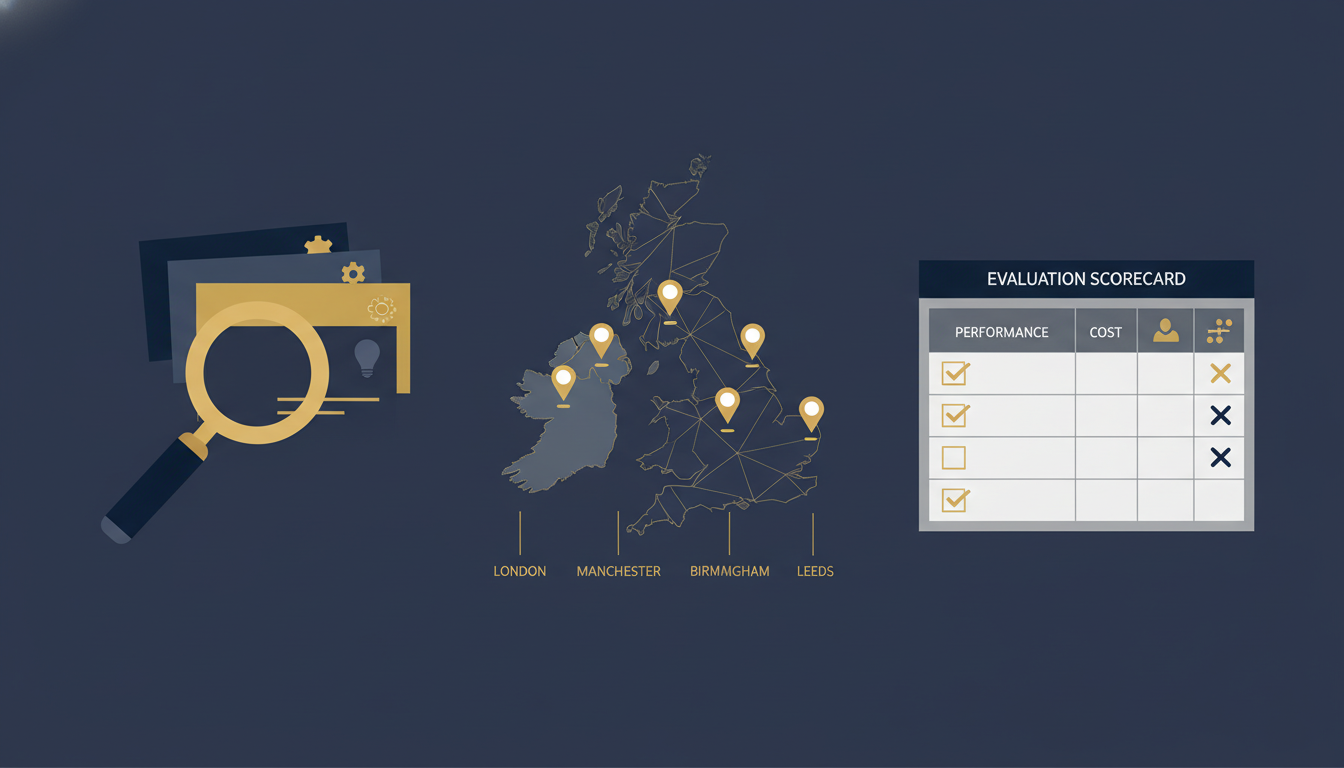
Pay-per-click advertising remains one of the most effective digital marketing channels for UK businesses. Whether you are running Google Ads, Microsoft Ads, or shopping campaigns, the right PPC agency can transform your advertising spend into measurable revenue. But with thousands of agencies across the country—from boutique specialists in Bristol to full-service firms in the capital—how do you separate the genuine experts from the pretenders?
This comprehensive guide walks you through everything you need to know about selecting the right PPC agency for your business. We cover certifications, pricing models, red flags, regional considerations across major UK cities, onboarding expectations, reporting standards, and how to measure long-term agency performance. Whether you are searching for a PPC agency London firms trust or exploring options in Manchester, Birmingham, Leeds, or Bristol, this guide will equip you with the knowledge to make a confident, informed decision.
Why Choosing the Right PPC Agency Matters
PPC advertising is not a set-it-and-forget-it channel. It requires daily optimisation, constant keyword research, competitive analysis, bid management, and creative testing. A poorly managed Google Ads account can burn through thousands of pounds in weeks with nothing to show for it. Conversely, a skilled PPC agency can deliver a consistent pipeline of qualified leads, sales, and brand visibility at a cost that makes commercial sense.
The stakes are particularly high for UK businesses operating in competitive markets. Cost-per-click rates have risen steadily across most sectors, with industries like legal services, finance, and insurance seeing average CPCs above £5. In this environment, every pound of your advertising budget needs to work harder than ever, and the agency you choose is the single biggest factor determining whether it does.
Consider the mathematics: if you are spending £5,000 per month on Google Ads, your annual investment is £60,000. Add agency fees of £1,000–£2,500 per month, and you are looking at a total outlay of £72,000–£90,000 per year. At that level of investment, the difference between a mediocre agency and an excellent one is not marginal—it can be tens of thousands of pounds in revenue.
Before approaching any PPC agency, ensure you have clarity on your own business goals. Are you prioritising lead generation, e-commerce sales, brand awareness, or market share? The more specific your objectives, the easier it becomes to evaluate whether an agency is the right fit. Strong agencies will push back and help refine vague goals—weak ones will simply agree with whatever you say.
Essential Certifications and Credentials to Look For
The PPC industry has a range of certifications that indicate varying levels of competence and platform access. While certifications alone do not guarantee results, they do provide a baseline level of assurance that an agency understands the platforms they are managing. Here is what to look for when evaluating a PPC agency Manchester firms recommend or any agency across the UK.
Google Partner and Premier Partner Status
Google’s Partner programme is the most widely recognised certification in PPC. To achieve Partner status, an agency must demonstrate:
- Performance: Maintaining a Google Ads optimisation score of at least 70% across managed accounts
- Spend: Managing a minimum of £8,000 (approximately $10,000 USD) in ad spend over 90 days across all accounts
- Certification: Having at least 50% of account strategists certified in Google Ads, with each holding at least one certification in Search, Display, Video, Shopping, or Apps
Google Premier Partners represent the top 3% of participating agencies in a given country. This status requires significantly higher spend thresholds, stronger account performance, and year-on-year growth. If you are evaluating a PPC agency Birmingham businesses trust, Premier Partner status is a strong positive signal.
Microsoft Advertising Partner
While Google dominates the UK search market, Microsoft Ads (Bing) accounts for approximately 10–12% of UK search volume. An agency with Microsoft Advertising Partner status can help you tap into this often-overlooked channel, where CPCs tend to be 20–35% lower than Google and the audience skews towards higher-income demographics.
Industry-Specific Certifications
Beyond platform certifications, look for agencies with recognised industry credentials:
| Certification | Issuing Body | What It Indicates | Relevance |
|---|---|---|---|
| Google Premier Partner | Top 3% of agencies by performance and spend | Essential | |
| Google Partner | Meets baseline competency and spend requirements | Minimum standard | |
| Microsoft Advertising Partner | Microsoft | Certified in Bing Ads management | Important for multi-platform |
| Meta Blueprint Certification | Meta | Competence in Facebook and Instagram advertising | If running social PPC |
| Google Analytics 4 Certification | Google Skillshop | Proficiency in GA4 tracking and attribution | Essential for reporting |
| DMA Membership | Data & Marketing Association | Adheres to UK data marketing best practices | Trust signal |
| ISO 27001 | International Standards | Information security management certification | Important for data handling |
Ask any prospective agency to share their Google Partner badge verification link. Genuine Partners have a public profile on the Google Partner directory that you can verify independently. If an agency claims Partner status but cannot produce a verification link, treat it as a red flag.
PPC Agency Pricing Models Explained
Understanding how PPC agencies charge is crucial to evaluating value for money. There is no single “correct” pricing model—each has advantages and disadvantages depending on your business size, budget, and goals. Here are the three most common structures you will encounter when searching for a PPC agency Leeds businesses work with or any agency across the UK.
1. Percentage of Ad Spend
The most common model in the UK market. The agency charges a percentage of your total monthly advertising spend, typically ranging from 10% to 20%. For example, if you spend £10,000 per month on ads, you would pay £1,000–£2,000 in management fees.
Pros: Fees scale naturally with your budget. Simple to understand and calculate. The agency is incentivised to grow your account because their fees grow with it.
Cons: Creates an inherent conflict of interest—the agency earns more when you spend more, regardless of whether increased spend improves your results. Can become very expensive at higher spend levels. A £100,000/month account at 15% means £15,000 in monthly fees.
2. Flat Monthly Fee
The agency charges a fixed monthly fee regardless of your ad spend. This model is growing in popularity among UK agencies, particularly those working with SMEs. Typical flat fees range from £500–£3,000 per month for SMEs and £3,000–£10,000+ for enterprise accounts.
Pros: Predictable costs. No conflict of interest around spend levels. Budget recommendations are more likely to be genuinely in your interest. Easier to plan annual marketing budgets.
Cons: The scope of work may be tightly defined. Additional platforms, campaigns, or significant account expansion may incur extra charges. Some agencies use low flat fees as a loss leader, then upsell aggressively.
3. Performance-Based / Hybrid
The agency charges a lower base fee plus a bonus tied to specific performance metrics (leads generated, ROAS achieved, revenue attributed). This model aligns agency incentives directly with your business outcomes.
Pros: Maximum alignment between your goals and the agency’s incentives. If they do not perform, you pay less. Encourages the agency to focus on quality over quantity.
Cons: Requires robust tracking and clear attribution. Disputes can arise over what constitutes a “qualified lead” or valid conversion. The agency may focus exclusively on easy wins and neglect long-term brand building.
Flat Fee Model
Percentage of Spend
Performance-Based
What UK Businesses Actually Pay: A Realistic Breakdown
To give you a grounded sense of what PPC management costs across the UK market, here is a breakdown based on business size and typical monthly ad spend:
| Business Size | Monthly Ad Spend | Typical Monthly Fee (Flat) | Typical Monthly Fee (% Spend) | Annual Total Investment |
|---|---|---|---|---|
| Micro (1–9 staff) | £500–£2,000 | £400–£800 | £75–£400 (15–20%) | £10,800–£33,600 |
| Small (10–49 staff) | £2,000–£10,000 | £800–£2,000 | £300–£1,500 (12–15%) | £33,600–£144,000 |
| Medium (50–249 staff) | £10,000–£50,000 | £2,000–£5,000 | £1,200–£5,000 (10–12%) | £144,000–£660,000 |
| Large (250+ staff) | £50,000–£500,000+ | £5,000–£15,000+ | £4,000–£40,000+ (8–10%) | £660,000–£6M+ |
Pricing model adoption among UK PPC agencies (2025 survey data)
What to Look for in a PPC Agency: The Complete Checklist
Beyond certifications and pricing, there are dozens of qualitative factors that separate excellent PPC agencies from average ones. Here is a detailed breakdown of what to evaluate, whether you are looking at a PPC agency Bristol companies rely on or a national agency with multiple UK offices.
Transparency and Account Ownership
This is arguably the single most important factor. A reputable PPC agency will insist that you own your Google Ads account. They should work within your account as a manager, not create campaigns in their own account on your behalf. If you ever part ways, you should retain full access to your account history, conversion data, and campaign structures.
Key questions to ask:
- Will I own my Google Ads account, or do you manage it within your MCC (My Client Centre)?
- If we terminate our agreement, do I retain full access to the account and all campaign data?
- Do I have real-time, read-only access to the live Google Ads interface (not just a dashboard)?
- Will I see the actual search terms report, not just a summary of top keywords?
Case Studies and Proven Results
Any agency worth considering should have documented case studies from UK businesses, ideally in your sector or a related one. Look for case studies that include:
- Specific metrics: Not just “we increased conversions” but “we increased qualified leads by 147% while reducing cost-per-lead from £42 to £18 over six months”
- Context: What was the starting point? What challenges did the business face?
- Methodology: What specific strategies and tactics did the agency employ?
- Timeframe: How long did it take to achieve the stated results?
- Verifiability: Can you speak to the client mentioned in the case study?
Team Structure and Expertise
Understand who will actually be working on your account day-to-day. Many agencies put their best people in the pitch meeting, then hand your account to a junior team member once the contract is signed.
Communication Cadence
Poor communication is the number one reason UK businesses switch PPC agencies. Before signing, establish clear expectations about:
- Reporting frequency: Monthly is standard; fortnightly or weekly is ideal during the first three months
- Meeting schedule: At minimum, a monthly strategy call. Ideally, fortnightly during onboarding
- Response times: Same-business-day response to emails. Urgent issues within two hours
- Points of contact: A named account manager and an escalation path if they are unavailable
- Reporting format: Customised dashboards, written commentary, and access to raw data
Red Flags: Warning Signs to Watch For
In our experience managing Google Ads campaigns for UK businesses, we have seen the same red flags repeatedly. Here are the most common warning signs that a PPC agency may not deliver on their promises.
Guaranteed Results
No legitimate PPC agency can guarantee specific outcomes. Google Ads is an auction-based system influenced by hundreds of variables including competitor behaviour, market conditions, seasonal trends, and algorithm updates. An agency that promises “page one rankings guaranteed” or “we guarantee a 5x ROAS” is either being dishonest or does not understand how the platform works.
Long Lock-in Contracts
Be wary of agencies that require 12-month minimum contracts, especially if you are a new client. A reasonable agency will offer:
- A 3-month initial term to allow for proper setup, optimisation, and data collection
- Rolling monthly terms after the initial period
- 30-day notice periods for termination
Some agencies justify long contracts by citing the time required for optimisation. While it is true that PPC campaigns need time to mature, a 12-month lock-in with no performance benchmarks protects the agency, not you.
No Account Access
If an agency will not give you direct access to your Google Ads account, walk away. This is non-negotiable. They may frame it as “protecting their proprietary strategies” or “preventing accidental changes,” but the real reason is usually that they do not want you to see what they are (or are not) doing. A good agency welcomes transparency.
Vanity Metrics Focus
An agency that reports primarily on impressions, clicks, and click-through rates without tying them back to business outcomes (leads, sales, revenue, ROAS) is hiding behind vanity metrics. While these metrics have their place, they should support a narrative about business impact, not replace it.
One-Size-Fits-All Approach
Every business has unique goals, competitive landscapes, and customer journeys. An agency that immediately proposes a standard package without asking detailed questions about your business is likely running the same cookie-cutter campaigns for every client. Good agencies invest time in understanding your business before proposing a strategy.
The Most Damaging Red Flags Ranked
Questions to Ask Before Signing with a PPC Agency
Walking into an agency meeting or discovery call without a prepared list of questions puts you at a disadvantage. Here are the essential questions to ask, grouped by category. These apply whether you are evaluating a PPC agency London specialists recommend or a regional agency elsewhere in the UK.
Strategy and Approach
- How do you approach keyword research for a new client? Look for answers that mention competitor analysis, search intent mapping, negative keyword planning, and long-tail keyword strategies—not just high-volume keyword targeting.
- What is your approach to campaign structure? A good agency will discuss single keyword ad groups (SKAGs) vs. themed ad groups, match type strategies, and how they structure accounts for maximum quality score.
- How do you handle bid management? Expect discussion of automated bidding strategies (Target CPA, Target ROAS, Maximise Conversions) vs. manual bidding, and when each is appropriate.
- What is your approach to ad copy testing? Look for a structured A/B testing methodology with clear hypotheses and statistically significant sample sizes.
- How do you handle landing page optimisation? The best agencies understand that PPC performance is inseparable from landing page quality. They should at minimum audit your landing pages and provide recommendations.
Reporting and Communication
- What does your standard reporting look like? Ask to see a sample report. It should include both data and analysis, not just numbers.
- How do you attribute conversions? The agency should be conversant in attribution models (last-click, data-driven, multi-touch) and explain which they use and why.
- How quickly do you respond to urgent requests? For example, if you need to pause all campaigns immediately due to a website outage.
- Will I have a dedicated account manager, and what is their experience level? Push for specifics, not just “yes, you will have a dedicated team.”
Commercials and Contracts
- What is your minimum contract term? Anything beyond three months for an initial engagement should be questioned.
- What happens if I want to leave before the contract expires? Understand exit clauses, notice periods, and any penalties.
- Do you charge setup fees? Many agencies charge a one-off setup fee for account audits, tracking implementation, and initial campaign builds. This is reasonable, but should be clearly disclosed upfront.
- What is included in your management fee, and what costs extra? Common extras include landing page creation, conversion tracking setup, display ad design, and additional platform management.
Regional Considerations: PPC Agencies Across the UK
The UK’s digital marketing landscape varies significantly by region. While the fundamentals of good PPC management are universal, there are regional factors worth considering when choosing an agency.
London
London is the UK’s largest market for PPC agencies, home to hundreds of agencies ranging from global networks to specialist boutiques. A PPC agency London businesses choose typically offers access to the deepest talent pool, the widest range of specialisms, and experience across virtually every industry vertical.
However, London agencies also tend to command premium pricing. Management fees for London-based agencies are typically 15–30% higher than equivalent agencies in other UK cities, reflecting higher operating costs and salary expectations. For some businesses, this premium is justified by the concentration of expertise. For others, particularly those with tighter budgets, agencies outside London can deliver equal or superior results at a lower cost.
Best for: Large accounts (£20,000+/month ad spend), highly competitive industries, businesses needing multi-platform or international PPC management, and companies that value in-person meetings in the capital.
Manchester
Manchester has emerged as the UK’s second-largest digital hub, with a thriving agency scene that rivals London in many respects. A PPC agency Manchester firms trust often combines London-level expertise with more competitive pricing and a strong understanding of the Northern England business landscape.
The city’s MediaCityUK development and its status as a major tech and creative hub means Manchester agencies attract top talent. Many senior PPC professionals who previously worked at London agencies have relocated to Manchester for quality-of-life reasons, bringing their expertise with them.
Best for: Mid-sized accounts (£5,000–£50,000/month), businesses based in the North of England, companies looking for strong expertise at a better price point than London, and e-commerce businesses (Manchester has a strong e-commerce agency specialism).
Birmingham
As the UK’s second-largest city by population, Birmingham has a growing digital marketing sector. A PPC agency Birmingham companies choose often has strong connections to the Midlands business community and a good understanding of regional and national campaigns.
Birmingham’s central location makes it accessible for face-to-face meetings from almost anywhere in England. The city’s agency scene is smaller than London’s or Manchester’s but includes several highly regarded PPC specialists, particularly in B2B, manufacturing, and professional services sectors.
Best for: Midlands-based businesses, B2B and manufacturing sectors, companies wanting a regionally connected agency with national capabilities, and businesses with moderate budgets seeking good value.
Leeds
Leeds has built a reputation as a centre of digital excellence in Yorkshire and the wider North. A PPC agency Leeds businesses recommend often provides exceptional value, combining strong technical capability with lower overhead costs than London or Manchester.
The city’s financial services sector has driven demand for sophisticated PPC management, meaning Leeds agencies tend to be particularly strong in regulated industries where compliance and precision are essential.
Best for: Financial services and regulated industries, Yorkshire and Humber-based businesses, companies seeking strong value for money, and businesses wanting agencies experienced with compliance-heavy PPC campaigns.
Bristol
Bristol has a distinctive creative and tech scene that sets its agencies apart. A PPC agency Bristol businesses trust often brings a more creative, design-led approach to paid search, with strong capabilities in ad copy, landing page design, and conversion rate optimisation.
The city’s proximity to the South West’s tourism, hospitality, and retail sectors means Bristol agencies frequently have deep experience in seasonally-driven PPC campaigns and location-based targeting strategies.
Best for: Creative and design-led businesses, tourism and hospitality sectors, South West-based companies, and businesses wanting a more boutique, hands-on agency relationship.
Regional Cost Comparison
Average flat-fee PPC management costs by UK city (SME accounts, £5,000–£15,000 monthly ad spend)
The PPC Agency Onboarding Process: What to Expect
A well-structured onboarding process is a strong indicator of a professional PPC agency. Here is what a typical onboarding timeline looks like with a competent agency, from initial engagement to full campaign launch.
Week 1: Discovery and Access
The agency conducts a thorough discovery session to understand your business, goals, target audience, competitive landscape, and USPs. You grant access to your Google Ads account (or the agency creates one under your ownership), Google Analytics, Google Tag Manager, and any CRM or lead tracking systems. The agency begins a comprehensive account audit if there is existing campaign history.
Week 2: Audit and Strategy
The agency delivers an audit report covering current account performance, wasted spend areas, missed opportunities, conversion tracking gaps, and competitor analysis. They present a recommended strategy including campaign structure, keyword targeting, budget allocation, and bid strategy. You review and provide feedback before build begins.
Week 3: Tracking and Build
The agency implements or verifies conversion tracking across all relevant actions (form submissions, phone calls, purchases, etc.) using Google Tag Manager and GA4. They build campaign structures, write ad copy, create ad extensions (sitelinks, callouts, structured snippets), and set up audience targeting. Negative keyword lists are compiled and applied.
Week 4: Review and Launch
You review all campaigns, ad copy, landing pages, and targeting before launch. The agency walks you through the strategy rationale for each campaign. Once approved, campaigns go live with close monitoring. The agency checks performance multiple times daily during the first week and makes rapid adjustments to bids, budgets, and targeting as initial data comes in.
Weeks 5–8: Optimisation Sprint
The first month post-launch is an intensive optimisation period. The agency refines keyword targeting based on search term data, adjusts bids for top-performing and underperforming segments, tests ad copy variations, and begins building remarketing audiences. Weekly check-ins are typical during this phase.
Month 3+: Steady-State Management
By month three, the account should be approaching a stable, optimised state. The agency transitions to a regular optimisation cadence with monthly strategy reviews, ongoing A/B testing, and proactive recommendations for scaling what works. Reporting moves to a monthly rhythm with a comprehensive performance review.
Pay close attention to how thoroughly an agency conducts the discovery phase. An agency that rushes through discovery and jumps straight to campaign setup is likely applying a template approach rather than building a genuinely tailored strategy for your business. The best agencies spend as much time understanding your business as they do building campaigns.
What Good PPC Reporting Looks Like
Reporting quality is one of the strongest indicators of agency competence and transparency. A good report should tell a story about your business performance, not just present a wall of numbers. Here is what best-in-class PPC reporting includes.
Essential Report Components
Every monthly PPC report should include these elements at a minimum:
- Executive Summary: A plain-English overview of the month’s performance, key wins, challenges, and strategic direction. This should be understandable by someone who has never used Google Ads.
- KPI Dashboard: Core metrics (spend, conversions, CPA, ROAS, conversion rate) compared to the previous month and to targets.
- Campaign-Level Performance: Breakdown by campaign showing which campaigns drove results and which need attention.
- Search Term Analysis: The actual search queries that triggered your ads, including negative keyword additions made during the month.
- Conversion Analysis: Where conversions came from (which campaigns, keywords, devices, locations, times of day) and conversion quality assessment.
- Competitor Insights: Auction insights data showing your impression share relative to competitors and any changes in the competitive landscape.
- Actions Taken: A detailed log of every optimisation action taken during the month.
- Next Month’s Plan: Specific actions planned for the coming month with clear rationale.
Report Quality Indicators
Red Flags in Reporting
Watch out for these reporting anti-patterns:
- Automated reports only: Tools like Google Looker Studio are useful, but a monthly report should include human analysis and commentary, not just auto-generated charts.
- Focus on impressions and clicks: If the report leads with impressions and clicks rather than conversions and revenue, the agency may be hiding poor performance behind high-volume metrics.
- No comparison to targets: Metrics without context are meaningless. Every report should show performance against agreed KPIs and targets.
- No action log: If the agency cannot tell you what specific changes they made to your account this month, they may not be doing much.
- Unexplained data fluctuations: Significant changes in performance should always be explained. If your cost-per-lead doubled and the report does not address why, that is a problem.
Understanding Contract Terms
PPC agency contracts in the UK vary widely, but understanding common terms and clauses will help you negotiate from a position of strength. Here are the key areas to scrutinise.
Contract Length and Notice Periods
The most common contract structures in the UK PPC agency market are:
| Contract Type | Initial Term | Rolling Period | Notice Period | Our Assessment |
|---|---|---|---|---|
| Rolling Monthly | None | Monthly | 30 days | Most flexible, ideal for new relationships |
| 3-Month Initial + Rolling | 3 months | Monthly | 30 days | Reasonable — allows setup time, then flexibility |
| 6-Month Contract | 6 months | Quarterly or monthly | 30–60 days | Acceptable if performance benchmarks are included |
| 12-Month Contract | 12 months | Annual | 60–90 days | Only acceptable with clear exit clauses and benchmarks |
Key Clauses to Negotiate
- Performance benchmarks: Include specific, measurable targets that trigger early termination rights if not met. For example, if cost-per-lead exceeds a stated threshold for two consecutive months, you can terminate without penalty.
- Data ownership: Explicitly state that all account data, campaign structures, conversion data, and analytics access remain your property.
- Intellectual property: Clarify who owns ad copy, landing page designs, and creative assets produced during the engagement. Ideally, you should own everything created specifically for your campaigns.
- Transition support: The contract should specify that the agency will cooperate with a handover process if you transition to a new agency or bring PPC in-house.
- Fee review clauses: If on a percentage-of-spend model, include caps or negotiate a sliding scale so fees do not become disproportionate as your spend grows.
- Scope definition: Clearly define which platforms, campaign types, and services are included. Ambiguity leads to scope creep charges.
How to Measure PPC Agency Performance
Once you have selected and onboarded a PPC agency, you need a framework for evaluating their performance on an ongoing basis. Here is how to assess whether your agency is delivering genuine value.
Primary Performance Metrics
These are the metrics that directly measure the business impact of your PPC campaigns:
- Return on Ad Spend (ROAS): The gold standard for e-commerce. If you spend £1 and generate £4 in revenue, your ROAS is 4:1. Most UK e-commerce businesses target a ROAS of 3:1 to 8:1, depending on margins.
- Cost Per Acquisition (CPA): The gold standard for lead generation. What does it cost to generate a qualified lead or customer? Track this against your customer lifetime value to ensure profitability.
- Conversion Volume: Are you generating enough conversions to meet your business targets? A brilliant CPA means nothing if volume is insufficient to sustain your growth goals.
- Revenue/Profit Attributed to PPC: The ultimate measure. How much actual revenue or profit can be attributed to your PPC investment?
Secondary Performance Metrics
These metrics indicate how well the agency is managing the account at a tactical level:
- Quality Score: Google’s measure of ad relevance, landing page experience, and expected CTR. Higher quality scores reduce your cost-per-click and improve ad positions.
- Impression Share: What percentage of available impressions are you capturing? Low impression share suggests budget constraints or bidding issues.
- Click-Through Rate (CTR): Indicates ad copy effectiveness. Industry benchmarks vary, but Search campaigns should typically achieve 4–8%+ CTR.
- Search Term Relevance: Are your ads appearing for relevant searches? Regular search term report reviews should show the agency is actively managing negative keywords.
- Account Structure Quality: Well-organised campaigns, ad groups, and keyword themes indicate professional management.
Performance Benchmarks by Industry
Here are typical Google Ads performance benchmarks for key UK industries to help you evaluate whether your agency is delivering competitive results:
| Industry | Avg. CPC | Avg. CTR | Avg. Conversion Rate | Avg. CPA |
|---|---|---|---|---|
| Legal Services | £5.20 | 4.2% | 3.8% | £137 |
| Financial Services | £4.80 | 4.5% | 4.2% | £114 |
| B2B Technology | £3.60 | 3.8% | 3.1% | £116 |
| E-commerce (General) | £0.85 | 5.2% | 2.8% | £30 |
| Healthcare / Dental | £2.40 | 5.8% | 5.5% | £44 |
| Home Services | £2.10 | 5.4% | 6.2% | £34 |
| Education / Training | £2.80 | 4.8% | 4.5% | £62 |
| Travel / Hospitality | £1.20 | 6.1% | 3.4% | £35 |
| Property / Real Estate | £1.90 | 5.6% | 3.9% | £49 |
| SaaS / Software | £4.50 | 3.5% | 2.4% | £188 |
Monthly Performance Review Framework
Use this framework when reviewing your agency’s monthly performance:
- Target comparison: Are primary KPIs (ROAS, CPA, conversion volume) on track against the targets agreed during onboarding?
- Trend analysis: Is performance improving, stable, or declining month-on-month? A good agency should show consistent improvement over the first six months.
- Spend efficiency: Is the agency managing your budget efficiently? Look at waste metrics like search terms that do not convert and high-CPC keywords with low conversion rates.
- Proactivity: Is the agency bringing new ideas, testing new approaches, and proactively identifying opportunities? Or are they in maintenance mode?
- Communication quality: Are reports delivered on time? Are questions answered promptly and thoroughly? Do they provide strategic recommendations, not just data?
In-House vs. Agency: When Does Outsourcing Make Sense?
Before committing to an agency, it is worth considering whether in-house PPC management might be more appropriate for your business. The answer depends on several factors.
When an Agency Makes Sense
- Your monthly ad spend is under £50,000: At this level, hiring a dedicated in-house PPC specialist (salary £35,000–£55,000 plus benefits, tools, and training) is more expensive than agency fees and gives you access to only one person’s expertise.
- You need multi-platform expertise: Agencies employ specialists across Google, Microsoft, Meta, LinkedIn, and other platforms. An in-house hire would need to be proficient across all of them.
- You want to scale quickly: Agencies can ramp up campaigns rapidly because they have established processes, tools, and team capacity.
- PPC is not your core competency: If you are an e-commerce brand, a law firm, or a SaaS company, your competitive advantage lies in your product or service—not in PPC management.
When In-House Makes Sense
- Your monthly ad spend exceeds £100,000: At high spend levels, the economics shift. Agency fees on a percentage model become very expensive, and a skilled in-house team can be more cost-effective.
- You need real-time responsiveness: In-house teams can react immediately to market changes, stock issues, or competitive moves without waiting for agency communication cycles.
- PPC is central to your business model: If your entire business is built on paid acquisition (e.g., a lead generation company), having PPC expertise in-house is a strategic advantage.
- You have the management capacity: Managing an in-house PPC team requires someone who can evaluate their work, set direction, and hold them accountable. If you do not have that capability, an agency provides built-in management.
PPC Agency
In-House Team
How to Transition Between PPC Agencies
If you have decided to switch agencies, the transition process needs careful management to avoid performance disruptions. Here is a step-by-step guide.
Before You Leave Your Current Agency
- Confirm account ownership: Verify that you have admin access to your Google Ads account, Google Analytics, Google Tag Manager, and any other platforms.
- Download historical data: Export key reports including search term reports, conversion data, and audience lists. While this data remains in your account, having backups is prudent.
- Document current performance: Record baseline metrics so you can measure whether the new agency improves upon them.
- Review your contract: Understand notice periods, any post-termination restrictions, and handover obligations.
- Request a handover document: Ask your current agency for a written summary of the account strategy, key learnings, and any ongoing tests.
During the Transition
- Allow an overlap period: If possible, have the new agency conduct their audit while the current agency is still managing campaigns. This avoids any gap in management.
- Do not make drastic changes immediately: The new agency should take time to understand the account before making sweeping changes. Pausing all campaigns and starting from scratch is almost never the right approach.
- Set realistic expectations: A transition period of four to eight weeks is normal before the new agency reaches full optimisation. Performance may dip slightly during this period.
- Verify tracking continuity: Ensure conversion tracking remains intact throughout the transition. Lost tracking data is one of the most common transition problems.
The Role of AI and Automation in Modern PPC Management
The PPC landscape has changed dramatically with the rise of Google’s AI-powered bidding strategies and campaign types like Performance Max. This evolution has important implications for how you evaluate PPC agencies in 2026.
What Has Changed
Google’s machine learning now handles much of the tactical bid management that used to require manual intervention. Smart Bidding strategies (Target CPA, Target ROAS, Maximise Conversions) can optimise bids across millions of auctions in real time, processing signals that no human could manually analyse.
Performance Max campaigns use AI to serve ads across all Google properties (Search, Display, YouTube, Gmail, Maps, Discovery) from a single campaign, with Google’s algorithms deciding where and when to show your ads.
What This Means for Agency Selection
The rise of automation has shifted the value proposition of PPC agencies from tactical bid management to strategic oversight, creative excellence, and data analysis. When evaluating agencies in 2026, look for:
- Strategic thinking: Can the agency set the right targets and constraints for automated bidding, rather than just relying on Google’s defaults?
- Creative capability: As Google’s AI handles more of the targeting and bidding, the quality of ad creative (copy, images, video) becomes a more important differentiator.
- Data and feed management: For e-commerce, product feed optimisation is critical for Shopping and Performance Max campaigns.
- First-party data strategy: With cookie deprecation reshaping the targeting landscape, agencies need to help you build and leverage first-party data through Customer Match, Enhanced Conversions, and server-side tracking.
- Cross-channel attribution: As campaigns span more Google properties, understanding how different touchpoints contribute to conversions becomes more complex and more important.
Industry-Specific Considerations
Different industries have different PPC needs. Here is what to prioritise based on your sector.
E-commerce
Look for agencies with strong Google Shopping and Performance Max experience. They should understand product feed optimisation, dynamic remarketing, and profit-based bidding (bidding based on margin, not just revenue). Ask about their experience with Google Merchant Centre, supplemental feeds, and automated rules for stock-based bid adjustments.
B2B and Lead Generation
Lead quality matters more than lead volume. The agency should understand your sales cycle, CRM integration, and how to optimise for downstream metrics (sales-qualified leads, pipeline value) rather than just form submissions. Ask about offline conversion tracking and CRM data imports into Google Ads.
Local Services
For businesses serving specific geographic areas, the agency needs experience with Local Services Ads, location-based bidding, Google Business Profile optimisation, and call tracking. This is particularly relevant for businesses seeking a PPC agency Birmingham or PPC agency Leeds firm that understands local market dynamics.
Regulated Industries
Financial services, healthcare, legal, and gambling sectors face additional compliance requirements in Google Ads. The agency must be experienced with Google’s advertising policies for regulated industries, FCA compliance (for financial services), and the specific certification requirements Google imposes on advertisers in these sectors.
How Cloudswitched Approaches PPC Management
At Cloudswitched, we take a fundamentally transparent approach to PPC management. As a London-based UK IT managed service provider with specialist Google Ads expertise, we believe that the best client relationships are built on complete visibility and honest reporting.
Our Approach
- Full account ownership: You always own your Google Ads account. We work within your account as a manager and you have full access at all times.
- No long-term lock-ins: We offer a three-month initial engagement followed by rolling monthly terms with 30 days’ notice.
- Transparent reporting: Monthly reports with human-written analysis, not just automated dashboards. We explain what we did, why we did it, and what it achieved.
- Business-focused metrics: We report on the metrics that matter to your business—leads, sales, revenue, and ROAS—not vanity metrics.
- Proactive strategy: We do not just manage campaigns; we actively look for opportunities to improve performance, test new approaches, and grow your results.
Whether you are based in London, Manchester, Birmingham, Leeds, Bristol, or anywhere in the UK, our team can help you get more from your Google Ads investment. We work with businesses across all major UK cities and understand the regional nuances that affect PPC performance in different markets.
Final Checklist: Choosing Your PPC Agency
Here is a comprehensive checklist you can use when evaluating PPC agencies. Score each agency against these criteria and compare your shortlisted options side by side.
Frequently Asked Questions
How much should I expect to pay a PPC agency in the UK?
For a small to medium-sized business spending £5,000–£15,000 per month on ads, expect to pay between £800 and £3,000 per month in management fees. London-based agencies tend to be at the higher end of this range, while agencies in Manchester, Birmingham, Leeds, and Bristol often offer more competitive pricing. The key is to evaluate the total investment (ad spend plus fees) against the returns generated, not just the management fee in isolation.
How long does it take to see results from PPC?
Unlike SEO, PPC can generate traffic and leads from day one. However, optimisation takes time. Most agencies need four to twelve weeks to gather sufficient data, test ad variations, refine targeting, and optimise bids to achieve peak performance. If an agency promises immediate results, they are either overpromising or planning to use overly aggressive tactics that may not be sustainable.
Should I choose a local PPC agency or a national one?
There is no inherent advantage to choosing a local agency over a national one, assuming they have equivalent expertise. However, some businesses value face-to-face meetings and a local understanding of their market. If you are a Bristol-based business targeting Bristol customers, a PPC agency Bristol that understands local search patterns may add value. For national campaigns, geographic proximity to your agency matters less than their expertise and track record.
What is the difference between Google Ads and PPC?
PPC (pay-per-click) is the broader term for any advertising model where you pay each time someone clicks your ad. Google Ads is the largest PPC platform, but PPC also includes Microsoft Ads (Bing), Meta Ads (Facebook/Instagram), LinkedIn Ads, and others. When evaluating PPC agencies, clarify whether they manage only Google Ads or have multi-platform capabilities.
Can I manage PPC myself using Google’s automated tools?
Google’s Smart Campaigns and automated features have made basic PPC accessible to beginners. However, these tools optimise for Google’s objectives (maximising ad revenue) as much as yours. A skilled PPC professional knows how to set appropriate guardrails, targets, and negative keywords that automation alone cannot determine. For businesses spending more than £2,000 per month on ads, professional management almost always delivers a positive ROI over self-management.
What should I do if my PPC agency is underperforming?
Start with a direct conversation. Share your concerns with specific data and give the agency an opportunity to explain and course-correct. If performance does not improve within four to six weeks after this conversation, and the agency is not communicating a clear plan for improvement, it may be time to explore alternatives. Always document performance issues in writing so you have a record if you need to invoke contract exit clauses.
Conclusion
Choosing the right PPC agency is one of the most consequential marketing decisions a UK business can make. The right partner will generate a measurable, growing return on your advertising investment. The wrong one will waste your budget and your time.
Use this guide as your framework for evaluation. Prioritise transparency, proven results, and genuine expertise over slick pitches and low prices. Ask the hard questions, check certifications, request references, and insist on account ownership.
Whether you are looking for a PPC agency London firms trust, exploring options with a PPC agency Manchester businesses recommend, or evaluating agencies in Birmingham, Leeds, or Bristol, the principles in this guide apply universally. The best PPC agency for your business is the one that understands your goals, communicates openly, and delivers measurable results against agreed targets.
Take your time with this decision. A strong agency relationship can last years and become one of the most valuable partnerships your business has. The investment in finding the right one is always worthwhile.
Ready to Get More From Your Google Ads?
Cloudswitched is a London-based UK IT managed service provider with specialist Google Ads expertise. We offer transparent pricing, full account ownership, and no long-term lock-ins. Whether you are starting from scratch or looking to improve an existing account, our team can help you achieve measurable results from your PPC investment.

CloudSwitched
London-based managed IT services provider offering support, cloud solutions and cybersecurity for SMEs.


