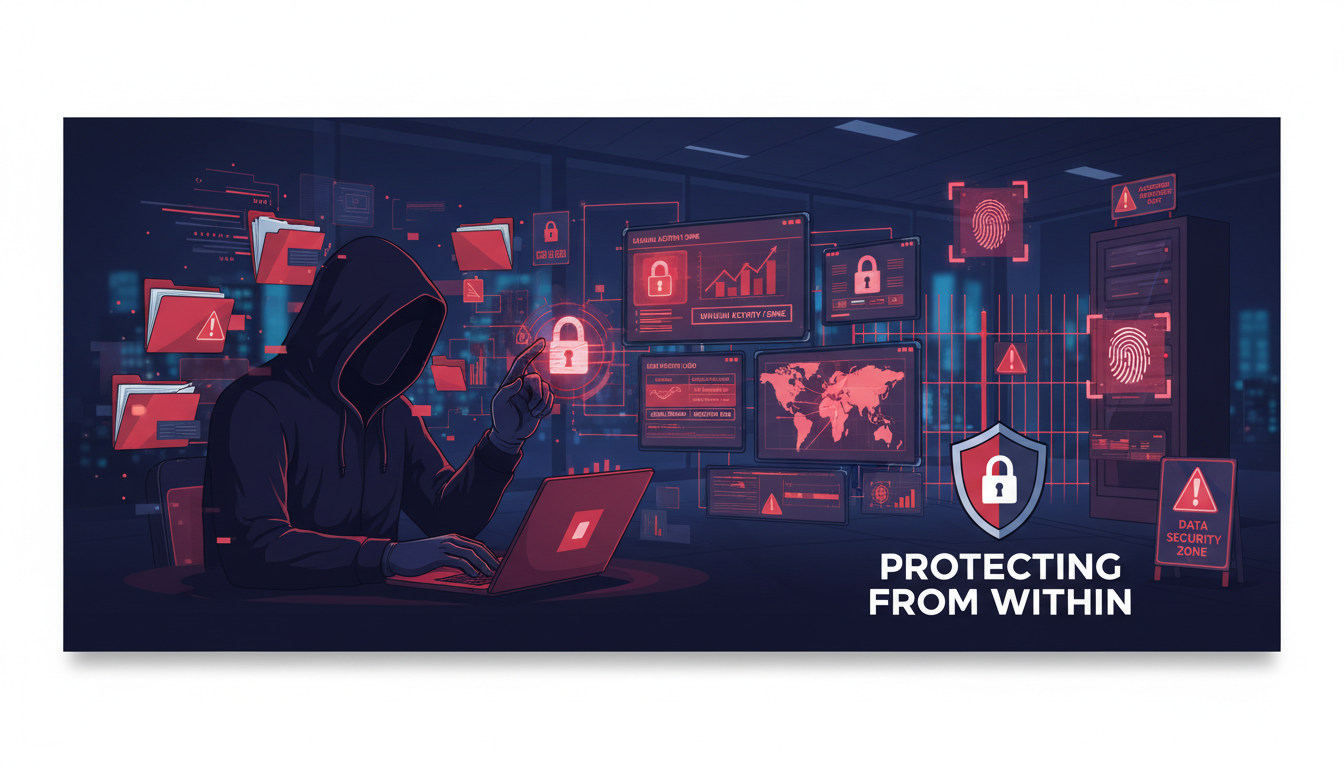
When UK business owners think about cyber security, they almost invariably picture external threats - hackers in distant countries, phishing emails from anonymous criminals, ransomware gangs demanding payment in cryptocurrency. While these external threats are very real, they represent only part of the risk landscape. Some of the most damaging security incidents affecting British businesses originate not from outside the organisation but from within it - from employees, contractors, and business partners who have legitimate access to systems and data.
Insider threats are security risks that originate from people inside the organisation or people who have been granted access to the organisation's systems. These threats can be malicious - a disgruntled employee deliberately stealing data or sabotaging systems - or they can be accidental - a well-meaning staff member falling for a phishing email, misconfiguring a system, or inadvertently exposing sensitive data. Both categories can cause devastating damage, and both require specific strategies to detect, prevent, and mitigate.
This guide examines the insider threat landscape for UK businesses, explores the different types of insider threats, and provides practical strategies for protection that balance security with trust, productivity, and legal compliance.
Understanding the Insider Threat Landscape
Insider threats are not a single phenomenon - they encompass a spectrum of behaviours, motivations, and risk levels. Understanding this spectrum is essential for developing proportionate and effective defences. The Centre for the Protection of National Infrastructure (CPNI), which advises UK businesses on personnel security, categorises insider threats into several distinct types.
The scale of the insider threat problem in the United Kingdom is significant and growing. Research from the Ponemon Institute indicates that the frequency of insider threat incidents at UK organisations has increased by over 40 per cent in the past four years. The costs are substantial too - not just in direct financial losses, but in regulatory penalties, reputational damage, loss of customer trust, and the operational disruption that follows a serious security breach. For small and medium-sized businesses, which often lack dedicated security teams and have fewer resources to absorb the impact, an insider incident can be disproportionately severe, sometimes threatening the viability of the business itself.
What makes insider threats particularly challenging to address is the inherent tension between security and trust. Businesses depend on their employees having access to systems and data to do their jobs effectively. Restricting access too aggressively hinders productivity and damages morale. Monitoring too intrusively creates a surveillance culture that erodes trust and may breach employment law. The most effective insider threat programmes find a careful balance - implementing proportionate controls that meaningfully reduce risk without creating an adversarial working environment that drives talent away.
The Negligent Insider
By far the most common type, the negligent insider is an employee who causes a security incident through carelessness, lack of awareness, or failure to follow established procedures. Examples include clicking on phishing links, using weak passwords, sending sensitive data to the wrong recipient, leaving laptops unattended in public places, or sharing login credentials with colleagues. These individuals have no malicious intent - they are simply making mistakes that have security consequences. The NCSC estimates that negligent insiders account for over half of all insider threat incidents in UK organisations.
The Malicious Insider
The malicious insider deliberately exploits their access for personal gain, revenge, or ideological reasons. This might be a departing employee who downloads the client database before joining a competitor, a finance team member who manipulates payment records for personal enrichment, or a system administrator who plants a backdoor to maintain access after leaving the organisation. While less common than negligent incidents, malicious insider actions tend to be far more damaging because they are deliberate, targeted, and often designed to evade detection.
The Compromised Insider
A compromised insider is a legitimate user whose credentials or device have been taken over by an external attacker. The user may be completely unaware that their account is being used to exfiltrate data, move laterally through the network, or establish persistent access. From the organisation's perspective, the activity appears to come from a trusted insider, making it exceptionally difficult to detect using traditional security controls. Business email compromise (BEC) attacks, where criminals hijack an employee's email account, are a common example.
The Third-Party Insider
An often-overlooked category of insider threat comes from third parties - contractors, consultants, managed service providers, and supply chain partners who have been granted access to your systems. These individuals are outside your direct employment relationship but inside your security perimeter, creating a unique risk profile. They may not have received the same security training as your permanent staff, they may be subject to different contractual obligations, and their access may be less rigorously monitored. In supply chain attacks, criminals specifically target smaller suppliers to gain access to their larger clients' systems, exploiting the trust relationship between business partners. For UK businesses operating in complex supply chains, third-party insider risk management is an essential but frequently neglected component of the security programme.
The challenge with third-party insiders is that traditional employment-based controls - background checks, HR processes, and cultural integration - may not apply or may apply differently. Contractual security requirements, regular access reviews, and technical controls such as privileged access management and network segmentation become even more important when managing third-party access. The NCSC recommends treating supply chain security as a board-level concern and assessing the security maturity of critical suppliers before granting system access.
Monitoring employees for insider threats in the UK must comply with employment law, UK GDPR, and the Human Rights Act 1998. The Information Commissioner's Office has published detailed guidance on monitoring at work, emphasising that monitoring must be proportionate, transparent, and conducted for a legitimate purpose. Covert monitoring is only justified in exceptional circumstances, typically where there is a specific suspicion of criminal activity. Any insider threat programme must be designed with these legal requirements in mind, ideally with input from employment lawyers, to avoid creating liability for the organisation.
Warning Signs of Insider Threats
While it is neither possible nor desirable to suspect every employee of being a potential threat, there are behavioural and technical indicators that can signal elevated risk. Effective insider threat programmes combine technical monitoring with awareness of behavioural indicators to identify potential issues early.
Context Is Everything
It is crucial to understand that none of the indicators listed below in isolation confirms an insider threat. A software developer downloading large volumes of source code may simply be doing their job. An employee working late may be meeting a deadline. A person expressing frustration may be having a difficult day. The indicators become meaningful when they appear in combination, when they represent a significant change from the individual's established patterns, or when they coincide with known risk factors such as an upcoming redundancy programme or a disciplinary process.
Effective insider threat detection requires correlation across multiple data sources - combining technical telemetry from systems and networks with contextual information from HR, management, and the broader business environment. This correlation is best achieved through a cross-functional insider threat working group that brings together representatives from IT security, human resources, legal, and senior management to assess potential indicators holistically rather than in isolation. Without this cross-functional approach, there is a significant risk of either missing genuine threats or generating false positives that waste investigative resources and potentially damage innocent employees' reputations.
Technical Indicators
- Accessing systems outside normal working hours
- Downloading or copying unusually large volumes of data
- Accessing files or systems outside normal job scope
- Using personal email or USB drives for work data
- Attempting to bypass security controls
- Multiple failed login attempts or privilege escalation
- Connecting unauthorised devices to the network
- Unusual patterns of printing sensitive documents
Behavioural Indicators
- Sudden and unexplained changes in work patterns
- Expressed dissatisfaction or grievances with the organisation
- Financial difficulties or sudden unexplained wealth
- Reluctance to take holiday or allow others to cover role
- Working unusual hours without clear business need
- Expressed intent to leave or already resigned
- Excessive interest in matters outside job responsibilities
- Disregard for security policies and procedures
Technical Controls for Insider Threat Prevention
Technical controls form the backbone of any insider threat defence strategy. These controls should be layered, providing multiple opportunities to detect and prevent insider incidents before they cause significant harm.
Principle of Least Privilege
Every user should have access to only the systems and data they need to perform their specific job function - nothing more. This fundamental security principle limits the potential damage from both negligent and malicious insiders by reducing the scope of data any single person can access. Regular access reviews - at least quarterly - ensure that permissions remain appropriate as people change roles, take on new responsibilities, or move to different teams.
Data Loss Prevention (DLP)
DLP tools monitor and control the movement of sensitive data, preventing it from being copied, emailed, uploaded, or printed in ways that violate policy. Microsoft 365 includes built-in DLP capabilities that can detect sensitive information types (such as National Insurance numbers, credit card numbers, or data classified as confidential) and either block the action, warn the user, or alert administrators. For organisations handling particularly sensitive data, dedicated DLP platforms from providers such as Symantec or Digital Guardian offer more advanced capabilities.
User Behaviour Analytics (UBA)
User behaviour analytics platforms build a baseline profile of normal activity for each user and then flag deviations from that baseline. If an employee who normally accesses 20 files per day suddenly downloads 2,000, or if a user who has never accessed the finance system suddenly begins querying it at 2am, UBA tools detect these anomalies and generate alerts for investigation. Microsoft 365 E5 and Microsoft Defender for Cloud Apps include UBA capabilities, making this technology increasingly accessible to mid-market UK organisations.
Privileged Access Management
Privileged accounts - system administrators, database administrators, and other users with elevated access - represent the highest risk category for insider threats because they have the broadest access to critical systems and data. Privileged Access Management (PAM) solutions control, monitor, and audit the use of privileged credentials. Rather than giving administrators permanent elevated access, PAM tools provide just-in-time access that is activated for a specific task, for a limited duration, and with full session recording. This approach ensures that privileged access is only used when genuinely needed and creates a complete audit trail of all privileged activity.
Endpoint Detection and Response
Endpoint Detection and Response (EDR) tools provide continuous monitoring and recording of activity on employee devices - laptops, desktops, and mobile devices. EDR goes beyond traditional antivirus software by capturing detailed telemetry about file access, process execution, network connections, and removable media usage. This telemetry is invaluable for detecting insider threat indicators such as mass file copying, use of data exfiltration tools, or attempts to access restricted systems. For UK organisations, EDR also supports compliance requirements by providing the detailed audit trail necessary to demonstrate that appropriate security controls are in place and operational.
Network Segmentation and Zero Trust
Network segmentation divides your network into isolated zones, limiting the ability of any single user or compromised account to move laterally across the entire infrastructure. Combined with a zero-trust security model - where every access request is authenticated and authorised regardless of network location - segmentation dramatically reduces the blast radius of insider incidents. Even if an insider or compromised account gains access to one segment of the network, they cannot easily pivot to other segments containing different categories of sensitive data. For hybrid environments spanning on-premises and cloud infrastructure, micro-segmentation policies enforced through tools such as Azure Network Security Groups and conditional access provide granular control over traffic flows between workloads.
The People Side: Culture, Training, and Process
Technical controls alone are insufficient. An effective insider threat programme also addresses the human factors through security culture, training, and HR processes that reduce risk while maintaining a positive working environment.
Security Awareness Training
Regular, engaging security awareness training is the most cost-effective defence against negligent insider incidents. Training should cover phishing recognition, password hygiene, data handling procedures, reporting suspicious activity, and the specific risks relevant to each employee's role. The NCSC's free training resources provide an excellent foundation, and specialist providers such as KnowBe4 and Proofpoint offer interactive training platforms with simulated phishing exercises.
Onboarding and Offboarding Processes
Rigorous processes for when employees join and leave the organisation are critical. During onboarding, access should be provisioned based on the specific job role, security policies should be explained and acknowledged, and background checks should be conducted where appropriate. During offboarding, all access must be revoked promptly - ideally before or at the moment the employee is informed of their departure. The period between an employee being given notice and their actual departure date represents a period of elevated insider risk that requires careful management.
Building a Security-Conscious Culture
The most effective defence against negligent insider threats is a workplace culture where security is understood, valued, and practised at every level of the organisation. This goes beyond annual compliance training - it requires visible leadership commitment, regular communication about security topics, recognition of good security practices, and an environment where employees feel comfortable reporting concerns or mistakes without fear of disproportionate consequences. When an employee accidentally clicks a phishing link, the organisation benefits far more from that employee immediately reporting the incident than from the employee attempting to hide it out of fear of punishment.
Tailored training for different roles within the organisation is significantly more effective than one-size-fits-all programmes. Finance teams need training focused on invoice fraud and business email compromise. HR teams need training on protecting employee personal data and recognising social engineering attacks targeting recruitment processes. Executives need awareness of whaling attacks - highly targeted phishing campaigns that impersonate senior leaders or business partners. By making training relevant to each individual's daily work, you increase engagement and retention of the security messages that matter most for their specific risk profile.
The Role of Line Managers
Line managers occupy a uniquely important position in insider threat prevention. They are best placed to notice changes in an employee's behaviour, performance, or attitude that might indicate elevated risk. They manage the day-to-day access requirements of their team members and should be actively involved in access review processes. They set the tone for security culture within their teams. Yet in many UK organisations, line managers receive no specific training on their role in insider threat prevention. Equipping managers with the awareness and tools to recognise warning signs, manage access appropriately, and escalate concerns through proper channels strengthens the entire insider threat programme without requiring invasive technical monitoring.
| Control Category | Implementation | Addresses | Priority |
|---|---|---|---|
| Access Management | Least privilege, regular access reviews, MFA | All insider threat types | Critical |
| Security Training | Regular training, phishing simulations | Negligent and compromised insiders | Critical |
| Data Loss Prevention | DLP policies, email scanning, USB control | Negligent and malicious insiders | High |
| Monitoring and Analytics | UBA, SIEM, audit logging | All insider threat types | High |
| HR Processes | Background checks, offboarding procedures | Malicious insiders | High |
| Incident Response | Insider-specific response playbooks | All insider threat types | Medium |
Responding to an Insider Threat Incident
When an insider threat incident is detected - whether negligent or malicious - the response must be swift, measured, and legally compliant. Unlike external cyber attacks where the priority is containment and eradication, insider threat incidents involve an employee or associate, bringing employment law, disciplinary procedures, and potential criminal proceedings into play.
Your incident response plan should include insider-specific playbooks that define how to preserve evidence (including digital forensic preservation that maintains admissibility), who to involve (typically IT security, HR, legal, and senior management), how to conduct the investigation without alerting the subject prematurely (in malicious cases), and how to handle the employment and legal consequences. The ACAS guidelines on disciplinary and grievance procedures provide the framework for the employment aspects of the response.
For UK organisations, it is also important to consider the data breach notification requirements under UK GDPR. If the insider incident involves personal data, you may be required to notify the ICO within 72 hours and affected data subjects without undue delay. The decision on notification should involve your data protection officer or legal adviser.
Evidence Preservation and Digital Forensics
When an insider threat incident is suspected, preserving digital evidence is paramount - both for the internal investigation and for any potential legal proceedings. Digital forensic evidence must be collected using established methodologies that maintain the chain of custody and ensure admissibility in court. This means creating forensic images of relevant devices and storage media rather than simply reviewing files on the live system, preserving audit logs and access records before they are overwritten, and documenting every step of the evidence collection process. For most UK small and medium-sized businesses, engaging a specialist digital forensics provider is advisable for anything beyond the most straightforward incidents, as improper evidence handling can render critical evidence inadmissible.
Post-Incident Review and Continuous Improvement
Every insider threat incident - whether it resulted from negligence, malice, or compromise - represents a learning opportunity. A thorough post-incident review should examine what controls were in place and why they did not prevent or detect the incident sooner, whether the incident response process worked effectively, what additional controls or improvements could reduce the likelihood or impact of similar incidents in the future, and whether the organisation's insider threat risk assessment needs updating. These lessons should be fed back into the security programme, training content, and policy framework to create a cycle of continuous improvement. Organisations that treat insider incidents as isolated events rather than symptoms of systemic issues are likely to experience repeat incidents of a similar nature.
Strengthen Your Security Posture
Cloudswitched provides comprehensive cyber security services for businesses across the United Kingdom. From insider threat assessments and DLP implementation to security awareness training and incident response planning, we help organisations build layered defences that protect against threats from every direction. Contact us to discuss your security needs.
GET IN TOUCH
CloudSwitched
London-based managed IT services provider offering support, cloud solutions and cybersecurity for SMEs.


