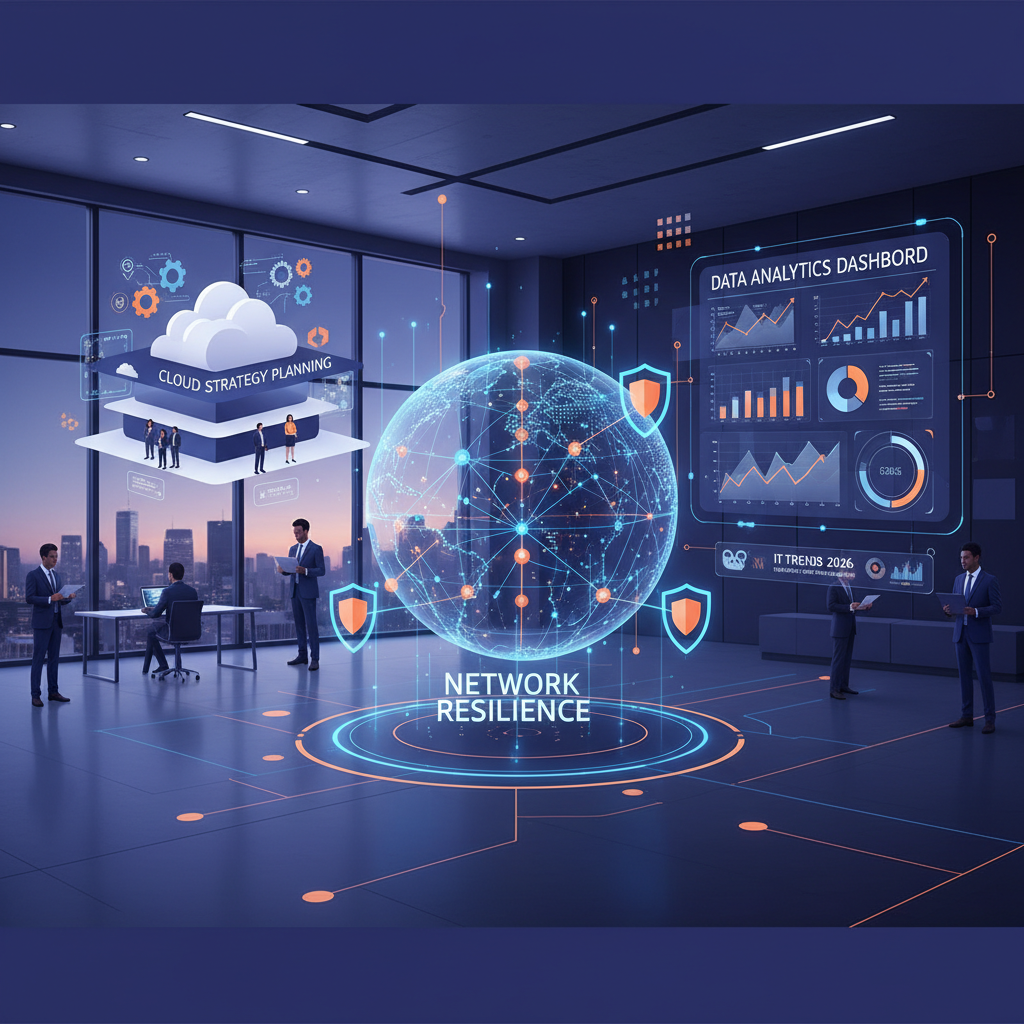
The IT support industry in the United Kingdom is in the midst of a profound transformation. What was once a relatively stable, predictable sector - dominated by break-fix contracts and on-premises server management - has become one of the most dynamic and rapidly evolving areas of the technology landscape. For business leaders, staying abreast of these changes isn't just interesting; it's essential for making informed decisions about how your organisation invests in and manages its technology.
As we move through 2026, several trends are reshaping what IT support looks like, how it's delivered, and what businesses should expect from their technology partners. Some of these trends have been building for years; others have emerged more recently. All of them will have a tangible impact on how UK businesses operate.
AI-Powered Support: The End of Tier One?
Artificial intelligence has been the dominant conversation topic in technology for the past three years, and its impact on IT support is now moving from theoretical to practical. AI-powered tools are fundamentally changing how support is delivered, particularly at the first-line (tier one) level.
Modern AI-driven helpdesk platforms can now handle a significant proportion of routine support requests without human intervention. Password resets, basic troubleshooting, software installation requests, and simple configuration changes can all be managed by AI agents that interact with users through natural language chat interfaces. These systems learn from historical ticket data, becoming progressively more effective over time.
For users, this means faster resolution of simple issues - often within seconds rather than the minutes or hours it might take to reach a human engineer. For IT support providers, it means that engineers can be freed from repetitive, low-complexity tasks to focus on more challenging and valuable work. The result is a better experience for everyone, provided the AI is implemented thoughtfully.
However, there's an important caveat. AI excels at handling predictable, well-documented issues but struggles with novel problems, complex multi-system failures, and situations that require contextual understanding of a specific business. The most effective implementations use AI to handle the routine workload whilst ensuring seamless escalation to human engineers for anything that requires judgement, creativity, or deep technical expertise. Providers that attempt to replace human support entirely with AI will deliver a poor experience; those that use AI to augment human capabilities will deliver an exceptional one.
Zero Trust Security: The New Default
The concept of zero trust security - 'never trust, always verify' - has been discussed in cybersecurity circles for years, but 2026 is the year it becomes the operational reality for mainstream UK businesses. The traditional security model, which assumed that anything inside the corporate network was trustworthy, has been comprehensively dismantled by remote working, cloud computing, and the increasing sophistication of cyber threats.
In a zero trust model, every access request is verified regardless of where it originates. A user logging in from the office is treated with the same scrutiny as one logging in from a coffee shop in another country. Identity verification, device health checks, and contextual risk assessment are applied to every transaction, every time.
For IT support providers, this means a fundamental shift in how security is implemented and managed. Rather than focusing on perimeter defences - firewalls, VPNs, and network segmentation - the emphasis moves to identity management, conditional access policies, endpoint compliance, and continuous monitoring. Microsoft's Entra ID (formerly Azure Active Directory) and its conditional access framework have become the cornerstone of zero trust implementations for organisations using Microsoft 365.
If your IT provider hasn't discussed zero trust with you yet, it's time to ask. At minimum, your organisation should have multi-factor authentication enforced for all users, conditional access policies that restrict access based on device compliance and location risk, and endpoint detection and response (EDR) deployed across all devices. These are no longer advanced security measures - they're the baseline.
The Consolidation of the MSP Market
The UK managed service provider market is undergoing significant consolidation. Private equity firms have identified the MSP sector as an attractive investment opportunity, and the result has been a wave of acquisitions that is reshaping the competitive landscape. Small and medium-sized MSPs are being acquired by larger platform companies, which then seek to standardise operations, reduce costs, and increase margins.
For businesses that use managed IT support, this trend has both positive and negative implications. On the positive side, consolidation can bring access to greater resources, more sophisticated tools, and broader expertise. A small local MSP that is acquired by a larger group may gain access to a 24/7 security operations centre, specialist cloud engineers, and enterprise-grade management platforms that it couldn't have afforded independently.
On the negative side, consolidation often brings the standardisation that larger organisations favour, which can reduce the flexibility and personal service that many businesses value in their IT provider. When your long-standing account manager is replaced by a call centre, and your bespoke support arrangement is migrated to a standardised service tier, the relationship can feel very different - even if the technical capabilities have improved.
The key takeaway for businesses is to pay close attention to any ownership changes at your IT provider. Ask questions about how the acquisition will affect your service, your account management, and your pricing. And maintain the contractual safeguards - data ownership, documentation access, reasonable notice periods - that would allow you to move providers if the post-acquisition reality doesn't match the promises.
Microsoft Copilot and the AI Integration Challenge
Microsoft Copilot - the AI assistant embedded across the Microsoft 365 suite - is one of the most significant product launches in Microsoft's history, and it's creating both opportunities and challenges for IT support. Copilot can draft emails, summarise meetings, create presentations, analyse spreadsheets, and automate workflows, all using natural language commands. For businesses that adopt it effectively, the productivity gains can be substantial.
However, deploying Copilot is not as simple as flipping a switch. It requires careful consideration of data governance (Copilot has access to everything the user has access to, which may expose overshared documents), licensing costs (Copilot for Microsoft 365 is an additional £24.70 per user per month on top of existing Microsoft 365 licences), change management (users need training to use Copilot effectively), and security implications (Copilot's outputs may inadvertently include sensitive information).
IT support providers are increasingly being called upon to manage Copilot deployments, from the initial data governance audit through to ongoing usage monitoring and optimisation. This represents a new service area that didn't exist two years ago and is likely to become a standard offering within the managed services portfolio.
Cyber Insurance: Tightening Requirements
Cyber insurance has become increasingly difficult to obtain - and increasingly expensive - for UK businesses that can't demonstrate robust security practices. Insurers have been badly burned by ransomware claims over the past few years and have responded by significantly tightening their underwriting requirements.
Where cyber insurance applications once involved a simple questionnaire, they now frequently require evidence of specific security controls: multi-factor authentication on all remote access, endpoint detection and response on all devices, regular patching schedules, tested backup and recovery procedures, and security awareness training for all staff. Businesses that can't demonstrate these controls are either declined coverage entirely or offered premiums that are prohibitively expensive.
This trend is pushing businesses to improve their security posture regardless of whether they previously considered cybersecurity a priority. And because the required controls align closely with what a competent IT support provider should be delivering as standard, it's reinforcing the value of investing in quality managed IT services.
Cyber-Insurable Businesses
- Multi-factor authentication enforced on all remote access and admin accounts
- Endpoint detection and response deployed across every managed device
- Regular patching schedule with critical updates applied within 14 days
- Tested backup and disaster recovery procedures with documented results
Likely to Be Declined Coverage
- Passwords alone used for remote access with no MFA requirement in place
- Basic antivirus only, with no behavioural detection or response capability
- Ad-hoc patching with no formal schedule or compliance tracking
- Backups exist but have never been tested or verified for recoverability
The Hybrid Working Infrastructure Maturity Curve
Most UK businesses adopted some form of hybrid working during the pandemic, but many did so in a rushed, tactical manner - deploying VPNs, distributing laptops, and hoping for the best. Four years on, the organisations that took this approach are now dealing with the consequences: inconsistent user experiences, security gaps, management blind spots, and infrastructure that was designed as a temporary measure but has become permanent.
2026 is the year that many businesses are finally investing in doing hybrid working properly. This means moving from VPN-based remote access to cloud-native architectures where applications and data are accessible securely from any location without the performance overhead and complexity of a VPN. It means deploying modern device management through platforms like Microsoft Intune, which can enforce security policies, deploy software, and monitor device health regardless of where the device is located. And it means rethinking collaboration tools, meeting room technology, and network infrastructure to support a workforce that may never be fully office-based again.
For IT support providers, this maturity curve represents a significant opportunity. Helping businesses transition from tactical hybrid working solutions to strategic, well-architected environments is complex, high-value work that requires both technical expertise and business understanding.
Sustainability and Green IT
Environmental sustainability is moving from a 'nice to have' to a genuine business imperative, and IT is a significant contributor to organisational carbon footprints. From the energy consumed by devices and data centres to the electronic waste generated by hardware refresh cycles, the environmental impact of IT is substantial - and increasingly scrutinised by regulators, investors, and customers.
IT support providers are responding by incorporating sustainability into their service offerings. This includes extending hardware lifecycles through better maintenance and repair rather than automatic replacement, optimising cloud resource consumption to reduce unnecessary energy use, implementing power management policies that reduce device energy consumption, and providing responsible disposal and recycling services for end-of-life equipment.
For businesses, the practical implications are straightforward. Choose devices that are designed for longevity and repairability. Extend hardware lifecycles where possible - a well-maintained laptop can easily last five years, and replacing it after three simply because it's 'old' is both wasteful and expensive. Optimise your cloud subscriptions to ensure you're not paying for - and consuming energy on - resources you don't use. And when hardware does reach end of life, ensure it's recycled responsibly through a certified WEEE recycling scheme.
Ask your IT provider about their sustainability practices. A growing number of UK MSPs now offer carbon-neutral or carbon-offset services, and some include sustainability reporting as part of their standard quarterly reviews. If your provider can't tell you what they're doing about sustainability, it may be time to ask more pointed questions.
Automation and Self-Service
The boundary between IT support and IT automation continues to blur. Tasks that previously required a support ticket, a human engineer, and a manual process are increasingly being automated - either fully or partially.
User onboarding is a prime example. Setting up a new starter - creating their accounts, provisioning their device, assigning their licences, and configuring their applications - can now be largely automated through platforms like Microsoft Intune and Azure Automation. An engineer still oversees the process and handles exceptions, but the repetitive, time-consuming steps are handled by automation scripts and workflows.
Self-service portals are also maturing. Rather than raising a support ticket and waiting for an engineer, users can perform many tasks themselves through a portal: resetting their own passwords, requesting software installations, booking meeting rooms, and accessing knowledge base articles for common issues. These portals reduce the volume of tickets that engineers need to handle and give users faster resolution of simple issues.
For businesses, the benefit is twofold: faster resolution of routine issues and lower support costs. For IT support providers, automation frees up engineering time for higher-value activities - security improvements, infrastructure optimisation, and strategic projects that directly contribute to business outcomes.
The Skills Shortage Intensifies
The UK technology skills shortage shows no sign of abating. Demand for IT professionals - particularly those with cybersecurity, cloud, and automation expertise - continues to outstrip supply by a significant margin. This has implications for both businesses that employ IT staff directly and those that rely on managed service providers.
For businesses with in-house IT teams, the skills shortage means increased salary expectations, higher turnover as staff are poached by competitors, and difficulty filling vacancies - particularly for specialist roles. The average time to fill an IT support vacancy in the UK has increased to over 40 days, and many positions go unfilled for months.
For managed service providers, the skills shortage creates both challenges and opportunities. Recruiting and retaining talented engineers is harder and more expensive than ever, but the providers that succeed in building strong teams can command premium pricing and win clients from competitors who can't maintain their service levels.
The practical implication for businesses is that the cost of IT support - whether in-house or outsourced - will continue to rise. This isn't a reason to cut corners; it's a reason to ensure that every pound spent on IT support is delivering maximum value. A slightly more expensive provider that delivers proactive, security-focused, strategically aligned support is almost always a better investment than a cheaper provider that simply reacts to problems as they arise.
Edge Computing and IoT Management
The growth of Internet of Things (IoT) devices in business environments - from smart building systems and environmental sensors to connected meeting room equipment and security cameras - is creating a new management challenge for IT support teams. These devices need to be secured, monitored, updated, and managed just like traditional IT assets, but they often use different protocols, different management tools, and different security models.
Edge computing - processing data closer to where it's generated rather than sending everything to the cloud - is closely related. As businesses deploy more IoT devices, the volume of data they generate can overwhelm network connections and cloud processing capacity. Edge computing addresses this by processing data locally and only sending relevant insights to the cloud.
For most UK SMEs, IoT and edge computing are still emerging concerns rather than immediate priorities. But the trend is clear: the number of connected devices in business environments is growing rapidly, and IT support providers need to develop the expertise to manage them. Businesses that are deploying smart building technology, connected manufacturing equipment, or environmental monitoring systems should ensure their IT provider has the capability to incorporate these devices into their overall management and security framework.
Regulatory Compliance as a Service
The regulatory landscape for UK businesses continues to become more complex. UK GDPR, the Network and Information Systems (NIS2) regulations, industry-specific requirements like FCA rules for financial services or NHS Data Security and Protection Toolkit for healthcare, and the growing emphasis on supply chain security are all creating compliance obligations that have significant IT implications.
| Regulation / Framework | Who It Affects | Key IT Requirements |
|---|---|---|
| UK GDPR | All organisations processing personal data | Data encryption, access controls, breach notification, data subject rights |
| Cyber Essentials | Government suppliers; increasingly required by large enterprises | Firewall, secure configuration, access control, malware protection, patching |
| NIS2 (UK implementation) | Essential and important service providers | Risk management, incident reporting, supply chain security, business continuity |
| ISO 27001 | Organisations seeking formal security certification | Comprehensive ISMS including risk assessment, controls, and continuous improvement |
| PCI DSS | Organisations handling payment card data | Network security, encryption, access control, monitoring, testing |
IT support providers are increasingly positioning themselves as compliance partners, helping businesses understand their obligations, implement the required controls, and maintain compliance on an ongoing basis. This is a natural extension of the managed services model - the provider already manages the systems that need to be compliant, so adding compliance monitoring and reporting is a logical step.
For businesses, the message is clear: choose an IT provider that understands the regulatory environment relevant to your industry and can help you navigate it. Compliance failures can result in significant fines, reputational damage, and loss of business - and the cost of achieving compliance through a knowledgeable IT partner is far less than the cost of addressing a compliance failure after the fact.
What Should You Do About These Trends?
The breadth of change in the IT support industry can feel overwhelming, but the practical steps for most businesses are straightforward. Start by having an honest conversation with your IT provider about each of these trends. How are they incorporating AI into their service delivery? What is their approach to zero trust security? How are they addressing the skills shortage? What sustainability practices do they follow?
If your provider can't answer these questions - or hasn't been proactively discussing these topics with you - that may indicate that they're not keeping pace with the industry. The best providers are not just reacting to these trends; they're anticipating them and helping their clients prepare.
Ultimately, the organisations that will thrive in this evolving landscape are those that view IT support not as a cost to be minimised but as a strategic investment that enables business success. The trends described in this article are not threats to be feared; they're opportunities to be seized - provided you have the right partner by your side.
Stay Ahead of the Curve
Our team stays at the forefront of IT support innovation so that our clients don't have to. From AI-powered support and zero trust security to Copilot deployment and compliance management, we help UK businesses navigate the evolving technology landscape with confidence. Let's discuss how these trends affect your organisation.
GET IN TOUCH
CloudSwitched
London-based managed IT services provider offering support, cloud solutions and cybersecurity for SMEs.


