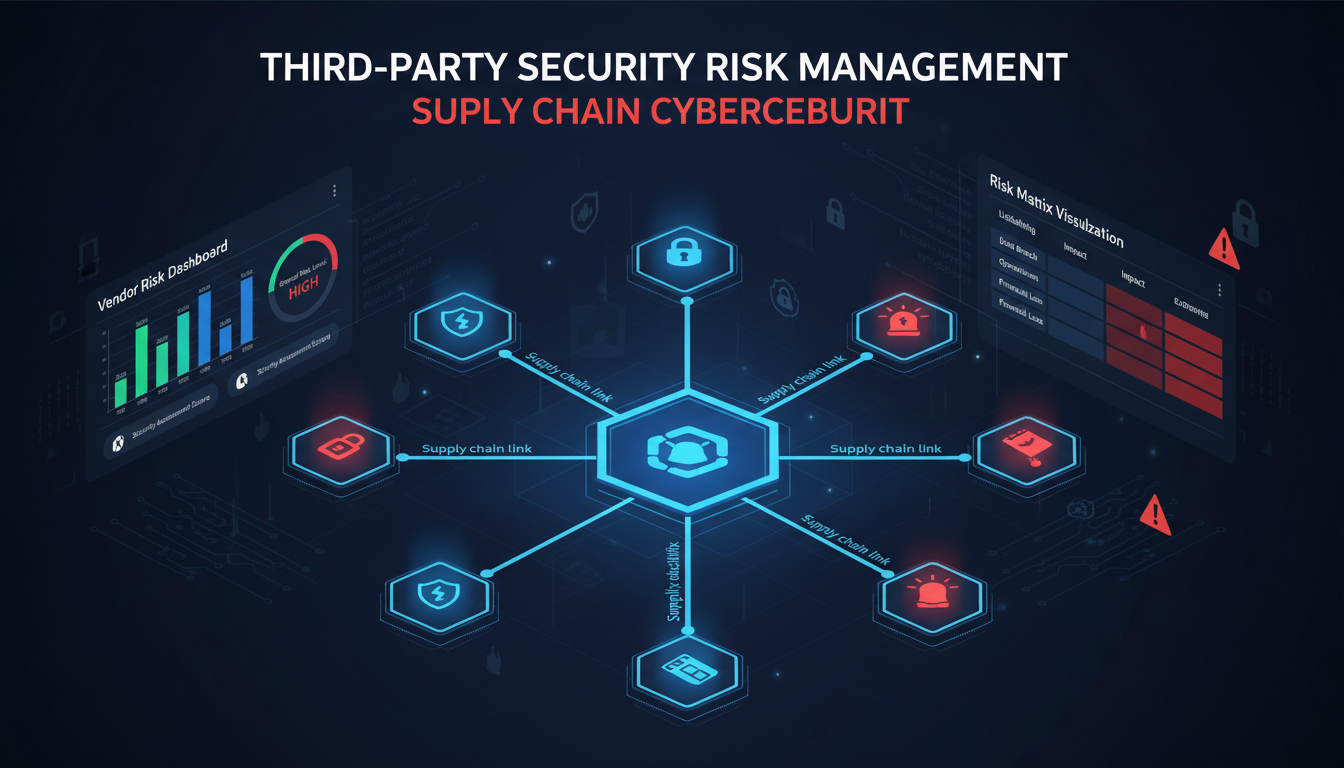
Every UK business, regardless of size, depends on third parties. Your cloud hosting provider stores your data. Your payroll processor handles your employees' personal and financial information. Your IT support provider has administrative access to your entire network. Your accounting software vendor holds your financial records. Your cleaning company has physical access to your offices after hours. Each of these relationships introduces risk - and managing that risk is no longer optional.
The concept of third-party security risk has moved from the domain of large enterprises and regulated industries to the mainstream of UK business. High-profile supply chain attacks - from the SolarWinds compromise to the MOVEit vulnerability that affected numerous UK organisations - have demonstrated that attackers increasingly target the weakest link in the supply chain rather than attacking the ultimate target directly. Your security is only as strong as the security of your most vulnerable supplier.
This guide provides UK businesses with a practical framework for identifying, assessing, and managing third-party security risks. It covers the regulatory context, the assessment process, contractual protections, ongoing monitoring, and the specific challenges facing UK SMEs that lack dedicated security teams.
The challenge is compounded by the pace at which businesses adopt new digital tools. The average UK SME now relies on between 20 and 40 different software-as-a-service applications, each representing a potential entry point for attackers. Many of these tools are adopted by individual teams or departments without a formal procurement process, creating blind spots in the organisation's security posture. A marketing team subscribing to a new analytics platform, a sales team trialling a new CRM, or a finance team adopting a new invoicing tool - each of these decisions introduces a third-party relationship that the business must understand and manage.
Supply chain attacks are particularly insidious because they exploit trust. Your employees have been trained to trust emails from known suppliers, to grant access to authorised vendors, and to share data with contracted partners. Attackers exploit these trusted relationships to bypass the security controls that would normally stop them. A compromised supplier can serve as a gateway into your network, your data, and your clients' information - all without triggering the alarms that would sound if an unknown attacker attempted the same access.
Why Third-Party Risk Matters for UK Businesses
The UK GDPR places explicit obligations on organisations regarding their data processors - any third party that processes personal data on your behalf. Article 28 requires you to use only processors that provide "sufficient guarantees" of appropriate technical and organisational security measures. If a processor suffers a data breach that affects your data, you share responsibility. The ICO can and does take enforcement action against data controllers who fail to adequately vet and monitor their processors.
Beyond GDPR, the Cyber Essentials scheme requires organisations to understand and manage the security of their supply chain. The NCSC's supply chain security guidance specifically warns UK organisations that adversaries target supply chains because it allows them to compromise many organisations through a single point of entry. And for businesses in regulated sectors - financial services under the FCA, healthcare under NHS Digital, legal services under the SRA - supply chain risk management is an explicit compliance requirement.
But even without regulatory drivers, the business case is clear. A breach at a key supplier can halt your operations, expose your clients' data, damage your reputation, and create legal liability. Understanding and managing these risks is simply sound business practice.
The Evolving Regulatory Landscape
The regulatory environment surrounding third-party risk continues to tighten. The ICO has made it clear through recent enforcement actions that ignorance of a processor's security failings is not a valid defence. In several high-profile cases, organisations have been fined not because they suffered a breach directly, but because a supplier they had failed to properly vet or monitor was compromised. The message is unambiguous: you are responsible for the security of the data you share with third parties, regardless of what contractual protections are in place.
The UK Government's National Cyber Strategy also places increasing emphasis on supply chain resilience. Sector-specific regulators are following suit, with the FCA's operational resilience framework requiring financial services firms to map and manage critical third-party dependencies. The Telecommunications (Security) Act imposes stringent supply chain requirements on telecoms providers. Even outside regulated sectors, businesses pursuing government contracts increasingly find that supply chain security is an explicit evaluation criterion. The direction of travel is clear: third-party risk management is becoming a baseline expectation for all UK businesses, not just those in highly regulated industries.
When you use cloud services - whether Microsoft 365, AWS, Salesforce, or any other platform - security is shared between you and the provider. The provider secures the infrastructure; you secure your data, user access, and configurations. Many UK businesses make the dangerous assumption that moving to the cloud means security is "someone else's problem." It is not. Your cloud provider is a critical third party whose security posture you must understand, but you remain responsible for how you use their services and how you configure access to your data.
Step 1: Identify Your Third Parties
The first step in managing third-party risk is knowing who your third parties are. This sounds obvious, but in practice, many businesses have a surprisingly incomplete picture of their vendor landscape. Shadow IT - where departments adopt cloud services without IT or procurement approval - means that personal data and business information may be flowing to vendors that nobody in management knows about.
Conduct a thorough vendor inventory. List every third party that has access to your data, your systems, or your premises. This includes technology vendors (cloud services, software, IT support), professional services (accountants, solicitors, consultants), operational services (cleaning, security, facilities management), and any sub-processors that your direct vendors use.
Uncovering Shadow IT
Shadow IT represents one of the most significant challenges in building a complete vendor inventory. Research consistently shows that the actual number of cloud applications used within an organisation is three to five times higher than what IT departments are aware of. Employees sign up for free trials, departments purchase subscriptions on corporate credit cards without notifying IT, and teams adopt collaboration tools to solve immediate problems without considering the security implications. Each of these unvetted applications potentially processes company data outside any governance framework.
To uncover shadow IT, review corporate credit card and expenses statements for recurring software subscriptions. Examine DNS logs and web proxy data to identify cloud services being accessed from your network. Survey department heads about the tools their teams use daily. Consider deploying a cloud access security broker (CASB) that provides visibility into cloud application usage across your organisation. The goal is not to prohibit all unapproved tools - that approach rarely works - but to bring them into your risk management framework so they can be assessed and, if appropriate, formally approved.
| Vendor Category | Examples | Typical Access | Risk Level |
|---|---|---|---|
| Cloud Infrastructure | Microsoft Azure, AWS, Google Cloud | Hosts data and applications | Critical |
| SaaS Applications | Microsoft 365, Salesforce, Xero | Processes and stores business data | High |
| IT Support / MSP | Managed service providers | Admin access to all systems | Critical |
| Payroll / HR | ADP, Sage Payroll, BrightHR | Employee personal and financial data | High |
| Marketing Tools | HubSpot, Mailchimp, Google Analytics | Customer contact information, behaviour data | Medium |
| Facilities | Cleaning, security, building management | Physical access to offices | Medium |
Step 2: Assess and Classify Risk
Not all third parties present equal risk. Your cloud hosting provider and your office plant supplier require very different levels of scrutiny. Classify your vendors into risk tiers based on the sensitivity of data they access, the criticality of the services they provide, and the extent of their access to your systems.
Critical Vendors
These are vendors whose failure or compromise would directly halt your business operations or expose highly sensitive data. Typically this includes your cloud infrastructure provider, your IT support provider, your email and collaboration platform, and any vendor with administrative access to your systems. Critical vendors require the most thorough assessment and the most rigorous ongoing monitoring.
High-Risk Vendors
Vendors that process significant volumes of personal data or provide important but not immediately critical services. This might include your CRM platform, your payroll provider, or your financial software vendor. These vendors require formal assessment and regular review.
Standard-Risk Vendors
Vendors with limited access to sensitive data or systems. Marketing tools, website analytics, and facilities services typically fall into this category. A lighter-touch assessment is appropriate, but they should still be included in your vendor inventory and reviewed periodically.
Building a Risk Scoring Framework
Beyond simple tiering, consider developing a risk scoring methodology that provides more granular assessment. A useful approach assigns numerical scores across several dimensions: data sensitivity (what types of data does the vendor access?), access breadth (how deeply integrated are they with your systems?), substitutability (how quickly could you replace this vendor if needed?), and geographic considerations (where are they based, and where do they process data?). Combining these scores produces an overall risk rating that drives the depth of assessment required and the frequency of ongoing review.
This scoring approach also helps prioritise limited resources. Most UK SMEs cannot conduct in-depth security assessments of every vendor simultaneously. A risk-scored inventory allows you to focus your efforts where they matter most - starting with the vendors that pose the greatest risk to your business and working down the list as resources allow. It also provides a defensible basis for your risk management decisions, which is valuable if you ever need to demonstrate your approach to regulators or auditors.
Step 3: Conduct Due Diligence
For critical and high-risk vendors, conduct formal security due diligence before entering into or renewing agreements. The scope of this assessment should be proportionate to the risk level but typically includes the following areas.
Security certifications. Does the vendor hold ISO 27001, Cyber Essentials Plus, SOC 2, or other relevant certifications? These certifications provide independent assurance that the vendor has implemented a formal security management system. They are not guarantees of security, but they demonstrate a baseline commitment that uncertified vendors may lack.
Data handling practices. Where is your data stored? Is it encrypted at rest and in transit? Who has access to it? How is it segregated from other clients' data? Is it stored within the UK or EEA, and if not, what legal mechanisms protect international transfers?
Incident response capabilities. Does the vendor have a documented incident response plan? How quickly will they notify you of a breach? What support will they provide during incident response? Under UK GDPR, you have 72 hours to report certain breaches to the ICO - your vendor must be able to notify you fast enough to meet this deadline.
Business continuity. What happens if the vendor suffers a major outage? Do they have disaster recovery plans? What are their recovery time objectives? Is your data held in multiple data centres for redundancy?
The Assessment Process in Practice
For many UK SMEs, the practical challenge is not knowing what to assess but having the capacity to conduct assessments. A pragmatic approach uses tiered assessment methods matched to vendor risk levels. For critical vendors, send a detailed security questionnaire covering all the areas above, request certification evidence, and if possible conduct a video call to discuss their security programme. For high-risk vendors, a focused questionnaire combined with certification checks is usually sufficient. For standard-risk vendors, reviewing publicly available security information and requesting basic documentation may be adequate.
Several free and low-cost resources can help structure your assessments. The NCSC's supply chain security guidance provides a framework for evaluating supplier security. The Standardised Information Gathering (SIG) questionnaire, while designed for larger organisations, can be adapted for SME use. Industry bodies such as the Chartered Institute of Information Security (CIISec) and IASME publish guidance on proportionate vendor assessment. The key principle is that some assessment is always better than none - do not let the perfect be the enemy of the good.
Document your findings systematically. Maintain a vendor risk register that records each vendor's risk classification, assessment date, key findings, any identified gaps, and remediation actions. This register becomes a living document that tracks the security posture of your supply chain over time and provides evidence of due diligence for compliance purposes.
Red Flags in Vendor Assessment
- No security certifications or evidence of security programme
- Unable or unwilling to answer security questions
- No documented incident response process
- Data stored outside UK/EEA with no transfer safeguards
- No breach notification commitment in contract
- Refuses to sign a data processing agreement
- No evidence of employee security training
Green Flags in Vendor Assessment
- ISO 27001, Cyber Essentials Plus, or SOC 2 certified
- Transparent and detailed security documentation
- Published incident response and breach notification SLA
- UK data centres with geographic redundancy
- Standard DPA available and regularly updated
- Willing to complete security questionnaires
- Regular third-party penetration testing
Step 4: Contractual Protections
Vendor assessment tells you about a supplier's current security posture, but contracts protect you over the life of the relationship. Every agreement with a vendor that processes personal data should include a Data Processing Agreement (DPA) that meets the requirements of Article 28 of the UK GDPR.
Beyond the DPA, consider including specific security obligations such as the requirement to maintain specific certifications, breach notification timescales (ideally 24-48 hours), the right to audit the vendor's security practices, obligations to report material changes to their security posture, data return and deletion provisions upon contract termination, and liability and indemnification clauses for breaches caused by the vendor's negligence.
For critical vendors, negotiate the right to conduct periodic security assessments or require annual certification renewals. For high-value contracts, consider requiring the vendor to carry cyber liability insurance to ensure they can meet their financial obligations in the event of a breach.
Key Contractual Clauses to Include
The specifics of contractual security protections vary by vendor type and risk level, but certain clauses should be standard across all agreements involving personal data or sensitive business information. A breach notification clause should specify the maximum time within which the vendor must notify you of a security incident - ideally within 24 hours of discovery, and certainly within a timeframe that allows you to meet your own 72-hour ICO notification obligation. The clause should also define what constitutes a reportable incident, the information that must be included in the notification, and the vendor's obligations to assist with your incident response.
A data handling clause should specify where your data will be stored, who will have access to it, how it will be segregated from other clients' data, and what encryption standards will be applied. It should also address data portability and deletion - when the contract ends, how will your data be returned to you, and how will the vendor certify that all copies have been securely destroyed? These provisions are often overlooked during contract negotiation but become critically important during vendor transitions.
Sub-processor clauses deserve particular attention. Many vendors use their own third-party services to deliver their product - your data may pass through several layers of the supply chain. Your contract should require the vendor to inform you of any sub-processors involved in handling your data, to impose equivalent security obligations on those sub-processors, and to notify you before introducing new sub-processors so you can assess the implications.
Step 5: Ongoing Monitoring
Vendor risk management is not a one-time exercise. The security posture of your vendors changes over time - they may suffer breaches, lose certifications, change their data practices, or be acquired by another company. Ongoing monitoring ensures you are aware of changes that affect your risk exposure.
For critical vendors, conduct formal reviews annually at minimum. This includes requesting updated certification evidence, reviewing any reported incidents, checking for security advisories or vulnerability disclosures, and reassessing the risk classification in light of any changes to the services you use.
For all vendors, monitor public sources for breach disclosures, security advisories, and regulatory actions. Services such as the ICO's enforcement notices page, the NCSC's alerts, and industry-specific regulatory announcements can provide early warning of vendor security issues.
Additionally, review your vendor inventory whenever your business changes. New projects, new office locations, new applications, and new staff all potentially introduce new third-party relationships. Make vendor risk assessment a standard part of your procurement and change management processes.
Automating Vendor Monitoring
Manual vendor monitoring quickly becomes impractical as your vendor portfolio grows. Fortunately, several approaches can help automate the process. Security rating services such as SecurityScorecard and BitSight provide continuous, automated assessment of organisations' external security posture based on publicly observable data. While these services are typically priced for enterprise use, some offer SME-friendly tiers that provide useful ongoing visibility into your critical vendors' security health.
At a minimum, set up Google Alerts for each of your critical vendors combined with terms like 'data breach,' 'security incident,' and 'vulnerability.' Subscribe to the ICO's enforcement actions feed and the NCSC's threat alerts. Monitor your vendors' status pages and security advisory channels. These low-cost measures provide early warning of issues that might affect your data or services.
Handling Vendor Security Incidents
When a vendor notifies you of a security incident - or you discover one through monitoring - your response must be swift and structured. Have a pre-defined vendor incident response procedure that covers immediate containment (do you need to suspend integration or access?), impact assessment (what data or systems were potentially affected?), regulatory obligations (does this trigger ICO notification requirements?), and communication (what do you need to tell your own clients or employees?). Practising this procedure through tabletop exercises ensures your team can execute it effectively under pressure.
Practical Tips for UK SMEs
Implementing a full enterprise-grade third-party risk management programme can feel overwhelming for a small business. Here are practical, proportionate steps that UK SMEs can take without dedicated risk management teams.
Start with your top five vendors. Identify the five third parties that have the most access to your data or systems. Conduct basic due diligence on these five and ensure you have appropriate contracts in place. This addresses the majority of your risk exposure with manageable effort.
Use free resources. The NCSC provides free supply chain security guidance. The ICO provides template DPAs. Cyber Essentials provides a framework for assessing basic security controls. You do not need expensive consultants or software to start managing vendor risk.
Ask simple questions. You do not need a 200-question security assessment for every vendor. For most vendors, asking five key questions provides adequate insight: Do you hold Cyber Essentials or ISO 27001? Where is our data stored? How will you notify us of a breach? Can you provide a DPA? When was your last security assessment?
Leverage your IT partner. If you work with a managed IT provider or virtual CIO, they can help assess vendor security, review contracts, and monitor your supply chain risk. This is one of the most valuable services a strategic IT partner provides.
Building a Culture of Vendor Accountability
Technical controls and contractual protections are necessary but not sufficient on their own. The most effective third-party risk management programmes embed vendor security awareness into the organisation's culture. Train your procurement and finance teams to include security considerations in vendor selection decisions - not as an afterthought, but as a core evaluation criterion alongside price, functionality, and service quality. Establish a policy that all new vendor relationships above a defined threshold must include a security assessment before contracts are signed.
Create a clear escalation path for vendor security concerns. If an employee notices that a supplier's portal lacks HTTPS, that a vendor is requesting unnecessary access to data, or that a sub-contractor is handling information carelessly, they should know who to report this to and be confident that their concern will be taken seriously. Many significant security issues are first spotted by front-line staff who interact with vendors daily - their observations are a valuable early warning system that complements formal assessment processes.
Finally, treat vendor risk management as an ongoing programme rather than an annual compliance exercise. The threat landscape evolves constantly, your vendor relationships change, and new risks emerge as your business grows and adopts new technologies. Regular reviews, continuous monitoring, and a willingness to reassess vendor relationships that no longer meet your security standards are the hallmarks of a mature, effective third-party risk management approach.
Need Help Managing Third-Party Security Risks?
Cloudswitched helps UK businesses identify, assess, and manage third-party security risks as part of our virtual CIO and managed security services. From vendor assessments and contract reviews to ongoing monitoring and compliance support, we protect your business from supply chain threats. Contact us to discuss your needs.
Explore Cyber Essentials Certification
CloudSwitched
London-based managed IT services provider offering support, cloud solutions and cybersecurity for SMEs.


