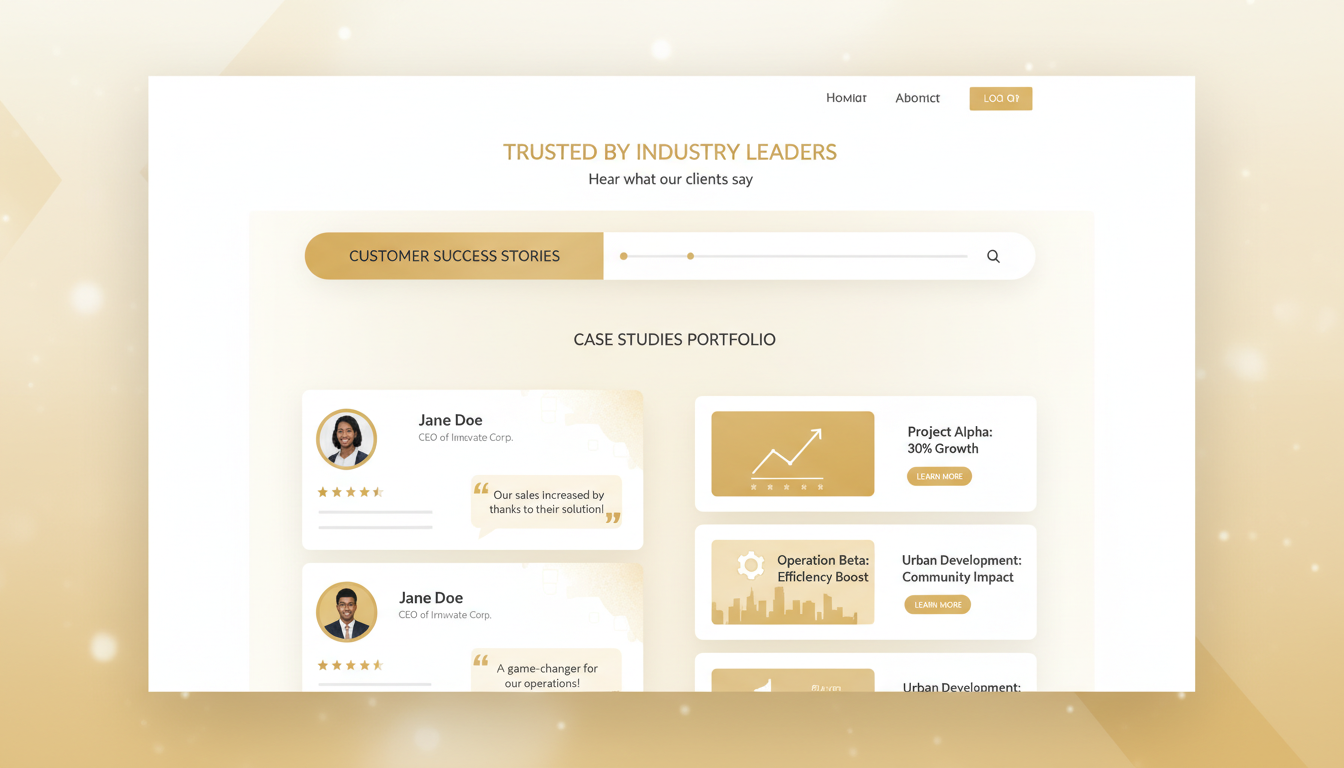
Every UK business with a website faces the same fundamental challenge: convincing visitors to become customers. Your products and services may be excellent, your pricing competitive, and your team experienced - but visitors have no way of knowing this from your claims alone. They have heard similar promises from countless other businesses. What they need is proof. And the most powerful form of proof in digital marketing is social proof - the evidence that other businesses and individuals have trusted you and benefited from the decision.
Testimonials and case studies are the two most effective forms of social proof for UK business websites. Testimonials provide concise, credible endorsements from satisfied clients. Case studies provide detailed narratives that demonstrate your capability, process, and results in a format that prospective clients can relate to their own situation. Together, they transform your website from a collection of claims into a compelling body of evidence.
Yet many UK businesses either neglect social proof entirely or use it poorly - burying testimonials on a page nobody visits, using generic quotes that lack specificity, or publishing case studies that read like press releases rather than persuasive narratives. This guide explains how to collect, create, and deploy testimonials and case studies that genuinely drive conversions.
The Psychology of Social Proof
Social proof is a psychological principle identified by Robert Cialdini: people look to the actions and opinions of others to determine the correct course of action, especially in situations of uncertainty. When a prospective client visits your website, they are in a state of uncertainty - they do not know whether your business can deliver on its promises. Testimonials and case studies resolve this uncertainty by providing evidence from people who have already made the decision to work with you.
The effectiveness of social proof depends on several factors. Relevance - testimonials from businesses similar to the prospective client are more persuasive than those from unrelated industries. Specificity - a testimonial that mentions concrete outcomes ("reduced our IT costs by 32%") is far more compelling than a vague endorsement ("great service"). Credibility - attributed testimonials with names, titles, and company names are more trusted than anonymous quotes. Recency - recent testimonials suggest ongoing quality, while dated ones raise questions about whether standards have been maintained.
Types of Social Proof That Work for UK Businesses
Beyond testimonials and case studies, several other forms of social proof can reinforce credibility on your website. Client logos - displaying the logos of businesses you have worked with - provide instant visual credibility, particularly when your client roster includes recognisable names within a given sector. Industry certifications and accreditations, such as ISO 27001, Cyber Essentials, or membership of trade bodies like the Federation of Small Businesses, signal that your organisation meets externally validated standards. Media mentions and awards demonstrate third-party recognition that you cannot fabricate, lending a layer of authority that self-generated marketing materials simply cannot achieve.
For UK B2B businesses in particular, industry-specific proof carries significant weight. A managed IT services provider gains far more from displaying a testimonial from a well-known regional law firm than from a generic five-star review. The key principle is that social proof must feel relevant, specific, and verifiable. Generic claims without supporting evidence can actually reduce credibility rather than enhance it, because savvy buyers recognise unsupported assertions when they see them. This is especially true in competitive UK sectors such as professional services, technology, and financial services, where decision-makers are accustomed to evaluating evidence rigorously before committing to a supplier.
Consider also the power of peer proof - testimonials from organisations of a similar size, sector, and geographic location to your target audience. A small accounting practice in Manchester will find a testimonial from a 15-person solicitors' firm in Leeds far more persuasive than one from a multinational corporation. The prospective client needs to see themselves reflected in your existing client base to believe that your services are a good fit for their specific circumstances. This principle extends to the language used in testimonials: a quote that references challenges common to a particular industry resonates more deeply than one that speaks in generic terms about quality and reliability.
Under UK advertising standards enforced by the ASA (Advertising Standards Authority), testimonials must be genuine, verifiable, and representative of the typical customer experience. You cannot fabricate testimonials, cherry-pick only exceptional results without context, or present paid endorsements without disclosure. Additionally, under UK GDPR, you need explicit consent from clients before publishing their testimonials, including their name, company, and any personal data. Always obtain written consent and specify where and how the testimonial will be used.
Collecting Effective Testimonials
When to Ask
The best time to request a testimonial is immediately after a positive outcome - when a project completes successfully, when a problem is resolved, or when a client expresses satisfaction. This is when the positive experience is freshest and the client is most willing to help. Waiting weeks or months allows the emotional impact to fade and reduces response rates.
How to Ask
Make the request specific rather than open-ended. Instead of "Could you write us a testimonial?", ask guided questions that prompt specific, useful responses: "What was the main challenge you were facing before working with us?", "What specific results have you seen since we started working together?", "Would you recommend us, and if so, why?" These questions generate testimonials that address the concerns prospective clients actually have.
Building a Systematic Collection Process
Rather than collecting testimonials on an ad hoc basis, establish a systematic process that generates a steady stream of fresh social proof. Integrate testimonial requests into your project completion workflow - when a project is marked as complete in your project management system, automatically trigger a testimonial request email. This ensures that no successful engagement passes without an opportunity to capture feedback, and it removes the awkwardness of remembering to ask weeks after the fact.
Consider using a brief online form rather than asking clients to compose a testimonial from scratch. A structured form with three to five guided questions generates more useful responses and reduces the effort required from the client. Questions such as "What specific problem did we help you solve?" and "What measurable results have you achieved?" consistently produce testimonials that are rich in the kind of detail that persuades prospective clients. Many UK businesses find that response rates double when they provide a structured form compared to an open-ended email request.
For higher-value testimonials, offer to conduct a brief telephone or video interview and then draft the testimonial for the client's approval. Many senior decision-makers - particularly in UK professional services and financial sectors - are willing to provide a testimonial but lack the time to write one. By doing the writing for them, based on their spoken words, you maintain authenticity whilst removing the friction that prevents many testimonials from materialising. Always send the draft for explicit written approval before publishing, both as a professional courtesy and to ensure compliance with UK GDPR requirements regarding the use of personal data in marketing materials.
What Makes a Strong Testimonial
The strongest testimonials share common characteristics. They identify a specific problem that was solved. They mention measurable outcomes where possible. They include the client's name, job title, and company (with permission). They feel authentic - slightly imperfect language is often more credible than polished marketing copy.
Video and Multimedia Testimonials
Written testimonials remain valuable, but video testimonials are increasingly powerful in the UK market. A client speaking directly to camera about their experience carries an authenticity that text alone cannot replicate - viewers can assess body language, tone of voice, and genuine enthusiasm in a way that is simply impossible with written words. Video testimonials are particularly effective on landing pages and service pages where visitors are close to making a purchasing decision and need that final reassurance to take action.
Producing effective video testimonials does not require a professional film crew or substantial budget. A well-lit, well-framed interview recorded on a modern smartphone can be highly effective, provided the audio quality is good. Use an external microphone, choose a quiet location with minimal background noise, and keep the video concise - sixty to ninety seconds is ideal for maintaining viewer attention. Ask the same guided questions you would use for written testimonials, and edit the footage to focus on the most compelling and specific responses that address common buyer objections.
For UK businesses operating across multiple sectors, consider creating sector-specific testimonial collections on your website. A visitor from the healthcare sector can view testimonials from other healthcare organisations, whilst a visitor from professional services sees testimonials from similar firms. This targeted approach significantly increases the relevance and persuasive impact of your social proof. Embed video testimonials directly on your website rather than simply linking to YouTube or Vimeo - this keeps visitors on your site, avoids distracting them with unrelated content in the sidebar, and provides a more professional presentation that reinforces your brand identity.
Strong Testimonial Elements
- Named individual with job title and company
- Specific problem identified before engagement
- Measurable outcome or result achieved
- Emotional element - how the improvement felt
- Relevant to the target audience's own challenges
- Natural language, not overly polished
- Recent and verifiable
Weak Testimonial Elements
- Anonymous or first name only
- No mention of the specific challenge
- Vague praise with no measurable results
- Reads like marketing copy, not a real person
- Too generic to be relevant to anyone
- Overly polished, suspiciously perfect
- Dated or from a business that no longer exists
Creating Compelling Case Studies
A case study is a detailed narrative that documents how you helped a specific client solve a specific problem. Unlike a testimonial, which is a brief endorsement, a case study tells the full story - the challenge, your approach, the solution, and the measurable results. Well-crafted case studies are among the most powerful sales tools a UK business can have.
Selecting the Right Case Study Subjects
Not every successful project makes an effective case study. The best subjects share several characteristics: the client represents your ideal target customer profile, the challenge they faced is common among your prospects, the results are measurable and genuinely impressive, and the client is willing to be named and quoted publicly. Aim for diversity across your case study portfolio - cover different industries, company sizes, geographical regions, and types of challenges to ensure that a broad range of prospective clients can find a case study that resonates with their own situation and needs.
When approaching clients about participating in a case study, frame it as a collaborative partnership rather than a one-sided favour. Many UK businesses appreciate the exposure and the opportunity to showcase their own forward-thinking decision-making to their stakeholders. Offer to share the finished case study for their own marketing use, provide a draft for their review and approval well before publication, and be transparent about where and how the content will be distributed. Businesses are generally far more receptive to case study requests when the process feels collaborative and mutually beneficial rather than extractive.
Common Case Study Pitfalls to Avoid
The most frequent mistake in case study writing is making the narrative about your own business rather than the client. The client's challenge, journey, and transformation should occupy the narrative centre, with your services playing the role of enabler rather than hero. Prospective readers identify with the client's situation, not with your capabilities - they want to see themselves in the story and envision how they might achieve similar results by engaging your services.
Other common pitfalls include lacking specificity in the results section, using technical jargon that your target audience may not understand, failing to include direct client quotes that add human authenticity to the narrative, and neglecting to update or retire case studies when they become outdated. A case study featuring a client who has since ceased trading or publicly switched to a competitor actively undermines your credibility rather than enhancing it. Review your case study portfolio at least annually and retire any that no longer reflect your current capabilities, service offerings, or the health of the client relationship.
The Case Study Structure
Every effective case study follows a narrative arc: situation, challenge, solution, results. The situation sets the scene - who is the client, what do they do, and what was their context? The challenge identifies the specific problem they were facing and why it mattered. The solution describes what you did, how you did it, and why you chose that approach. The results quantify the impact - what improved, by how much, and what does the client's situation look like now?
| Section | Purpose | Length | Key Elements |
|---|---|---|---|
| Overview / Summary | Quick snapshot for scanners | 50-100 words | Client name, industry, key result |
| Situation / Background | Context and relatability | 100-200 words | Company size, industry, location |
| Challenge | Problem identification | 150-250 words | Pain points, previous attempts, urgency |
| Solution | Demonstrate expertise and approach | 200-400 words | What you did, how, and why |
| Results | Prove value with evidence | 150-250 words | Metrics, improvements, client quote |
Writing Case Studies That Engage and Persuade
The most effective case studies read like compelling narratives, not dry corporate reports. Begin with the client's situation in a way that creates genuine empathy - describe the frustration, the tangible business impact of the problem, and the urgency that drove them to seek a solution. Use the client's own words wherever possible, drawing on interview quotes to bring the narrative to life and provide the authentic voice that readers instinctively trust more than polished marketing copy.
When describing your solution, focus on the strategic reasoning behind your approach rather than an exhaustive list of technical details. Prospective clients want to understand your thinking process and methodology, not just the tools and technologies you deployed. Explain why you chose a particular approach over alternatives, how you adapted to challenges encountered during the project, and what made your solution specifically suited to this client's circumstances. This demonstrates expertise and thoughtfulness far more effectively than a list of features or deliverables ever could.
Distributing Case Studies Beyond Your Website
A case study published on your website is undoubtedly valuable, but its impact multiplies considerably when distributed through additional channels. Equip your sales team with case studies formatted for email attachment and presentation use - a well-chosen case study shared at the right moment in a sales conversation can be the decisive factor that tips a prospect from consideration to commitment. Create condensed summary versions for LinkedIn posts that generate engagement and drive traffic to the full version on your website, and develop case study briefs formatted for inclusion in proposals and formal tender responses.
For UK businesses engaged in competitive tender processes or formal procurement exercises, professionally formatted case study PDFs carry particular weight. Procurement teams and evaluation panels routinely assess suppliers on documented evidence of relevant past performance, and a well-presented case study directly addressing the type of project being tendered can significantly strengthen your submission. Ensure each case study document is professionally designed with consistent branding, includes clear contact information, and features a prominent call to action that makes it easy for the reader to take the next step towards engaging your services.
Where to Display Social Proof on Your Website
The placement of testimonials and case studies is just as important as their content. Social proof should appear where visitors make decisions - not hidden on a page that nobody finds.
Homepage
Your homepage should feature two to four of your strongest testimonials, ideally near the bottom of the page where visitors have already learned about your services and are evaluating whether to take the next step. Keep homepage testimonials concise - one to three sentences each - with the client's name and company visible.
Service Pages
Each service page should include testimonials specifically relevant to that service. A testimonial from a client praising your network installation work belongs on your networking services page, not your cloud migration page. This relevance increases the testimonial's persuasive impact because the visitor is reading about the exact service they are considering.
Dedicated Case Study Pages and Proposal Integration
Create a dedicated case studies section on your website where visitors can browse your full portfolio of client success stories. Organise case studies by industry, service type, or challenge solved - allowing visitors to quickly find examples directly relevant to their own situation. Each case study should have its own dedicated URL with a compelling page title, a summary snapshot of key results, and the full narrative below. Include filtering or categorisation functionality so that visitors can efficiently locate the most relevant examples. A well-organised case study library positions your business as experienced, established, and capable across multiple sectors and challenge types.
Beyond your website, integrate your strongest case studies into sales proposals and tender responses. When responding to a request for proposal from a prospective client, include two or three carefully selected case studies that demonstrate your proven experience with projects similar in scope, sector, and complexity. This transforms your proposal from an abstract list of capabilities and prices into a credible, evidence-backed submission that evaluators can trust. For UK businesses competing in public sector procurement, where evaluation criteria frequently include weighted scores for evidence of relevant past performance, well-documented case studies can be the decisive factor between winning and losing a contract worth tens or hundreds of thousands of pounds.
Consider also the strategic value of micro case studies - brief, focused success examples of 150 to 200 words that can be woven into service pages, blog posts, and email campaigns without requiring the reader to navigate away. Not every prospect will invest time in reading a full-length case study, but a concise example demonstrating a specific capability can be remarkably effective at building confidence. A short paragraph within your cloud migration services page describing how you migrated a 50-person accountancy firm to Microsoft 365 in three weeks with zero downtime provides immediate, contextual credibility precisely where the visitor is evaluating your offering.
Landing Pages
If you run paid advertising campaigns driving traffic to landing pages, testimonials are essential. Landing page visitors have no prior relationship with your brand - they arrived through an advert - and need immediate reassurance that your business is credible and competent. Place one or two strong testimonials above the fold or near the call-to-action button.
Measuring the Impact of Social Proof
Like any marketing element, the effectiveness of testimonials and case studies should be measured. Use website analytics to track: conversion rates on pages with and without testimonials (A/B testing), time spent on case study pages, click-through rates from case study summaries to full case studies, and whether visitors who view case studies are more likely to convert than those who do not.
Google Analytics 4 allows you to set up event tracking that monitors interactions with testimonial sections and case study pages. This data helps you understand which testimonials and case studies resonate most with your audience and optimise your social proof strategy over time.
Keeping Social Proof Fresh and Relevant
Social proof has a shelf life that many businesses overlook. Testimonials dating from five years ago, case studies featuring companies that have since closed their doors, or quotes attributed to individuals who have long since moved on to different roles all undermine rather than enhance your credibility. Establish a regular review cycle - quarterly is ideal for active businesses - to audit your entire portfolio of testimonials and case studies for continued relevance, accuracy, and impact.
During each review, verify that all referenced client companies remain in operation and that the named individuals still hold the positions attributed to them. Remove or update any testimonials that are no longer accurate or that reference services you no longer provide. Replace older testimonials with fresh ones that reflect your current capabilities, service standards, and market positioning. If your business has evolved significantly - perhaps expanding into new service areas, adopting new technologies, or targeting different market segments - ensure that your social proof portfolio evolves in step to reflect these changes accurately.
Building a Long-Term Social Proof Strategy
The most successful UK businesses treat social proof as a strategic asset requiring ongoing investment rather than a one-time marketing exercise. Develop a formal social proof strategy that defines collection goals, target testimonial profiles across different sectors and service lines, standardised collection processes, placement guidelines for different page types, and measurement criteria for evaluating effectiveness. Assign clear ownership for social proof management to a specific team member or role - without explicit accountability, testimonial collection and case study creation invariably fall to the bottom of competing priorities.
Consider establishing a client reference programme that formalises the relationship between your business and your most satisfied clients. Programme members agree to provide testimonials, participate in case studies, and serve as references for prospective clients evaluating your services, in exchange for tangible benefits such as early access to new service offerings, priority support, or preferential pricing. This structured approach creates a reliable, predictable pipeline of high-quality social proof whilst simultaneously deepening your relationships with your most valuable and loyal clients. Over time, a comprehensive and well-maintained social proof strategy becomes a formidable competitive advantage - one that new market entrants will struggle to replicate regardless of their pricing or marketing spend.
Need a Website That Converts Visitors Into Clients?
Cloudswitched builds websites for UK businesses that are designed to convert. From strategic placement of testimonials and case studies to compelling calls-to-action and performance tracking, we create websites that work as your most effective sales tool. Get in touch to discuss how we can improve your website's conversion rate.
GET IN TOUCH
CloudSwitched
London-based managed IT services provider offering support, cloud solutions and cybersecurity for SMEs.


