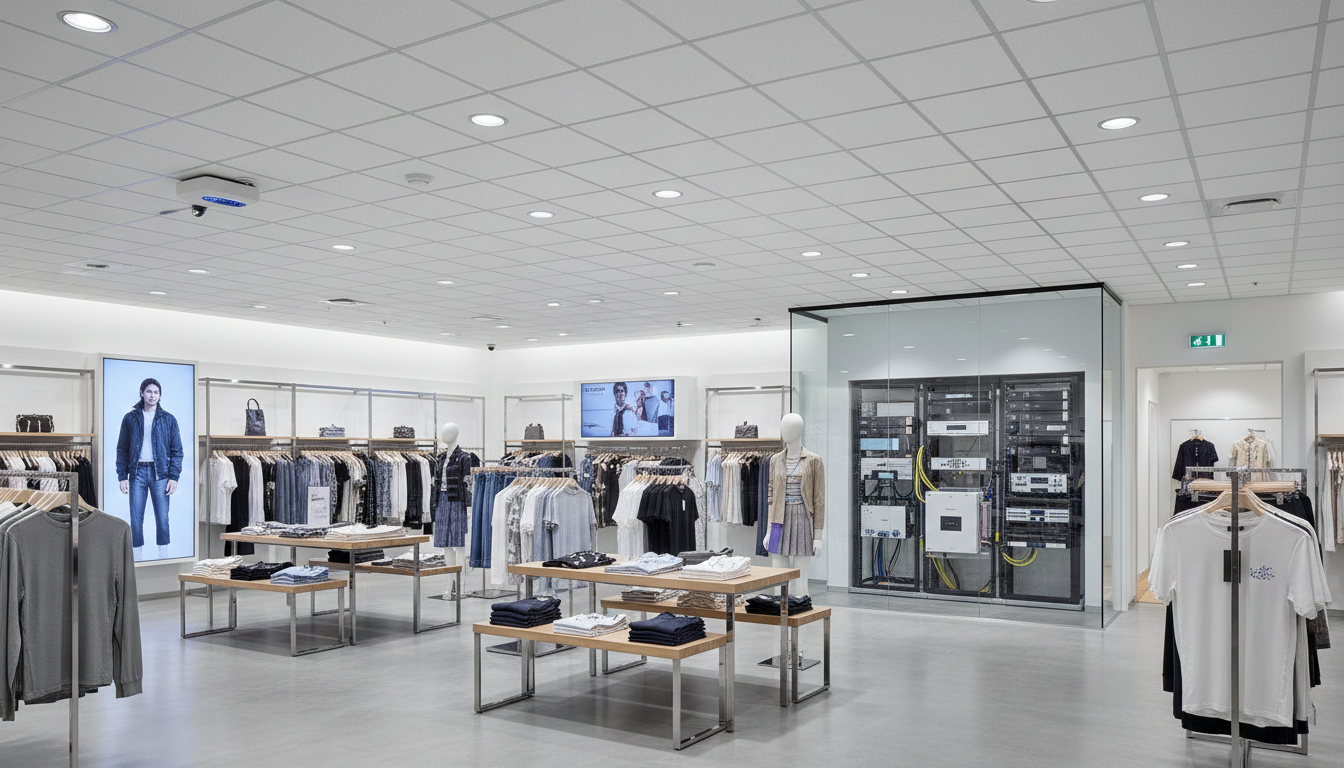
The UK retail sector is undergoing a fundamental transformation. High street footfall may have declined over the past decade, but the retailers that are thriving - from independent boutiques in Bath to multi-site chains across London - are those that have embraced technology to enhance the in-store customer experience. The modern customer expects more than just products on shelves. They expect free Wi-Fi, seamless digital experiences, and the kind of personalised service that requires sophisticated behind-the-scenes technology.
Cisco Meraki, the cloud-managed networking platform, has become the technology of choice for forward-thinking UK retailers. Its combination of enterprise-grade networking, built-in analytics, and cloud-based management makes it uniquely suited to the retail environment, where simplicity of management and depth of insight are equally important. This guide explores how UK retailers can use Cisco Meraki to improve customer experience, increase sales, and gain competitive advantage on the high street.
From guest Wi-Fi that captures customer data to location analytics that reveal shopping patterns, Meraki provides tools that were once available only to the largest retail chains but are now accessible to businesses of every size.
The UK retail landscape presents unique challenges and opportunities for technology adoption. With over 300,000 retail outlets across the country, ranging from independent high street shops to sprawling out-of-town retail parks, the diversity of environments demands a flexible, scalable networking solution. Meraki's cloud-first architecture is particularly well-suited to this reality - a single-store boutique in Covent Garden and a 200-store national chain can both deploy the same platform, scaling their investment to match their needs without wholesale infrastructure changes.
Moreover, the competitive pressure on UK retailers has never been greater. Online retail now accounts for over a quarter of total UK retail sales, and physical stores must offer compelling reasons for customers to visit in person. Technology-enhanced experiences - personalised offers delivered via mobile, seamless click-and-collect processes, and data-driven store layouts - are no longer differentiators but baseline expectations. Meraki provides the networking foundation upon which all of these experiences are built, making it an essential investment for any retailer serious about their physical presence.
Guest Wi-Fi That Works for Your Business
Offering free guest Wi-Fi in your retail store is no longer a nice-to-have - it is a customer expectation. But there is a significant difference between simply providing internet access and deploying a guest Wi-Fi system that actively contributes to your business goals. Cisco Meraki's built-in splash page and access control features allow you to create a guest Wi-Fi experience that captures valuable customer data while providing a seamless connection experience.
The strategic value of retail guest Wi-Fi extends far beyond simply keeping customers connected. When implemented thoughtfully, it becomes a marketing channel, a data collection mechanism, and a customer engagement platform all in one. Research consistently shows that customers who connect to in-store Wi-Fi spend more time browsing, are more likely to make a purchase, and are more receptive to targeted promotions. For UK retailers competing against the convenience of online shopping, these incremental improvements in customer engagement can make a meaningful difference to the bottom line.
Bandwidth Management for Guest Networks
Providing guest Wi-Fi does not mean sacrificing your business network's performance. Meraki's traffic shaping and bandwidth management features allow you to allocate a specific portion of your internet bandwidth to the guest network, ensuring that customer browsing never interferes with payment processing, inventory systems, or staff communications. A typical configuration might reserve 70% of available bandwidth for business operations and allocate 30% to the guest network, with per-client limits preventing any single device from consuming a disproportionate share. This balance ensures customers enjoy a responsive browsing experience whilst your critical retail systems remain unaffected.
Splash Pages and Data Capture
When a customer connects to your Meraki guest Wi-Fi, they are presented with a customisable splash page before gaining internet access. This splash page can be branded with your logo and colours, and it can require customers to provide information before connecting. Common approaches include email capture (the customer enters their email address), social media login (the customer authenticates via Facebook, Google, or other platforms), and SMS verification (the customer enters their mobile number and receives a verification code).
Each of these methods provides you with customer contact information that can be used for marketing purposes - subject to GDPR consent requirements, of course. Meraki's splash page can include GDPR-compliant consent checkboxes and links to your privacy policy, ensuring you collect data lawfully. For UK retailers, this is one of the most cost-effective ways to build a customer database, as the customer is voluntarily providing their information in exchange for a free service.
Leveraging Wi-Fi Data for Marketing
The customer data captured through your guest Wi-Fi splash page has significant marketing value when used responsibly and in compliance with GDPR. Email addresses collected at the point of Wi-Fi connection can be used to send targeted promotions, loyalty rewards, and personalised recommendations based on visit frequency and purchase history. For UK retailers, this represents one of the most cost-effective methods of building a first-party data asset - a particularly valuable resource in an era of increasing restrictions on third-party cookies and tracking.
Integration with email marketing platforms such as Mailchimp or Klaviyo allows you to automate follow-up communications. A customer who connects to your Wi-Fi on a Saturday afternoon could receive a personalised email on Monday morning featuring products relevant to the department they spent the most time in, or a discount code to encourage a return visit. This level of personalisation, once the preserve of large online retailers, is now achievable for physical stores through the intelligent use of Wi-Fi analytics data.
Under GDPR, which is enforced in the UK by the Information Commissioner's Office (ICO), you must have a lawful basis for collecting and processing personal data. For guest Wi-Fi data capture, this is typically consent - the customer explicitly agrees to their data being used for specified purposes. Your splash page must clearly state what data you are collecting, how it will be used, who it will be shared with, and how long it will be retained. You must also provide an easy way for customers to withdraw consent and request deletion of their data. Meraki's splash page supports all of these requirements, but you are responsible for ensuring the content complies with GDPR. Consider having your privacy notice reviewed by a legal professional familiar with UK data protection law.
Location Analytics and Customer Insights
One of Meraki's most powerful features for retail is its built-in location analytics. Using the wireless signals from customers' smartphones - even those not connected to your Wi-Fi - Meraki access points can detect and track foot traffic patterns throughout your store. This provides insights that were previously available only through expensive dedicated analytics systems.
The ability to understand customer behaviour within your physical store has historically been one of the great advantages that online retailers held over their high street counterparts. E-commerce platforms can track every click, every page view, and every abandoned basket with precision. Physical retailers, by contrast, have traditionally relied on sales data and anecdotal observation to understand how customers interact with their stores. Meraki's location analytics begins to close this gap, providing physical retailers with data-driven insights that approach the granularity of their online competitors.
Privacy-Respectful Analytics
It is important to note that Meraki's location analytics operates in a privacy-respectful manner. The system detects the presence of Wi-Fi-enabled devices by observing probe requests - signals that smartphones continuously broadcast when searching for known networks. These signals contain the device's MAC address, which Meraki uses as an anonymous identifier. No personal information is collected from devices that do not actively connect to your network, and Meraki's analytics are fully compliant with UK data protection regulations when configured correctly. From a practical standpoint, customers are never individually identified through passive analytics; the data provides aggregate patterns rather than individual tracking.
What Location Analytics Can Tell You
Meraki's location analytics dashboard provides several categories of data. Visitor count shows you how many people enter your store each day, broken down by hour. This is more accurate than traditional door counters because it can differentiate between staff and customers and identify repeat visitors. Dwell time tells you how long customers spend in your store and, with multiple access points, which areas they spend the most time in. This is invaluable for understanding which displays and departments attract the most attention. Repeat visitors shows you what percentage of your traffic is returning customers versus first-time visitors, helping you measure the effectiveness of your loyalty and marketing efforts. Capture rate reveals what percentage of people who walk past your store actually come inside - a critical metric for evaluating window displays and signage.
Turning Analytics into Action
The true value of location analytics lies not in the data itself but in the actions it enables. When your analytics reveal that customers consistently spend the least time in the back-left corner of your store, you can experiment with repositioning popular product categories to that area and measure the impact. When dwell time data shows that customers linger longest near your shoe display but conversion rates for footwear remain low, it suggests a pricing or product selection issue rather than a visibility problem. These insights transform store management from an art based on intuition into a discipline grounded in evidence.
For multi-site retailers, the ability to compare analytics across locations is particularly powerful. If your Manchester store consistently achieves a higher capture rate than your Leeds store, you can investigate what Manchester is doing differently - perhaps their window displays are more effective, their signage is more inviting, or their store entrance is more accessible. By identifying and replicating the practices of your best-performing locations, you can systematically improve performance across your entire estate.
Meraki Smart Cameras for Retail
Meraki's MV smart cameras complement the wireless analytics by providing visual intelligence. Unlike traditional CCTV, which simply records footage for security review, Meraki cameras include built-in analytics that process video locally on the camera, providing real-time insights without sending video to the cloud.
In a retail context, Meraki cameras can monitor queue lengths at checkouts and alert staff when queues exceed a threshold, count people entering and exiting specific areas of the store, create heat maps showing which areas of the store receive the most traffic, and detect when display areas are empty and need restocking. All of this data is accessible through the same Meraki dashboard used to manage your network, creating a unified view of your store's operations. The cameras store footage locally on built-in solid-state storage, with cloud-managed retention policies, eliminating the need for a separate network video recorder.
Beyond Security: Operational Intelligence
The shift from traditional CCTV to Meraki smart cameras represents a fundamental change in how retailers use visual monitoring. Where CCTV footage was typically reviewed only after an incident - a theft, an accident, a customer complaint - Meraki cameras provide continuous operational intelligence that informs day-to-day management decisions. Queue length monitoring, for instance, allows store managers to open additional tills before queues become unacceptably long, reducing customer frustration and the likelihood of abandoned purchases.
Heat mapping capabilities reveal patterns that would be impossible to detect through casual observation. You might discover that a promotional end-cap receives heavy foot traffic on weekday lunchtimes but is virtually ignored on weekends, suggesting that your weekday and weekend customer demographics have different interests. Alternatively, heat maps might reveal that a particular aisle creates a bottleneck during busy periods, suggesting a layout adjustment that could improve flow and increase exposure to adjacent products. These insights accumulate over time, enabling a continuous cycle of observation, hypothesis, experimentation, and improvement.
| Meraki Feature | Retail Benefit | Customer Impact | Business Impact |
|---|---|---|---|
| Guest Wi-Fi with splash page | Customer data capture | Free connectivity | Marketing database growth |
| Location analytics | Foot traffic insights | Better store layout | Optimised merchandising |
| Smart cameras (MV) | Visual intelligence | Shorter queue times | Staffing optimisation |
| Network segmentation | Secure PCI compliance | Safe payment processing | Reduced breach risk |
| Cloud management | Multi-site visibility | Consistent experience | Reduced IT overhead |
| Content filtering | Controlled guest access | Safe browsing | Liability protection |
Network Segmentation for PCI Compliance
Any UK retailer that accepts card payments must comply with the Payment Card Industry Data Security Standard (PCI DSS). One of the fundamental requirements of PCI DSS is network segmentation - separating the network used for processing card payments from the network used for everything else, including guest Wi-Fi.
Meraki makes this segmentation straightforward through its VLAN and firewall capabilities. A typical retail network architecture includes a payment VLAN carrying only card terminal traffic, completely isolated from other networks; a corporate VLAN for staff devices, EPOS systems, and back-office applications; a guest VLAN for customer Wi-Fi access, with content filtering and bandwidth limits; and optionally, a separate IoT VLAN for smart cameras, digital signage, and other connected devices. Each VLAN has its own firewall rules, ensuring that a compromise on the guest network cannot reach the payment network. Meraki's cloud-managed firewall makes it easy to configure and audit these rules across all your sites from a single dashboard.
PCI DSS Compliance in Practice
Achieving and maintaining PCI DSS compliance is an ongoing obligation for UK retailers, and the consequences of non-compliance are severe - both in terms of financial penalties and reputational damage following a data breach. Meraki simplifies the compliance burden by providing the network infrastructure controls that PCI DSS requires, but it is important to understand that network segmentation is just one element of a comprehensive compliance programme. Retailers must also implement strong access controls, maintain security policies, regularly test their systems, and ensure that all staff handling card data receive appropriate training.
Meraki's cloud-based management actually provides a compliance advantage that is often overlooked: centralised audit trails. Every configuration change, every firewall rule modification, and every access policy update is logged in the Meraki dashboard with timestamps and administrator identification. During a PCI audit, this comprehensive change management record demonstrates that your network controls are actively managed and monitored - a requirement that many retailers struggle to satisfy with traditional on-premises equipment where configuration changes may go unrecorded.
Meraki-Powered Retail Store
- Free guest Wi-Fi building customer database
- Location analytics optimising store layout
- Smart cameras reducing queue times
- PCI-compliant network segmentation
- Cloud management across all locations
- Data-driven merchandising decisions
- Professional, modern customer experience
Traditional Retail Network
- No guest Wi-Fi or poor experience
- No foot traffic data or insights
- CCTV for security only, no analytics
- Flat network with PCI compliance risk
- Site-by-site management burden
- Gut-feel merchandising decisions
- Outdated technology impression
Multi-Site Management for Retail Chains
For UK retailers with multiple locations, Meraki's cloud management is transformative. Every Meraki device across all your stores is managed from a single web-based dashboard. You can deploy consistent network configurations, security policies, and guest Wi-Fi settings across every location without visiting each site. When a new store opens, the Meraki equipment simply needs to be plugged in and connected to the internet - it automatically downloads its configuration from the cloud and is ready to use within minutes.
The dashboard also provides comparative analytics across all your locations. You can see which stores have the highest foot traffic, the longest dwell times, and the best capture rates. This data enables you to identify your best-performing locations, understand what makes them successful, and apply those learnings across your estate. For retail chains expanding across UK cities, this centralised visibility and management capability is essential for maintaining consistent standards while scaling rapidly.
Template-Based Deployment
Meraki's template functionality is a powerful tool for retail chains seeking consistency across their estate. A network template defines the complete configuration for a store - SSID settings, firewall rules, traffic shaping policies, splash page design, VLAN configuration, and content filtering rules - and can be applied to any number of sites. When you update the template, all associated sites inherit the changes automatically. This means that a security policy update, a new guest Wi-Fi splash page design, or a bandwidth allocation change can be rolled out across hundreds of stores simultaneously, without visiting a single site or making repetitive manual changes.
Real-Time Troubleshooting Across All Sites
When network issues arise at a remote location, Meraki's cloud dashboard eliminates the need for expensive on-site visits in many cases. From the central dashboard, your IT team - or your managed service provider - can view real-time connectivity status, run diagnostic tests, check client connection histories, and even remotely reboot devices if necessary. For a retail chain with stores spread across the UK, this remote management capability translates directly into reduced IT support costs and faster issue resolution. A network problem at your Edinburgh store can be diagnosed and often resolved from your London headquarters within minutes, rather than requiring an engineer to travel to the site.
Ready to Transform Your Retail Experience with Meraki?
Cloudswitched is an authorised Cisco Meraki partner serving retail businesses across the United Kingdom. From single-store deployments to nationwide rollouts, we design, deploy, and manage Meraki networks that improve customer experience, provide actionable analytics, and ensure PCI compliance. Get in touch to discuss your retail technology strategy.
GET IN TOUCH
CloudSwitched
London-based managed IT services provider offering support, cloud solutions and cybersecurity for SMEs.


