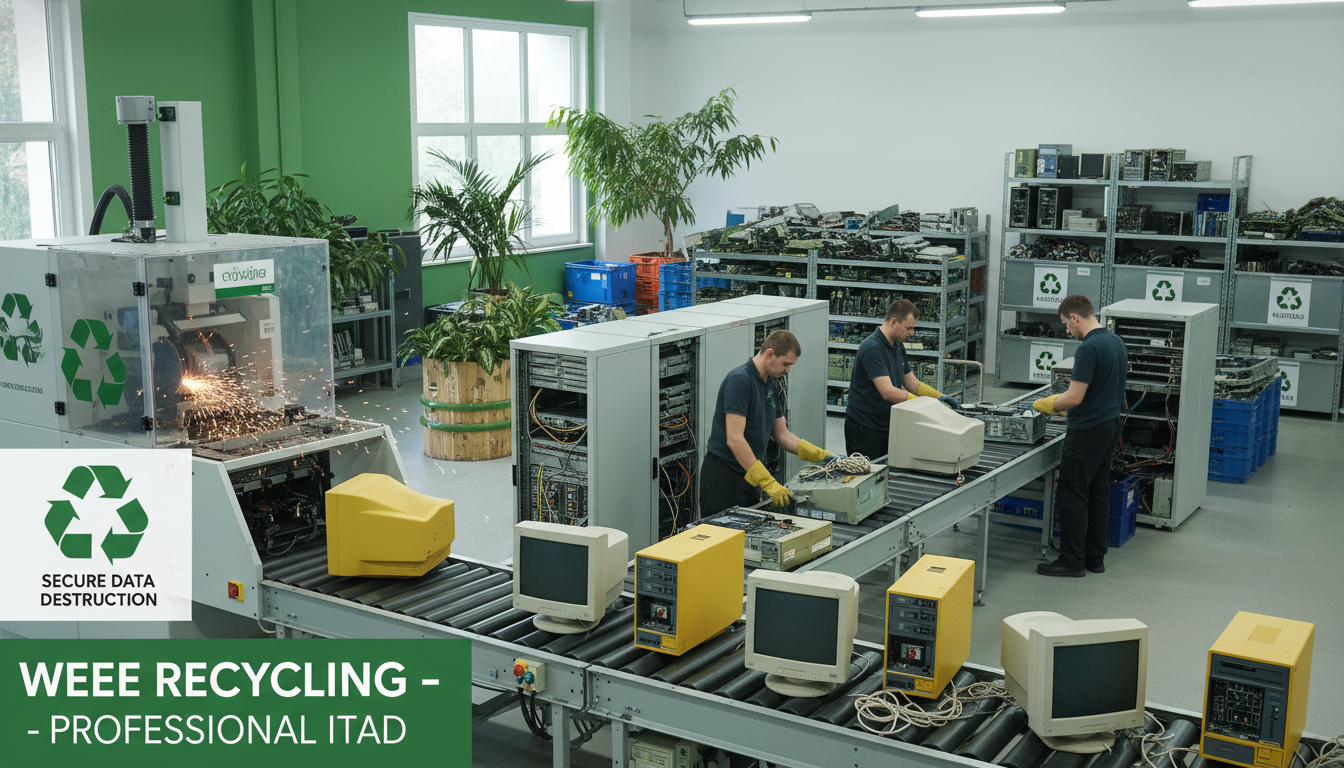
Introduction: Why Responsible IT Asset Disposal Is a Business-Critical Priority
Every organisation in the United Kingdom, regardless of size or sector, will eventually face the challenge of disposing of its IT assets. Servers reach end of life, laptops become obsolete, storage arrays are replaced by cloud infrastructure, and entire data centres must be decommissioned when leases expire or businesses relocate. The question is not whether you will need to dispose of IT equipment, but whether you will do so in a way that protects your data, satisfies your legal obligations, recovers maximum residual value, and minimises your environmental footprint. This is precisely what professional IT decommissioning services are designed to deliver - a structured, auditable, and compliant approach to every stage of the asset disposal lifecycle.
The consequences of getting IT asset disposal wrong are severe and far-reaching. From a data security perspective, improperly sanitised hard drives have been the source of some of the most damaging data breaches in UK corporate history. The Information Commissioner’s Office (ICO) has levied multi-million-pound fines against organisations that failed to adequately protect personal data during equipment disposal. From an environmental perspective, the UK’s Waste Electrical and Electronic Equipment (WEEE) Regulations impose strict legal obligations on producers and holders of electronic waste, with criminal penalties for non-compliance. And from a financial perspective, organisations that fail to implement structured IT asset disposal services UK processes routinely leave tens of thousands of pounds of residual value on the table - value that could be recovered through refurbishment, resale, and materials reclamation.
This specialist guide has been written for IT directors, facilities managers, compliance officers, and business owners across the United Kingdom who are responsible for the secure and compliant disposal of IT equipment. Whether you are decommissioning a single server room, managing a multi-site office consolidation, or overseeing a large-scale data centre migration, this guide will walk you through every aspect of the process - from regulatory requirements and data sanitisation standards to logistics planning, environmental compliance, and provider selection. By the time you finish reading, you will have a comprehensive framework for managing IT asset disposal as the strategic, risk-mitigating, value-recovering process it should be.
Understanding IT Decommissioning: Scope, Definitions, and Why It Matters
IT decommissioning services encompass the complete end-to-end process of safely retiring IT infrastructure from active service. This is fundamentally different from simply unplugging equipment and sending it to a skip. Professional decommissioning involves a structured methodology that includes asset identification and tagging, data sanitisation or destruction, physical disconnection and removal, secure transportation, environmental processing, value recovery, and comprehensive documentation that creates a defensible audit trail. Each of these steps must be executed with precision, because a failure at any stage can result in data exposure, regulatory non-compliance, or environmental harm.
The scope of IT decommissioning services extends far beyond what many organisations initially appreciate. A typical enterprise decommissioning project may involve servers, storage arrays, networking equipment, uninterruptible power supplies, cable infrastructure, raised floor tiles, cooling systems, and the physical environment itself. In a data centre context, decommissioning may also involve coordination with colocation providers, power disconnection, and the reinstatement of leased facilities to their original condition. For office environments, the scope typically includes desktop computers, laptops, monitors, printers, telephony equipment, cabling, and associated peripheral devices.
The reason professional IT decommissioning services have become essential rather than optional is the convergence of three powerful forces. First, data protection regulations - particularly the UK GDPR and the Data Protection Act 2018 - impose explicit obligations on organisations to ensure that personal data is securely destroyed when it is no longer needed. Second, the WEEE Regulations create legal duties around the environmentally responsible treatment of electronic waste. Third, the increasing sophistication of data recovery techniques means that even “deleted” data can be recovered from improperly sanitised media, making professional data destruction not just advisable but essential.
The UK Regulatory Landscape: WEEE, GDPR, and Environmental Law
Any discussion of IT asset disposal in the United Kingdom must begin with a thorough understanding of the regulatory framework that governs it. UK organisations face a complex web of overlapping regulations, and ignorance of these requirements is no defence against enforcement action. The three primary pillars of regulation are the WEEE Regulations, the UK GDPR, and the Environmental Protection Act 1990, each of which imposes distinct obligations on organisations disposing of IT equipment.
WEEE Regulations 2013 (as amended)
The Waste Electrical and Electronic Equipment Regulations 2013 - commonly known as the WEEE Regulations - implement the EU WEEE Directive in UK law and remain in force post-Brexit with minor amendments. These regulations are the primary legislative framework governing WEEE recycling IT equipment UK obligations and apply to all organisations that produce, distribute, or hold electronic waste. Under WEEE, producers of electrical equipment must register with an approved producer compliance scheme and contribute to the costs of collecting, treating, and recycling WEEE. Businesses disposing of IT equipment are classified as “holders” of WEEE and must ensure that their waste is handled by an authorised treatment facility (AATF) or an approved exporter.
The requirements for WEEE recycling IT equipment UK compliance are specific and non-negotiable. All WEEE must be collected separately from general waste. It must be transported by a registered waste carrier. It must be treated at a facility that holds the appropriate environmental permits. And a full paper trail - including duty of care waste transfer notes and WEEE evidence notes - must be maintained for a minimum of two years. Failure to comply with the WEEE Regulations can result in criminal prosecution, unlimited fines, and imprisonment of up to two years for the most serious offences.
For organisations undertaking large-scale IT decommissioning projects, WEEE recycling IT equipment UK compliance adds a significant layer of complexity. Different categories of IT equipment may need to be processed through different waste streams, and the regulations require that certain hazardous components - such as batteries, mercury-containing backlights, and lead solder - are removed and treated separately before the main body of equipment can be processed. This is one of the strongest arguments for engaging a specialist IT asset disposal services UK provider, as they maintain the necessary permits, registrations, and processing infrastructure to handle these requirements efficiently.
UK GDPR and Data Protection Act 2018
The UK General Data Protection Regulation, retained in domestic law following Brexit, imposes a direct obligation on data controllers to ensure that personal data is processed securely throughout its lifecycle - including at the point of disposal. Article 5(1)(f) requires that personal data is “processed in a manner that ensures appropriate security,” while Article 17 establishes the right to erasure, which necessarily requires the ability to permanently and verifiably destroy data. The Data Protection Act 2018 supplements these requirements with additional provisions specific to the UK context.
For IT asset disposal services UK purposes, the practical implication is clear: any storage media that has ever contained personal data must be sanitised to a standard that renders the data irrecoverable before the equipment leaves your control, or the media must be physically destroyed. The ICO has specifically stated that organisations cannot rely on simple deletion or formatting as adequate sanitisation methods, because data can be recovered from formatted drives using commercially available tools. This is why professional data sanitisation, performed to recognised standards such as NIST 800-88 or HMG Infosec Standard 5 (IS5), is an essential component of any compliant disposal process.
The financial penalties for non-compliance are substantial. Under the UK GDPR, the ICO can impose fines of up to £17.5 million or 4% of annual global turnover, whichever is greater. Beyond the financial penalties, a data breach resulting from improper disposal can cause catastrophic reputational damage. Several high-profile cases in the UK have involved sensitive personal or medical data being recovered from improperly disposed hard drives that were sold on secondary markets or found in skips.
Environmental Protection Act 1990
The Environmental Protection Act 1990 establishes the “duty of care” that applies to anyone who produces, imports, keeps, stores, transports, treats, or disposes of controlled waste. IT equipment, once it has reached end of life and is destined for disposal, becomes controlled waste and is subject to these provisions. The duty of care requires that waste is transferred only to an authorised person, that a written description of the waste accompanies each transfer, and that waste transfer notes are kept for at least two years. This duty of care follows the waste throughout its lifecycle, meaning that the original producer retains a degree of responsibility even after the waste has been transferred to a third party.
| Regulation | Primary Obligation | Key Requirements for IT Disposal | Maximum Penalty |
|---|---|---|---|
| WEEE Regulations 2013 | Environmentally responsible treatment of electronic waste | Separate collection, registered carriers, authorised treatment facilities, WEEE evidence notes | Unlimited fine + up to 2 years imprisonment |
| UK GDPR / DPA 2018 | Secure processing and erasure of personal data | Certified data sanitisation (NIST 800-88 / HMG IS5), certificates of destruction, audit trail | £17.5M or 4% of global turnover |
| Environmental Protection Act 1990 | Duty of care for controlled waste | Authorised carriers, waste transfer notes, written waste descriptions, 2-year record retention | Unlimited fine (magistrates) or Crown Court prosecution |
| Hazardous Waste Regulations 2005 | Special handling of hazardous components | Pre-acceptance audits, consignment notes, separate treatment of batteries and hazardous materials | Unlimited fine + up to 5 years imprisonment |
| Transfrontier Shipment of Waste Regulations | Control of cross-border waste movements | Notification and consent procedures for any WEEE exported outside the UK | £50,000 per shipment + criminal prosecution |
Data Sanitisation Standards: NIST 800-88 and HMG IS5 Explained
Data sanitisation is the cornerstone of any professional IT decommissioning services programme, and the standard to which sanitisation is performed directly determines whether disposed equipment poses a residual data risk. Two standards dominate the UK market: the National Institute of Standards and Technology Special Publication 800-88 (NIST 800-88) and the HMG Infosec Standard 5 (IS5), which is mandated for UK government and public sector organisations but widely adopted by the private sector as well.
NIST 800-88: Guidelines for Media Sanitization
NIST SP 800-88 Revision 1, titled “Guidelines for Media Sanitization,” is the most widely referenced international standard for data destruction. It defines three levels of sanitisation, each appropriate for different risk levels and media types:
Clear: The Clear method applies logical techniques to overwrite data in all user-addressable storage locations. This typically involves one or more overwrite passes using tools that write zeros, ones, or random patterns across the entire storage surface. Clear is effective for protecting against simple, non-invasive data recovery attempts and is generally appropriate for media that will be reused within the same organisation. However, it may not be sufficient for media that has contained highly sensitive data, because remnant data may persist in areas not accessible through standard read/write interfaces, such as reallocated sectors, host-protected areas, or device configuration overlays.
A Purge operation renders data recovery infeasible using state-of-the-art laboratory techniques. For magnetic hard drives, this typically involves multiple overwrite passes combined with firmware-level secure erase commands. For solid-state drives (SSDs), purge involves cryptographic erasure (where the drive’s internal encryption key is destroyed, rendering all stored data unreadable) or the use of the drive’s built-in sanitisation command (such as ATA Secure Erase Enhanced or NVMe Format with Cryptographic Erase). Purge is the recommended minimum standard for any media leaving organisational control.
Destroy: The Destroy method renders the media physically unable to store data and is typically achieved through shredding, disintegration, incineration, or degaussing (for magnetic media). Destroy is the only option that provides absolute certainty that data cannot be recovered and is mandated for media that has contained classified, top-secret, or otherwise extremely sensitive information. For organisations in regulated industries or those handling sensitive personal data under UK GDPR, physical destruction provides the highest level of assurance and the most defensible audit position.
HMG Infosec Standard 5 (IS5)
HMG IS5 is the UK government’s standard for the secure sanitisation and disposal of information-bearing media. While primarily mandatory for government departments and agencies, IS5 is widely adopted by private-sector organisations that handle government data, operate in regulated industries, or simply wish to apply the most rigorous standards available. IS5 defines specific procedures for different media types and classification levels, and requires that sanitisation is performed by vetted personnel using approved methods and equipment.
For organisations providing IT asset disposal services UK to the public sector or defence sector, IS5 compliance is non-negotiable. The standard requires that all sanitisation activities are logged, that certificates of destruction are issued for every item, and that the entire chain of custody is documented from the point of collection to the point of final processing. Many private-sector organisations also require IS5-compliant destruction, particularly in financial services, healthcare, legal, and critical national infrastructure sectors.
When selecting an IT asset disposal services UK provider, always ask which data sanitisation standard they follow and request evidence of their accreditation. Reputable providers will hold certifications such as ADISA (Asset Disposal and Information Security Alliance) and will be happy to demonstrate their sanitisation processes, equipment, and reporting. Any provider that cannot clearly articulate their sanitisation methodology should be avoided.
| Sanitisation Method | Standard | Applicable Media | Data Recovery Risk | Residual Value | Certificate Issued |
|---|---|---|---|---|---|
| Single-pass overwrite (Clear) | NIST 800-88 | HDDs, tapes | Low (basic tools) | ✓ Full reuse | ✓ Yes |
| Multi-pass overwrite (Purge) | NIST 800-88 | HDDs | Very low | ✓ Full reuse | ✓ Yes |
| Cryptographic erase (Purge) | NIST 800-88 | SSDs, NVMe, SEDs | Very low | ✓ Full reuse | ✓ Yes |
| Degaussing | NIST / IS5 | HDDs, tapes (magnetic only) | Negligible | ✗ Media destroyed | ✓ Yes |
| Physical shredding | NIST / IS5 / EN 15713 | All media types | Zero | ✗ Materials recovery only | ✓ Yes |
| Incineration | IS5 | All media types | Zero | ✗ No recovery | ✓ Yes |
| HMG Enhanced overwrite | HMG IS5 | HDDs (government / classified) | Negligible | ✓ Restricted reuse | ✓ Yes |
The IT Decommissioning Process: A Step-by-Step Methodology
A well-executed IT decommissioning project follows a structured methodology that ensures nothing is overlooked and every asset is tracked from its current location to its final destination. Whether you are decommissioning a single server rack or an entire data centre, the fundamental process remains the same - only the scale and complexity vary. The following methodology represents industry best practice and is the approach used by leading IT decommissioning services providers across the UK.
Comprehensive site survey to identify, tag, and catalogue every IT asset. Each item receives a unique identifier linked to the asset tracking system. Serial numbers, model numbers, locations, and data classification levels are recorded. This phase typically takes 1–2 weeks for a standard data centre and establishes the definitive inventory against which all subsequent activities are tracked.
All data-bearing media is sanitised to the agreed standard (NIST 800-88 Purge or Destroy, or HMG IS5). Each item receives an individual certificate of destruction documenting the method used, the date, the engineer, and the verification result. For on-site sanitisation, mobile data destruction units are deployed. For media requiring physical destruction, assets are transported under chain-of-custody protocols to the processing facility.
Equipment is systematically powered down, disconnected, and removed from racks and cabinets. Cable management documentation is updated, and all cabling is either removed or clearly labelled for the incoming tenant. Power distribution units are disconnected, and any modifications made to the facility during the equipment’s operational life are noted for potential reinstatement.
Decommissioned assets are securely packaged using anti-static materials and industry-standard shipping containers. GPS-tracked, security-sealed vehicles transport equipment to the processing facility. Chain of custody is maintained throughout, with documented handoffs at every transfer point. For IT equipment logistics UK operations, all carriers must hold valid waste carrier licences and appropriate insurance.
Equipment is triaged into three streams: assets suitable for refurbishment and resale, components suitable for parts harvesting, and materials destined for recycling. Refurbishable equipment is tested, graded, and remarketed. Non-functional equipment is processed for materials recovery - precious metals, copper, aluminium, and plastics are separated and sent to specialist recyclers. All processing occurs at AATF-licensed facilities.
A comprehensive project completion report is delivered, including: individual certificates of data destruction for every data-bearing asset, WEEE compliance certificates, waste transfer notes, environmental impact statements, asset disposition reports showing the final destination of every item, and financial reconciliation for any value recovered through resale. This documentation package forms the organisation’s defensible audit trail.
Asset Tracking: The Foundation of Accountable Disposal
Effective asset tracking is the single most important enabler of a compliant and accountable IT decommissioning process. Without a robust asset tracking system, it is impossible to demonstrate that every asset has been accounted for, that every data-bearing device has been sanitised, and that every item has reached its intended final destination. This is why leading IT decommissioning services providers invest heavily in asset tracking technology and processes.
Modern asset tracking for IT decommissioning typically employs a combination of barcode or RFID tagging, mobile scanning applications, and cloud-based asset management platforms. Each asset is tagged at the point of discovery with a unique identifier that links to a database record containing the asset’s full details: make, model, serial number, location, data classification, sanitisation status, and current disposition status. As the asset progresses through each stage of the decommissioning process - sanitisation, packaging, transportation, processing - its status is updated in real time, creating an unbroken chain of custody that can be audited at any point.
For organisations managing their own asset registers, the decommissioning process provides an ideal opportunity to reconcile physical assets against the configuration management database (CMDB). It is remarkably common for organisations to discover significant discrepancies during a decommissioning audit - “ghost” assets that appear in the CMDB but cannot be physically located, and “rogue” assets that are physically present but do not appear in any inventory. Both situations represent security and compliance risks, and the decommissioning audit provides the opportunity to resolve them definitively.
IT Asset Relocation: Managing Moves Without Losing Control
Not all end-of-life scenarios involve disposal. In many cases, IT assets need to be relocated rather than decommissioned - for example, during office moves, data centre migrations, site consolidations, or the redeployment of equipment from one business unit to another. IT asset relocation UK services address this requirement with the same level of rigour and accountability that applies to disposal, because the risks during transit are just as significant.
The parallels between IT asset relocation UK operations and decommissioning projects are substantial. Both require comprehensive asset inventories. Both demand secure packaging and transportation. Both necessitate chain-of-custody tracking. And both carry significant risks if executed poorly - damaged equipment, lost assets, data exposure, and business disruption. The key difference is that relocation adds the complexity of reinstallation and recommissioning at the destination site, which requires careful coordination between the logistics team, the receiving site’s facilities management, and the organisation’s IT operations team.
Professional IT asset relocation UK providers bring several critical capabilities to the table. First, they have specialist vehicles and packaging materials designed specifically for transporting sensitive IT equipment, including shock-absorbing cases, climate-controlled containers, and anti-static wrapping. Second, they employ engineers who understand how to safely disconnect, transport, and reconnect complex IT infrastructure without causing damage or data loss. Third, they maintain comprehensive insurance coverage that protects against loss or damage during transit - something that standard removals companies typically cannot offer for high-value IT equipment.
For larger IT asset relocation UK projects, such as data centre migrations, the logistics planning becomes a critical project in its own right. Migration plans must account for the sequence of disconnection and reconnection, the capacity of transportation vehicles, access constraints at both the source and destination sites, power and cooling requirements at the receiving facility, and the business continuity implications of equipment being unavailable during transit. Many organisations underestimate the complexity of these factors and only discover the gaps in their planning when equipment arrives at the new site and cannot be installed due to power, cooling, or space constraints that were not identified in advance.
IT Equipment Logistics: Secure Transportation and Chain of Custody
The logistics of moving IT equipment - whether for disposal, relocation, or recycling - represent one of the highest-risk phases of the entire process. During transportation, assets are outside the physical security perimeter of the organisation, potentially exposed to theft, damage, or environmental hazards. This is why IT equipment logistics UK operations demand a level of rigour that goes far beyond standard freight and courier services.
Professional IT equipment logistics UK providers operate a fleet of dedicated vehicles that are designed, equipped, and secured specifically for transporting IT assets. These vehicles feature GPS tracking that provides real-time location monitoring, tamper-evident seals that indicate if the cargo area has been accessed during transit, shock and vibration monitoring systems that record any impacts exceeding safe thresholds, and climate control systems that maintain temperature and humidity within the operating tolerances of sensitive equipment. Drivers are security-vetted to at least BS 7858 standard and trained in the specific handling requirements of IT equipment.
Chain of custody documentation is the critical control that ensures every asset is accounted for at every stage of the logistics process. At the point of collection, a detailed manifest is created listing every asset being transported, identified by its unique tracking identifier. The manifest is signed by both the collecting engineer and the site representative. At the point of delivery - whether to a processing facility, a new site, or a destruction centre - the manifest is reconciled against the physical assets received, and any discrepancies are immediately escalated. This documentation provides the legal evidence that assets were handled responsibly and creates the foundation for the certificates of destruction and WEEE compliance certificates that the organisation needs for its audit trail.
For IT equipment logistics UK operations involving high-security assets - such as equipment from government, defence, financial services, or healthcare organisations - additional controls may be required. These can include dual-driver operations (ensuring no single individual has unsupervised access to the cargo), real-time video monitoring of the cargo area, police-escorted convoys for particularly sensitive consignments, and the use of screened or classified facilities for processing. These enhanced measures carry a cost premium but are essential for organisations with the highest security requirements.
The importance of selecting a logistics provider with appropriate credentials cannot be overstated. At minimum, any provider handling IT waste must hold a valid upper-tier waste carrier licence issued by the Environment Agency (or the equivalent devolved bodies in Scotland, Wales, and Northern Ireland). For organisations requiring enhanced security, look for providers that hold ISO 27001 certification (information security management), ADISA certification (data sanitisation and asset disposal), and relevant government security clearances such as List X or SC clearance.
Comparing Disposal Approaches: Resale, Recycling, and Destruction
When IT assets reach end of life, organisations face a fundamental decision about the disposition pathway for each item. The three primary options - refurbishment and resale, materials recycling, and physical destruction - each offer different balances of value recovery, environmental benefit, and security assurance. Understanding these trade-offs is essential for developing a disposal strategy that aligns with your organisation’s priorities.
Refurbishment & Resale
Materials Recycling
Physical Destruction
The optimal approach for most organisations is a blended strategy that assigns each asset to the most appropriate disposition pathway based on its age, condition, residual value, and the sensitivity of the data it has contained. Newer equipment in good working order can be sanitised to Purge level and resold, generating revenue that offsets the cost of the decommissioning project. Older or damaged equipment that has no resale value but contains recoverable materials should be recycled through an AATF. And media that has contained highly sensitive or classified data should be physically destroyed, regardless of its potential resale value, because the risk of a data breach far outweighs any financial recovery.
A competent IT asset disposal services UK provider will conduct this triage as a standard part of their service and will present a detailed disposition plan showing the recommended pathway for each asset category, the expected financial return from resale, the projected recycling volumes, and the destruction requirements. This transparency allows the organisation to make informed decisions and ensures that the disposal strategy aligns with both commercial and compliance objectives.
Environmental Compliance and Sustainability
The environmental dimension of IT asset disposal has moved from a peripheral concern to a central business priority, driven by a combination of regulatory pressure, stakeholder expectations, and genuine corporate commitment to sustainability. For UK organisations, WEEE recycling IT equipment UK compliance is the baseline - the legal minimum that must be achieved. But many organisations now aspire to go significantly beyond minimum compliance, adopting circular economy principles that prioritise reuse and remanufacture over recycling, and recycling over disposal.
The environmental impact of IT equipment is substantial across its entire lifecycle. Manufacturing a single laptop generates approximately 300–400 kg of CO2 equivalent, consumes significant quantities of rare earth minerals, and requires hundreds of litres of water. When that laptop is disposed of responsibly - either through refurbishment for reuse or through materials recycling - the environmental benefit is considerable. Extending the useful life of a laptop by even two years avoids the need to manufacture a replacement, saving the equivalent of all the carbon embedded in its production. Recycling the materials when the device eventually reaches end of life recovers precious metals (gold, silver, palladium, platinum), base metals (copper, aluminium, steel), and plastics that would otherwise need to be mined or manufactured from virgin resources.
For organisations reporting on their environmental impact - whether through mandatory climate-related financial disclosures, voluntary frameworks such as the Task Force on Climate-related Financial Disclosures (TCFD), or corporate social responsibility reports - the data generated by a professional WEEE recycling IT equipment UK programme provides valuable metrics. A good disposal provider will supply detailed environmental impact reports showing the total weight of equipment processed, the proportion diverted from landfill, the materials recovered, the CO2 emissions avoided through reuse and recycling, and the overall landfill diversion rate achieved. These metrics feed directly into ESG (Environmental, Social, and Governance) reporting and demonstrate tangible commitment to environmental responsibility.
The 95% landfill diversion rate shown above represents the benchmark achieved by leading IT asset disposal services UK providers. This means that 95% or more of all IT equipment processed by weight is either reused, recycled, or has its materials recovered - with less than 5% going to landfill (typically consisting of non-recyclable composite materials and contaminated components). Organisations should treat this as a minimum standard when evaluating providers and should be sceptical of any provider that cannot demonstrate a diversion rate of at least 90%.
Provider Selection: Evaluating IT Decommissioning Partners
Selecting the right provider for your IT decommissioning services requirements is a decision that carries significant risk. An inadequate provider can expose your organisation to data breaches, regulatory non-compliance, environmental liability, and reputational damage. Conversely, a well-chosen provider will manage the entire process seamlessly, mitigate your risks, maximise your value recovery, and provide the documentation you need to demonstrate compliance. The following framework will help you evaluate providers objectively.
Essential Certifications and Accreditations
The certification landscape for IT asset disposal services UK providers is well established, and the certifications a provider holds are the most reliable indicator of their competence and credibility. The following certifications should be considered essential for any provider you evaluate:
ADISA (Asset Disposal and Information Security Alliance): ADISA is the UK’s leading certification body for IT asset disposal and data sanitisation. ADISA-certified providers undergo rigorous audits that assess their entire operation, from data handling procedures and sanitisation methods to physical security, personnel vetting, and logistics controls. ADISA certification is widely regarded as the industry gold standard and is the single most important credential to look for when selecting a provider.
ISO 27001: This international standard for information security management systems demonstrates that the provider has a systematic approach to managing sensitive information, including the data contained on equipment in their care. ISO 27001 certification requires regular third-party audits and continuous improvement of security controls.
ISO 14001: This environmental management standard confirms that the provider has a systematic approach to managing their environmental impact, including the processing of electronic waste. ISO 14001 certification is particularly important for organisations that need to demonstrate environmental responsibility in their supply chain.
Environment Agency licensing: Any facility processing WEEE must hold the appropriate environmental permits issued by the Environment Agency (or equivalent devolved bodies). These permits specify the types and quantities of waste the facility is authorised to accept and process, and are subject to regular inspection and enforcement.
Due Diligence Questions to Ask Providers
When evaluating potential IT decommissioning services partners, the following questions will quickly separate competent, reputable providers from those that fall short:
- What data sanitisation standards do you follow, and can you demonstrate ADISA or equivalent certification for your sanitisation processes?
- Do you provide individual certificates of destruction for every data-bearing asset, and what information does each certificate contain?
- What is your chain-of-custody process from collection to final processing, and how is it documented?
- What is your landfill diversion rate, and can you provide environmental impact reports from recent projects?
- Are your vehicles GPS-tracked and fitted with tamper-evident seals?
- What security vetting do your staff undergo, and do you hold any government security clearances?
- Can you provide an asset tracking portal where we can monitor the status of our equipment in real time?
- How do you handle the resale of refurbished equipment, and what financial transparency do you provide on value recovered?
- What insurance coverage do you hold for equipment in your care, custody, and control?
- Can you provide references from organisations of similar size and in similar industries to ours?
Scoring IT Disposal Providers: A Comparative Framework
To help organisations make objective comparisons between providers, we have developed a scorecard framework that evaluates IT asset disposal services UK providers across the dimensions that matter most. This framework is based on our assessment of leading UK providers and reflects the criteria that procurement and compliance teams should prioritise during the selection process.
The scorecard above makes the case clearly: ADISA-certified specialist providers offer the highest levels of data security, compliance documentation, and overall assurance. While they may not always be the cheapest option, the premium is justified by the substantially lower risk profile and the comprehensive audit trail they provide. General waste contractors, despite their broad coverage and lower cost, present significant gaps in data security and chain-of-custody controls that make them unsuitable for any organisation handling personal data or operating in a regulated sector.
IT Decommissioning Readiness: Assessing Your Organisation
Before embarking on a decommissioning project, it is valuable to assess your organisation’s readiness across the key dimensions that determine how smoothly the project will proceed. The following gauges reflect the typical readiness levels we observe across UK organisations, based on our experience supporting hundreds of IT decommissioning services projects. Use these as a benchmark to identify areas where preparation work is needed before the project begins.
Only 30% of UK organisations have an accurate, up-to-date IT asset register. Most discover significant discrepancies during the decommissioning audit.
Half of organisations lack formal data classification, making it difficult to determine the appropriate sanitisation level for each asset during disposal.
Most organisations are broadly aware of WEEE obligations, but many lack the detailed operational understanding needed to ensure full compliance during disposal.
Only 22% of UK organisations have a written IT asset disposal policy. Without one, disposal decisions are ad hoc and inconsistent, increasing compliance risk.
If your organisation scores below 50% on any of these dimensions, the first step before engaging a disposal provider should be preparatory work to address the gaps. At minimum, you should compile the most accurate asset inventory possible, establish a basic data classification scheme (even a simple three-tier model of “public,” “internal,” and “confidential”), and draft a formal IT asset disposal policy that sets out your organisation’s requirements for data sanitisation, environmental compliance, and value recovery. Your chosen IT decommissioning services provider can assist with all of these preparatory activities, and many offer pre-project consultancy as a standard service.
Certificates of Destruction: What They Are and Why They Matter
A certificate of destruction is the single most important document generated during the IT asset disposal process. It provides formal, auditable evidence that a specific data-bearing asset has been sanitised or destroyed to a defined standard, and it identifies the method used, the date of processing, the processing facility, and the engineer who performed the work. In the event of a data breach investigation, a regulatory audit, or a legal challenge, certificates of destruction are the primary evidence that the organisation met its data protection obligations during equipment disposal.
A comprehensive certificate of destruction should contain, at minimum, the following information: the organisation’s name and the project or contract reference; the asset’s unique identifier (serial number, asset tag, or tracking number); a description of the asset (make, model, type); the sanitisation or destruction method applied (referencing the relevant standard, such as NIST 800-88 Purge or HMG IS5 Enhanced); the date and time of processing; the name and signature of the engineer who performed the sanitisation; the name and location of the processing facility; and a verification statement confirming that the sanitisation was verified as successful (for overwrite methods) or that the media was physically destroyed (for destruction methods).
For organisations in regulated industries, certificates of destruction may need to meet additional requirements specified by the industry regulator. Financial services firms regulated by the FCA, for example, may need to demonstrate that destruction was performed within specific timeframes. Healthcare organisations subject to NHS Digital requirements may need certificates that reference specific NHS data handling standards. Legal firms may need certificates that address the requirements of the Solicitors Regulation Authority regarding client data. A competent IT asset disposal services UK provider will understand these sector-specific requirements and will tailor their certification accordingly.
Some providers issue a single “blanket” certificate of destruction that covers an entire batch of assets with a single document, rather than individual certificates for each data-bearing device. While this approach may satisfy minimum regulatory requirements in some contexts, it provides significantly weaker audit protection. If any individual asset in the batch was not properly sanitised, the blanket certificate provides no way to identify or isolate the failure. Always insist on individual certificates for every data-bearing asset, identified by serial number or unique tracking reference.
The True Cost of IT Decommissioning: What UK Organisations Should Budget
Understanding the financial dimensions of an IT decommissioning services project is essential for budgeting and business case development. The total cost depends on the scale and complexity of the project, the security requirements, the geographic locations involved, and the extent of value recovery achievable from resaleable assets. However, it is important to recognise that professional decommissioning is not purely a cost - it is also a value recovery exercise, and for many organisations, the revenue generated from asset resale partially or fully offsets the cost of the disposal process.
At the project level, a typical data centre decommissioning engagement for a mid-size UK organisation - involving 50 to 200 rack units of equipment across servers, storage, and networking - will cost between £15,000 and £60,000 for the full service including audit, sanitisation, removal, transportation, processing, and compliance documentation. For smaller office-based projects involving desktop equipment, the cost is typically £15 to £40 per asset for collection, sanitisation, and processing, with the per-unit cost decreasing as volumes increase.
The value recovery component can be significant. Enterprise servers that are less than five years old can retain 15–30% of their original purchase price when refurbished and resold through specialist channels. Corporate laptops in good condition typically fetch £50–£200 on the secondary market. Even networking equipment and storage arrays can generate meaningful returns. A well-managed disposal programme for 500 desktop devices and 50 servers might recover £25,000–£60,000 in resale value, substantially offsetting or even exceeding the cost of the disposal service itself.
The cost of not using professional IT decommissioning services is where the true financial risk lies. A single data breach resulting from improperly disposed equipment can generate costs running into hundreds of thousands or even millions of pounds when you factor in ICO fines, legal costs, customer notification expenses, credit monitoring services, business disruption, and reputational damage. The professional decommissioning fee is, in effect, an insurance premium against these catastrophic outcomes - and it is an exceptionally cost-effective one.
Industry-Specific Considerations for IT Disposal
While the fundamentals of IT asset disposal apply universally, certain industries face additional requirements and considerations that influence how IT asset disposal services UK programmes should be designed and executed. Understanding these sector-specific nuances is important both for organisations operating in these sectors and for the providers that serve them.
Financial Services
Financial services firms regulated by the Financial Conduct Authority (FCA) and the Prudential Regulation Authority (PRA) face some of the most stringent data handling requirements in the UK. The FCA’s Senior Managers and Certification Regime (SM&CR) creates personal accountability for senior managers in respect of data handling failures, which means that inadequate IT disposal processes can have career-ending consequences for named individuals. Financial firms should require NIST 800-88 Purge as a minimum for all storage media, with physical destruction mandated for media that has contained customer financial data, trading data, or regulatory correspondence. Full audit trails and individual certificates of destruction are essential, and many firms require their disposal provider to hold specific financial sector accreditations.
Healthcare and NHS
Healthcare organisations, including NHS trusts and private healthcare providers, handle some of the most sensitive personal data in existence: medical records, clinical images, genetic data, and mental health information. The NHS has experienced several high-profile data breaches involving improperly disposed hard drives, and the sector is now subject to intensive scrutiny by both the ICO and NHS Digital. Healthcare organisations should mandate physical destruction for all media that has contained patient data, and should require their disposal provider to hold specific healthcare sector experience and, ideally, NHS Digital DSP Toolkit compliance. The WEEE recycling IT equipment UK requirements are identical to other sectors, but the data sanitisation and destruction requirements are among the most demanding.
Legal Services
Law firms and legal services organisations are subject to the Solicitors Regulation Authority (SRA) Code of Conduct, which imposes specific obligations regarding client confidentiality. Legal professional privilege extends to electronic records, and the improper disposal of storage media containing privileged material can result in both regulatory sanctions and civil liability. Law firms should require enhanced data sanitisation and should consider physical destruction as the default for all storage media, given the extreme sensitivity of the data involved and the potential for significant harm if privileged material were to be compromised.
Government and Defence
UK government departments and defence organisations operate under the most rigorous disposal requirements, governed by HMG IS5 and the Cabinet Office’s Security Policy Framework. Disposal of classified material must be performed by providers holding appropriate government security clearances, and the destruction methods and facility requirements are specified in detail according to the classification level of the material. For OFFICIAL-SENSITIVE and above, physical destruction is typically mandated, with witnessed destruction required for higher classifications. IT equipment logistics UK operations for government and defence assets require security-cleared drivers, GPS tracking, and in some cases escorted transportation.
Building an IT Asset Disposal Policy: A Framework for UK Organisations
A formal IT asset disposal policy is the foundation of a compliant and consistent approach to equipment end-of-life management. Despite its importance, our research indicates that only 22% of UK organisations have a written disposal policy in place. For the remaining 78%, disposal decisions are made on an ad hoc basis by individuals who may not fully understand the regulatory requirements, the security implications, or the value recovery opportunities. This section provides a framework for building a comprehensive disposal policy that addresses all of the key considerations.
An effective IT asset disposal policy should address the following elements: scope (which equipment types and data classifications are covered); roles and responsibilities (who authorises disposal, who executes it, who audits it); data sanitisation requirements (minimum standards for each data classification level); approved disposal methods (the permitted disposition pathways and their conditions); approved providers (the criteria for selecting and managing disposal partners); documentation and record-keeping requirements; environmental compliance obligations; value recovery expectations; exception handling procedures; and policy review and update schedules.
The policy should be owned by a senior executive - typically the Chief Information Security Officer (CISO), the Chief Technology Officer (CTO), or the Head of IT - and should be reviewed annually or whenever a significant change occurs in the regulatory landscape, the organisation’s risk profile, or the technology estate. The policy should be communicated to all staff who have any involvement in IT asset management or disposal, and compliance with the policy should be auditable.
For organisations that lack the internal expertise to develop a disposal policy from scratch, many IT asset disposal services UK providers offer policy development as a consultancy service. This can be a cost-effective way to ensure that the policy is comprehensive, compliant, and aligned with industry best practice. The provider’s operational expertise in disposal processes, regulatory requirements, and common pitfalls can add significant value to the policy development process.
Case Studies: Lessons from UK Decommissioning Projects
Examining real-world examples of IT decommissioning projects - both successful and unsuccessful - provides valuable insights into the practical challenges and best practices that organisations should be aware of. The following case studies are drawn from publicly reported incidents and anonymised project data.
Case Study 1: NHS Trust Data Breach from Improper Disposal
In one of the most widely reported IT disposal failures in UK history, an NHS trust was fined £325,000 by the ICO after thousands of patient records were discovered on hard drives that had been sold on an internet auction site. The trust had contracted a third-party company to dispose of its IT equipment, but had failed to verify that the company held appropriate certifications or followed adequate data sanitisation procedures. The hard drives were sold without any data sanitisation whatsoever, exposing the personal and medical details of thousands of patients. The case demonstrated the critical importance of provider due diligence and the duty of care that organisations retain even after transferring equipment to a third party for disposal.
Case Study 2: Successful Data Centre Decommissioning
A major UK financial services firm successfully decommissioned a 400-rack data centre as part of a cloud migration programme. The project involved over 3,000 individual assets, including servers, storage arrays, networking equipment, and UPS systems. By engaging an ADISA-certified specialist provider and following a structured decommissioning methodology, the firm achieved a 97% landfill diversion rate, recovered £180,000 in resale value from refurbishable equipment, and received individual certificates of destruction for every data-bearing asset. The entire project was completed within the 12-week timeline agreed at the outset, with zero data security incidents and full WEEE recycling IT equipment UK compliance throughout.
Case Study 3: Multi-Site Office Consolidation
A professional services firm with 14 offices across England and Scotland consolidated into three regional hubs, requiring the simultaneous decommissioning of 11 sites. The project involved over 2,500 desktop devices, 300 printers, and extensive networking and telephony equipment. The key challenge was coordinating IT asset relocation UK activities (moving equipment to the new hub offices) with disposal activities (decommissioning equipment that was not being retained). By using a single provider for both relocation and disposal, the firm was able to maintain a unified chain of custody, achieve economies of scale on logistics costs, and complete the consolidation within a six-month programme timeline. The total value recovered from resale and recycling covered approximately 60% of the total decommissioning and relocation cost.
Common Pitfalls and How to Avoid Them
Even well-intentioned organisations frequently make mistakes during IT asset disposal that expose them to unnecessary risk. Understanding the most common pitfalls - and how to avoid them - will help you execute a more effective, more compliant, and more cost-efficient decommissioning programme.
Pitfall 1: Relying on “delete” or “format” as data sanitisation. Standard deletion removes only the file system pointer, not the underlying data. Formatting typically overwrites only the file allocation table. In both cases, the actual data remains on the storage media and can be recovered using freely available software tools. Professional sanitisation to NIST 800-88 or IS5 standards is the only reliable method of ensuring data irrecoverability.
Pitfall 2: Failing to account for all data-bearing media. Many organisations focus their sanitisation efforts on hard drives and SSDs but overlook other data-bearing media within their IT estate: backup tapes, USB drives, optical media, firmware chips in networking equipment, NVRAM in printers and copiers, and even RAM modules (which can retain data for a period after power is removed). A comprehensive disposal programme must identify and address all data-bearing media, not just the most obvious types.
Pitfall 3: Not verifying the disposal provider’s credentials. As the NHS trust case study illustrates, engaging an unverified or uncertified disposal provider can have catastrophic consequences. Always verify the provider’s certifications independently (not just by accepting their claim), visit their processing facility if possible, and check their standing with ADISA, the Environment Agency, and any other relevant bodies. A legitimate provider will welcome this scrutiny; any provider that resists it should be avoided.
Pitfall 4: Treating IT disposal as a facilities issue rather than an information security issue. In many organisations, IT asset disposal falls under the remit of facilities management or procurement, rather than information security. While facilities and procurement teams are well placed to manage the logistics and commercial aspects of disposal, they may not have the technical understanding to evaluate data sanitisation methods or assess data security risks. IT disposal should be a joint responsibility, with information security setting the requirements and overseeing compliance, and facilities/procurement managing the operational execution.
Pitfall 5: Leaving equipment unsecured before collection. The period between an asset being decommissioned and being collected by the disposal provider is a vulnerability window. Equipment stored in unsecured areas - loading docks, corridors, open-plan offices - is susceptible to theft, and stolen equipment containing unsanitised data represents a serious breach risk. Always ensure that decommissioned equipment is stored in a locked, access-controlled area until collection, and maintain an inventory of exactly what is stored there.
Pitfall 6: Ignoring the value recovery opportunity. Many organisations treat IT disposal purely as a cost, failing to explore the potential for value recovery through resale. Enterprise IT equipment retains significant residual value, particularly within the first five years of its life. By engaging a provider that operates an active remarketing channel, organisations can often recover enough value from resale to fully or partially offset the cost of the disposal programme. Even when assets have no resale value, materials recovery (precious metals, copper, aluminium) generates a small but meaningful return.
Future Trends in IT Asset Disposal and Decommissioning
The IT asset disposal industry in the United Kingdom is evolving in response to technological change, regulatory developments, and shifting corporate priorities. Understanding these trends will help organisations prepare for the future and make decisions today that remain fit for purpose as the landscape evolves.
Circular economy mandates: The UK government is increasingly committed to circular economy principles, and future legislation is expected to impose more demanding requirements for the reuse and recycling of electronic waste. The proposed Right to Repair legislation, along with potential extensions to the WEEE Regulations, may create new obligations for producers and holders of IT equipment. Organisations that adopt circular economy practices now - prioritising refurbishment and reuse over destruction - will be ahead of the regulatory curve.
Blockchain-based audit trails: Several leading IT decommissioning services providers are exploring the use of blockchain technology to create immutable, tamper-proof audit trails for the disposal process. Blockchain-based certificates of destruction and chain-of-custody records would provide an even higher level of assurance than traditional paper or PDF certificates, because they cannot be altered after the fact. While this technology is still in its early stages of adoption in the UK market, it represents a significant improvement in audit integrity.
AI-driven asset valuation: Artificial intelligence is being deployed to more accurately assess the residual value of IT equipment, enabling providers to maximise recovery from resale and provide more transparent financial reporting to their clients. AI-powered valuation tools analyse factors such as equipment age, specification, condition, market demand, and commodity prices to generate real-time valuations that inform disposition decisions.
SSD and NVMe sanitisation challenges: The shift from magnetic hard drives to solid-state storage technologies (SSDs, NVMe drives) presents new challenges for data sanitisation. Traditional overwrite methods are less effective on SSDs because of wear-levelling algorithms and over-provisioned storage areas that are not accessible to standard write commands. Cryptographic erasure has emerged as the preferred sanitisation method for SSDs, but it relies on the drive’s built-in encryption being properly configured - which is not always the case. Physical destruction remains the only guaranteed method for SSDs, particularly for those containing sensitive data.
Extended Producer Responsibility (EPR): The UK government is consulting on reforms to the existing EPR framework that would place greater financial responsibility on manufacturers for the end-of-life management of their products. If implemented, these reforms could shift more of the cost of WEEE recycling IT equipment UK operations from the end user to the producer, potentially reducing the direct cost to organisations disposing of equipment while encouraging manufacturers to design products that are easier to recycle.
Frequently Asked Questions
What is the difference between IT decommissioning and IT asset disposal?
IT decommissioning services refer to the complete end-to-end process of safely retiring IT infrastructure from active service, which includes planning, disconnection, data sanitisation, physical removal, transportation, and environmental processing. IT asset disposal is a subset of decommissioning that focuses specifically on what happens to the equipment after it has been removed - whether it is resold, recycled, or destroyed. In practice, most professional providers offer both services as an integrated package, because decommissioning without a defined disposal pathway leaves equipment in limbo, and disposal without proper decommissioning creates data security risks. For most UK organisations, engaging a single provider that covers the full lifecycle from disconnection to final disposition is the most efficient and lowest-risk approach.
How do I ensure my IT disposal provider is WEEE-compliant?
To verify WEEE recycling IT equipment UK compliance, you should check several specific credentials. First, confirm that the provider’s processing facility holds an Authorised Approved Treatment Facility (AATF) licence from the Environment Agency. You can verify this on the Environment Agency’s public register. Second, check that their transportation operations use carriers with valid upper-tier waste carrier licences. Third, request copies of their WEEE evidence notes from recent projects, which demonstrate that processed waste has been properly reported through the compliance scheme system. Fourth, ask about their landfill diversion rate - reputable providers achieve 95% or above. Finally, verify that they hold ISO 14001 environmental management certification, which provides additional assurance of systematic environmental compliance. Any provider unable or unwilling to provide this evidence should be ruled out of consideration.
What data sanitisation standard should my organisation use?
The appropriate data sanitisation standard depends on your organisation’s sector, the classification of the data involved, and your regulatory obligations. As a general guideline, NIST 800-88 Purge is the recommended minimum for any storage media leaving organisational control, and this standard is suitable for most private-sector organisations handling business-confidential and personal data. UK government organisations and their supply chain partners must use HMG IS5, which specifies additional controls including enhanced overwrite procedures and witnessed destruction for classified material. Organisations in highly regulated sectors - financial services, healthcare, legal, defence - should typically apply NIST 800-88 Destroy (physical destruction) for media that has contained the most sensitive data categories. Your CISO or Data Protection Officer should define the minimum sanitisation standard for each data classification level within your IT asset disposal services UK policy.
Can IT equipment be resold after data sanitisation, and is it safe?
Yes, IT equipment can be safely resold after professional data sanitisation, provided the sanitisation has been performed to at least NIST 800-88 Purge level by a certified provider using validated tools and processes. At the Purge level, data recovery is infeasible using state-of-the-art laboratory techniques, meaning that even a determined and well-resourced adversary cannot extract meaningful data from the sanitised media. The resale of sanitised equipment is not only safe but actively encouraged by both environmental regulations (the WEEE hierarchy prioritises reuse over recycling) and circular economy principles. Many organisations generate significant revenue from the resale of refurbished equipment, which offsets disposal costs and supports sustainability goals. The key requirement is that sanitisation is performed by a certified provider, individually verified, and documented with per-asset certificates of destruction.
How long should I retain IT disposal records and certificates of destruction?
UK regulatory requirements specify different retention periods depending on the type of record and the applicable regulation. Waste transfer notes must be retained for a minimum of two years under the Environmental Protection Act 1990. However, for data protection purposes, the ICO recommends retaining certificates of destruction and associated disposal records for at least six years, which aligns with the standard limitation period for civil claims in England and Wales. Organisations in regulated sectors may need to retain records for even longer - financial services firms, for example, are typically required to retain records for seven years or more. As a practical best practice, we recommend retaining all IT decommissioning services records, including certificates of destruction, chain-of-custody documentation, WEEE evidence notes, and environmental impact reports, for a minimum of seven years. The storage cost is negligible, and the protection these records provide in the event of an investigation or legal challenge is invaluable.
What happens if IT equipment is lost or stolen during the disposal process?
Equipment loss or theft during the disposal process is a reportable data breach under UK GDPR if the equipment contained personal data that had not been sanitised prior to the loss. This means that the organisation must assess the risk to data subjects, and if the risk is significant, report the breach to the ICO within 72 hours and notify affected individuals without undue delay. The financial and reputational consequences can be severe. To mitigate this risk, always ensure that data sanitisation is performed at the earliest possible stage in the disposal process - ideally on-site before equipment is removed from your premises. If on-site sanitisation is not feasible, ensure that unsanitised equipment is transported in GPS-tracked, sealed, and alarmed vehicles by security-vetted drivers, and that comprehensive insurance coverage is in place. Professional IT equipment logistics UK providers implement all of these controls as standard, which is why using a specialist provider is far safer than relying on general couriers or internal transportation.
Conclusion: Making IT Asset Disposal a Strategic Capability
IT asset disposal and decommissioning is far more than a housekeeping exercise. It is a strategic capability that sits at the intersection of information security, regulatory compliance, environmental responsibility, and financial management. Organisations that treat it as an afterthought - delegating it to the lowest bidder or allowing it to happen without formal process or oversight - expose themselves to serious and entirely avoidable risks. Organisations that approach it strategically, with clear policies, certified partners, and rigorous documentation, not only mitigate those risks but also recover significant financial value and demonstrate the environmental responsibility that stakeholders increasingly demand.
The UK regulatory environment is not becoming less demanding. WEEE requirements continue to evolve, the ICO is increasingly active in enforcing data protection obligations at the point of disposal, and emerging legislation around the circular economy and extended producer responsibility will add further compliance dimensions in the years ahead. Building a robust IT asset disposal services UK capability now - with the right policies, providers, and processes - positions your organisation to meet these evolving requirements with confidence.
Whether you are decommissioning a single server room or managing a multi-site data centre migration, the principles outlined in this guide provide a comprehensive framework for doing so securely, compliantly, and cost-effectively. The investment in professional IT decommissioning services pays for itself many times over through risk mitigation, value recovery, and the peace of mind that comes from knowing every asset has been tracked, every drive has been sanitised, and every regulatory obligation has been met.
For UK organisations that have not yet formalised their IT disposal processes, the time to act is now. The volume of IT equipment reaching end of life is growing year on year, driven by accelerated refresh cycles, cloud migration programmes, and the ongoing modernisation of legacy infrastructure. Every day that passes without a formal disposal policy and a certified disposal partner is a day of unnecessary risk exposure. The tools, standards, and specialist providers described in this guide make it straightforward to implement a world-class disposal programme - all that is required is the organisational commitment to prioritise it.
The IT equipment logistics UK industry, the IT asset relocation UK market, and the broader IT decommissioning services sector have matured significantly in recent years, driven by the increasing volume and complexity of IT disposal projects across the UK. Organisations now have access to highly capable, well-certified, and transparently managed partners who can handle every aspect of the disposal lifecycle. The question is no longer whether professional IT asset disposal is necessary - it is simply a matter of choosing the right partner and getting started.
Need help with IT asset disposal or decommissioning?
Cloudswitched delivers fully managed IT decommissioning services across the United Kingdom. From secure data sanitisation and WEEE-compliant recycling to asset tracking, value recovery, and comprehensive compliance documentation, our team handles every aspect of your IT disposal programme. Whether you are decommissioning a single server room or managing a multi-site data centre migration, we provide the certifications, logistics capability, and audit trail you need to dispose of IT assets securely and compliantly.
Get a Free Disposal Audit
CloudSwitched
London-based managed IT services provider offering support, cloud solutions and cybersecurity for SMEs.


