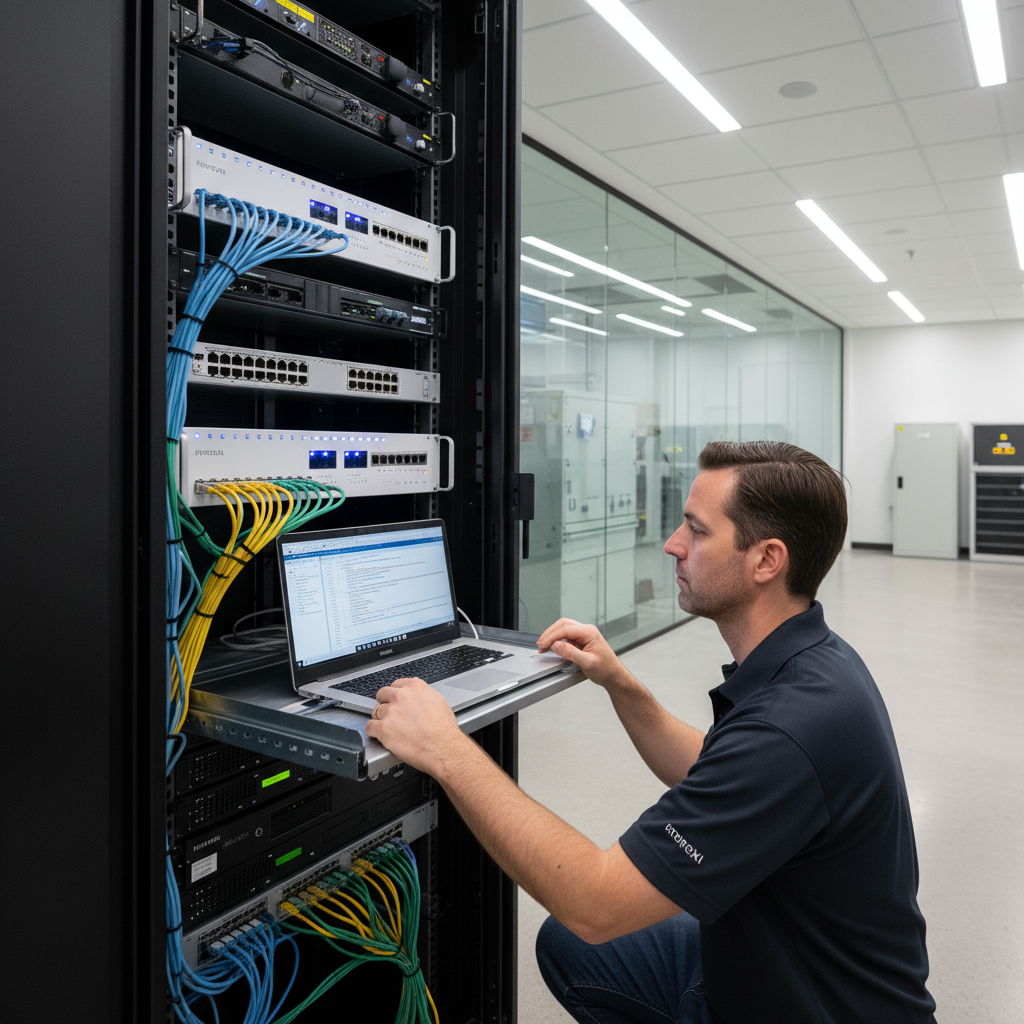
Accountancy firms across the United Kingdom operate in one of the most data-sensitive industries imaginable. Every day, practices of all sizes handle confidential financial records, tax returns, payroll information, and corporate accounts - data that is not only commercially valuable but also subject to stringent regulatory requirements under UK GDPR, HMRC guidelines, and professional body standards set by ICAEW, ACCA, and AAT.
Yet despite this critical dependence on technology and the sensitive nature of the data they process, many accountancy firms - particularly small and mid-sized practices across cities like Manchester, Birmingham, Leeds, and Bristol - still rely on ad-hoc IT arrangements. A partner who is "good with computers," a local freelancer who visits once a month, or a break-fix provider who only appears when something has already gone wrong. In an era of sophisticated cyber threats, cloud-based accounting platforms, and Making Tax Digital mandates, this approach is no longer sufficient.
This guide explains exactly what accountancy firms need from their IT support, why the sector faces unique technology challenges, and how to choose a provider that genuinely understands the demands of professional financial services.
Why Accountancy Firms Face Unique IT Challenges
Every business needs reliable IT, but accountancy firms operate under a specific set of pressures that make technology management particularly demanding. Understanding these pressures is the first step toward building an IT strategy that genuinely supports your practice.
Regulatory and Compliance Obligations
Accountancy firms are subject to overlapping layers of regulation. UK GDPR, enforced by the Information Commissioner's Office, requires you to implement appropriate technical measures to protect personal data. HMRC's Making Tax Digital programme demands reliable digital record-keeping and submission capabilities. Your professional body - whether ICAEW, ACCA, AAT, or CIOT - imposes its own standards around data handling, client confidentiality, and professional indemnity. Anti-money laundering regulations require secure record retention for at least five years. Failure to meet any of these obligations can result in fines, disciplinary proceedings, and reputational damage that a small practice may never recover from.
Seasonal Workload Peaks
Accountancy is one of the most cyclical professions. The January Self Assessment deadline, the April corporation tax and year-end rush, quarterly VAT returns, and payroll processing cycles create intense periods where every minute of downtime has an outsized impact. An IT failure during the first week of January, when your team is working evenings and weekends to meet HMRC deadlines, is not merely inconvenient - it can mean missed filing dates, client penalties, and professional liability claims.
Cloud Software Dependency
Modern accountancy practices depend heavily on cloud-based platforms. Xero, QuickBooks Online, Sage, FreeAgent, CCH, Iris, and TaxCalc are just some of the applications your team likely uses daily. Each requires reliable internet connectivity, compatible hardware, proper user management, and integration with your other systems. Managing this software ecosystem without professional IT support leads to licence sprawl, security gaps, and compatibility issues that waste hours of your team's time.
Client Expectations and Digital Service Delivery
Today's clients - whether individual taxpayers or corporate finance directors - increasingly expect their accountants to offer seamless digital interactions. Secure client portals for document exchange, electronic signature workflows, real-time dashboards showing financial positions, and prompt responses via professional communication channels are rapidly becoming standard expectations rather than differentiators. Firms that cannot deliver these digital experiences risk losing clients to competitors who can. Meeting these expectations requires not just the right software, but reliable infrastructure, consistent uptime, and the technical expertise to integrate multiple platforms into a coherent client journey.
HMRC's Making Tax Digital programme is progressively mandating digital record-keeping and submission for VAT, Income Tax Self Assessment, and eventually Corporation Tax. This is not simply a software requirement - it demands reliable internet connectivity, secure data storage, compatible bridging software, and robust backup procedures. Firms without professional IT support frequently struggle with MTD compliance, particularly during the transition periods when HMRC updates its APIs and requirements.
The Core IT Requirements for Accountancy Practices
Based on our experience supporting accountancy firms across the UK, these are the fundamental technology requirements that every practice should have in place, regardless of size.
Cyber Security That Meets Professional Standards
Accountancy firms are prime targets for cyber criminals. You hold financial data, bank details, National Insurance numbers, and corporate tax information - exactly the data that commands premium prices on the dark web. Phishing attacks targeting accountancy firms have increased by over 300% since 2020, with attackers specifically crafting emails that mimic HMRC communications, client requests, and professional body notifications.
Your IT support provider should implement multi-layered security including endpoint detection and response, email filtering with anti-phishing protection, multi-factor authentication on all systems, encrypted communications, and regular security awareness training for your team. Cyber Essentials Plus certification should be considered a minimum baseline, and your provider should be able to support you through the certification process.
Reliable and Tested Backup Systems
Data loss in an accountancy practice can be catastrophic. Losing client records, work-in-progress files, or historical tax data does not just create operational problems - it can trigger regulatory investigations and professional negligence claims. Your backup strategy should follow the 3-2-1 principle: three copies of data, on two different media types, with one stored offsite. Backups should be encrypted, tested regularly, and capable of restoring your systems within hours rather than days.
| IT Requirement | Why It Matters for Accountancy | Compliance Link |
|---|---|---|
| Multi-Factor Authentication | Prevents unauthorised access to client financial data | UK GDPR Article 32, ICAEW guidelines |
| Encrypted Email | Protects sensitive documents shared with clients and HMRC | UK GDPR, Professional indemnity requirements |
| Automated Backups | Ensures client records are never permanently lost | UK GDPR Article 32, AML record retention |
| Patch Management | Closes security vulnerabilities before they are exploited | Cyber Essentials, NCSC guidance |
| Access Controls | Restricts data access to authorised personnel only | UK GDPR principle of data minimisation |
| Secure Remote Access | Enables flexible working without compromising security | UK GDPR, firm's own security policy |
Fast and Responsive Help Desk Support
When your team encounters an IT issue - whether it is a software crash, a printer failure, or a connectivity problem - every minute spent waiting for a fix is a minute not spent on billable client work. For a mid-sized accountancy firm with 20 fee earners, even one hour of downtime can represent £2,000 to £4,000 in lost billing. Your IT provider must offer rapid response times, with critical issues addressed within 15 minutes and routine requests resolved within a few hours.
Software Licence Management
Accountancy firms typically run a complex mix of software: practice management systems, tax software, accounts production software, document management systems, Microsoft 365, and various specialist tools. Each comes with its own licensing model, renewal dates, and version requirements. Without proper management, firms frequently overpay for unused licences, run outdated versions that create security risks, or discover critical incompatibilities during peak season.
Disaster Recovery and Business Continuity
Accountancy firms must have a documented and tested disaster recovery plan that goes beyond simple backups. Consider what would happen if your office suffered a flood, a fire, or a prolonged power outage during January. Could your entire team continue working remotely within hours? Are your cloud subscriptions, licence keys, and configuration settings documented somewhere accessible outside the office? A comprehensive business continuity plan - developed and maintained by your IT provider - ensures that your practice can survive any disruption without losing client data or missing regulatory deadlines. The firms that weathered the pandemic most successfully were invariably those with robust disaster recovery plans already in place, and the lesson applies equally to any future disruption.
Common IT Problems in Accountancy Firms
Through years of supporting accountancy practices, we have identified recurring IT problems that plague firms without proper managed support. Recognising these issues in your own practice is a strong indicator that your current IT arrangements need upgrading.
Slow Systems During Peak Periods
Many firms experience noticeable performance degradation during their busiest periods - precisely when they can least afford it. This typically stems from ageing hardware that cannot handle increased workloads, insufficient internet bandwidth for cloud applications, or poorly configured servers struggling under the weight of concurrent users. A proactive IT provider monitors system performance continuously and ensures capacity is scaled before peak periods arrive.
Email Security Failures
Email remains the primary communication channel between accountancy firms and their clients, HMRC, Companies House, and banks. It is also the primary attack vector for cyber criminals. Without enterprise-grade email filtering, multi-factor authentication, and staff training, firms are vulnerable to phishing attacks, business email compromise, and data breaches. We have seen cases where attackers intercepted email chains between accountants and clients, redirecting payment instructions to fraudulent bank accounts - costing firms and their clients tens of thousands of pounds.
Poor Remote Working Infrastructure
The shift to hybrid working has been particularly significant for accountancy. Many fee earners now expect to work from home at least two or three days per week, and during peak periods, the ability to work evenings and weekends from home is essential. Firms without a properly configured remote access solution - whether VPN, Remote Desktop, Azure Virtual Desktop, or a fully cloud-based setup - find that remote workers experience slow performance, connectivity issues, and security gaps that undermine both productivity and data protection.
Inadequate Staff Onboarding and Offboarding
Accountancy firms frequently underestimate the IT complexity involved in onboarding new staff and offboarding departing employees. A new joiner needs access to practice management software, tax applications, document management systems, email, and potentially client-specific portals - all configured correctly and securely from day one. Delays in provisioning mean lost billable hours during the critical first weeks of employment. Equally important is the offboarding process: when a team member leaves, their access to all systems must be revoked immediately and comprehensively. Failing to disable accounts promptly creates serious security vulnerabilities, particularly given the sensitivity of the financial data your practice holds. A managed IT provider automates these processes with standardised checklists and identity management tools, ensuring nothing is overlooked in either direction.
With Managed IT Support
- Systems monitored 24/7 with proactive maintenance
- Security patches applied within 24 hours of release
- Automated encrypted backups tested monthly
- Help desk response within 15 minutes for critical issues
- Licence management preventing overspend and gaps
- Capacity planning ahead of January and April peaks
- Cyber Essentials certification support included
- Secure remote access for hybrid working
Without Managed IT Support
- Problems only discovered when staff report them
- Patches applied sporadically or not at all
- Backups untested - may fail when needed most
- IT help depends on who is available that day
- Licence renewals missed, creating compliance gaps
- System slowdowns during critical filing periods
- No formal cyber security framework in place
- Remote access via personal devices with no controls
Choosing an IT Provider for Your Accountancy Practice
Not all IT support providers are equal, and not all understand the specific needs of accountancy firms. When evaluating potential providers, there are several critical factors to consider beyond the headline price.
Sector Experience
Your IT provider should have demonstrable experience supporting accountancy practices. They should understand the software ecosystem - Xero, Sage, CCH, Iris, TaxCalc, HMRC's APIs - and the regulatory landscape. Ask potential providers how many accountancy clients they currently support and request references from firms of a similar size to yours. A provider who primarily supports manufacturing companies or retail businesses will not have the specialist knowledge your practice requires.
Security Credentials
At a minimum, your IT provider should hold Cyber Essentials Plus certification. ISO 27001 certification demonstrates a mature information security management system. Microsoft Solutions Partner status indicates competence with the Microsoft 365 ecosystem that most accountancy firms depend on. These accreditations are not optional extras - they are evidence that the provider takes security as seriously as your regulators expect you to.
Scalable Service Model
Accountancy firms grow and their IT needs evolve. Your provider should offer a service model that scales with you - adding users, upgrading systems, and expanding capabilities without requiring a complete overhaul. The best providers offer tiered service plans that let you start with essential support and add advanced capabilities like virtual CIO services, advanced security monitoring, and strategic IT planning as your practice grows.
Communication and Reporting Standards
The quality of communication from your IT provider matters as much as their technical competence. You should expect regular reporting - monthly at a minimum - that covers ticket volumes, resolution times, security incidents blocked, patch compliance rates, and recommendations for improvement. These reports should be written in plain language, not technical jargon, and presented by someone who understands your practice well enough to contextualise the numbers. During peak periods, your provider should proactively increase their monitoring and communication cadence, checking in to confirm systems are performing well rather than waiting for you to report problems. A provider who only contacts you when something breaks or when an invoice is due is not delivering the strategic partnership your practice deserves.
What to Expect from Managed IT Support Pricing
Managed IT support for accountancy firms in the UK is typically priced per user per month. Based on current market rates, here is what you should expect to pay for comprehensive support that meets the requirements outlined in this guide.
For a small practice of 5 to 10 users, expect to pay between £60 and £100 per user per month for a fully managed service including monitoring, help desk, security, backup, and software management. A mid-sized practice of 20 to 50 users will typically pay £50 to £85 per user per month, benefiting from economies of scale. Larger practices of 50 to 100 users may negotiate rates of £40 to £70 per user per month.
These figures should include everything your practice needs on a day-to-day basis. Be cautious of providers who quote very low per-user prices but then charge extra for essentials like security software, backup management, or out-of-hours support during your peak periods. The total cost of ownership is what matters, not the headline rate.
Building a Technology Roadmap for Your Practice
Beyond reactive support, your IT provider should help you build a technology roadmap that aligns with your practice's strategic goals. This roadmap should address hardware refresh cycles, ensuring that ageing workstations and servers are replaced before they become unreliable. It should plan for software transitions, such as moving from on-premises accounting software to cloud-based platforms. It should incorporate security improvements, gradually building from Cyber Essentials to Cyber Essentials Plus and potentially ISO 27001. And it should consider emerging technologies like artificial intelligence tools that are beginning to transform tax computation, audit procedures, and client advisory services.
A good IT provider does not simply keep your current systems running - they help you make informed decisions about technology investments that will improve your practice's efficiency, competitiveness, and resilience over the coming years. This strategic guidance is arguably the most valuable component of a managed IT relationship, yet it is the element most frequently absent from cheap, low-quality IT support agreements.
A practical technology roadmap for an accountancy practice should span three to five years and be reviewed annually. In the near term, it might address migrating from an ageing on-premises server to a cloud-hosted environment, implementing a client portal, or achieving Cyber Essentials Plus certification. In the medium term, it could encompass adopting AI-assisted bookkeeping tools, automating routine compliance checks, or consolidating multiple legacy applications into a single integrated platform. The roadmap should include realistic budgets, clear timelines, and identified risks - and your IT provider should take ownership of keeping it current as both your practice and the technology landscape evolve. For practices evaluating their current IT arrangements, exploring structured IT support plans designed for professional services firms is a logical first step toward building this kind of strategic technology partnership.
The Impact of Poor IT on Client Relationships
In accountancy, your reputation is everything. Clients trust you with their most sensitive financial information, and they expect a professional, reliable service. When your IT systems fail - when emails go missing, when you cannot access a client's file during a meeting, when a data breach exposes their personal information - that trust is damaged in ways that are extremely difficult to repair.
Conversely, firms that invest in robust IT infrastructure project competence and professionalism. Secure client portals for document sharing, reliable video conferencing for remote meetings, prompt and professional email communications, and the confidence that comes from knowing your data is protected - these are the hallmarks of a well-run modern practice. Your IT is not just a back-office function; it is a visible expression of your professional standards.
IT Support Built for Accountancy Firms
Cloudswitched provides specialist managed IT support for accountancy practices across the United Kingdom. From Cyber Essentials certification and HMRC compliance to cloud software management and peak-season capacity planning, we understand the unique demands of professional financial services. Contact us to discuss your practice's IT requirements.
GET IN TOUCH
CloudSwitched
London-based managed IT services provider offering support, cloud solutions and cybersecurity for SMEs.


