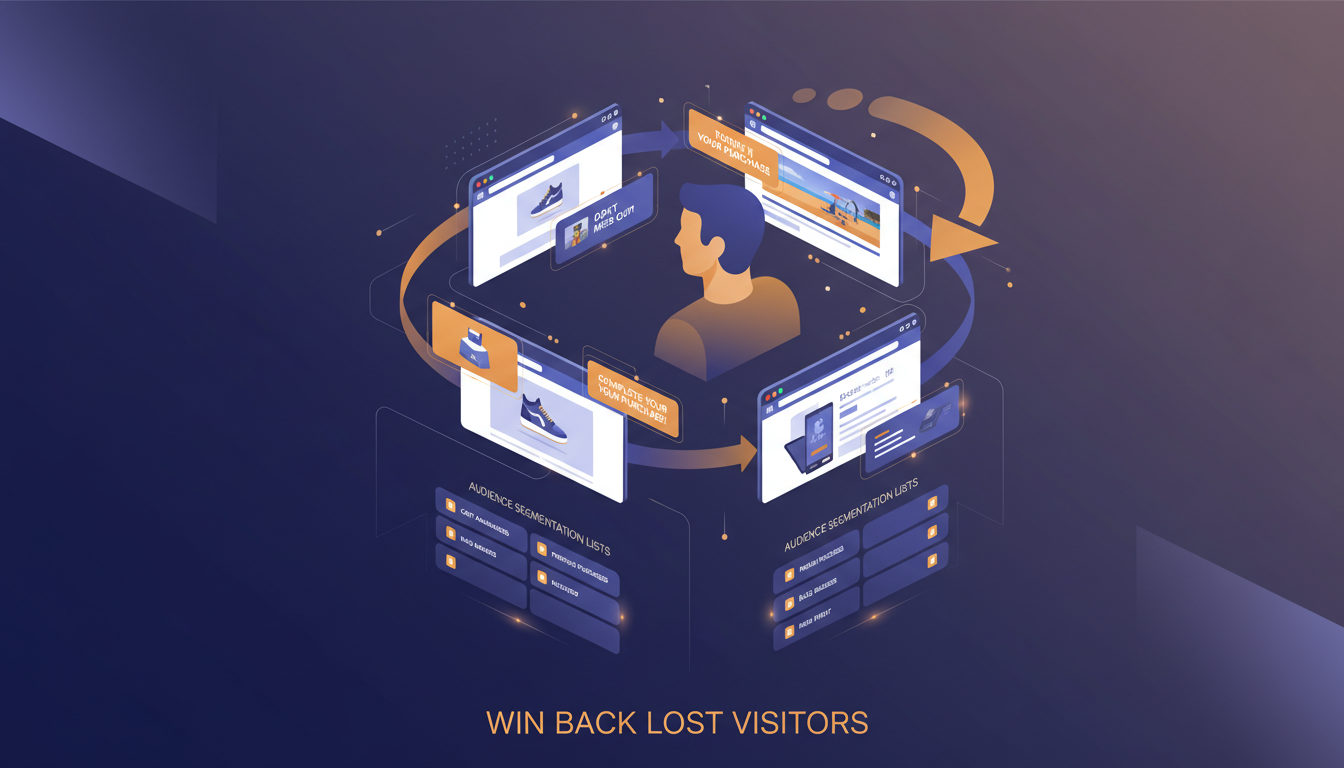
Here's a sobering statistic: approximately 96% of visitors who land on your website leave without converting. They browse, they read, they compare - and then they're gone. Without remarketing, those visitors are lost forever. With it, you have a powerful second chance to bring them back and convert them into customers.
Remarketing (also called retargeting) shows targeted ads to people who have already interacted with your website, app, or content. Because these people have already shown interest in your business, they convert at significantly higher rates and lower costs than cold traffic. It's consistently one of the highest-ROI strategies in digital advertising.
For UK businesses operating in increasingly competitive digital markets, remarketing represents one of the most efficient ways to maximise the return on existing traffic investments. Rather than spending more money to attract entirely new visitors, remarketing leverages the audience you have already paid to acquire. In a landscape where cost per click continues to rise across nearly every industry, this efficiency matters more than ever.
Why Remarketing Works So Well
Remarketing's effectiveness comes down to a psychological principle called the mere exposure effect - people develop a preference for things they've seen before. When someone sees your brand name and message repeatedly after visiting your website, familiarity builds trust, and trust drives conversion.
Consider the typical buying journey: a potential customer discovers your business through a Google search, visits your website, browses a few pages, and then leaves to compare alternatives. Without remarketing, your competitor might win that sale. With remarketing, your ads follow that visitor across the web - on news sites, YouTube, Gmail, social media - keeping your brand top of mind until they're ready to decide.
Research into UK consumer behaviour confirms that the average B2B buying cycle has lengthened considerably over the past five years, with decision-makers now consulting an average of 13 content pieces before making a purchase. For B2C, the picture is similar: comparison shopping is the norm, with UK consumers visiting an average of four to five websites before committing to a purchase over £100. Remarketing bridges this extended decision window, ensuring your brand remains visible throughout the entire consideration phase rather than fading from memory after a single visit.
Set up Google Analytics 4 audiences alongside your Google Ads remarketing tags from day one. GA4 audiences offer more granular segmentation options, including predictive audiences that identify users likely to purchase or churn within the next seven days. Linking GA4 to Google Ads gives you access to these advanced segments at no additional cost.
Types of Google Ads Remarketing
Google offers several remarketing options, each suited to different strategies and business types:
| Type | How It Works | Best For |
|---|---|---|
| Standard Remarketing | Display ads shown to past visitors across the Google Display Network | All businesses |
| Dynamic Remarketing | Shows the exact products/services someone viewed on your site | E-commerce, travel, real estate |
| RLSA (Search) | Adjusts Search ad bids for people who've visited your site before | High-competition industries |
| Video Remarketing | Targets people who've interacted with your YouTube channel or videos | Content-driven businesses |
| Customer Match | Upload email lists to target existing contacts across Google | Upselling, re-engagement |
Choosing the right remarketing type depends on your business model, the complexity of your product or service, and the length of your typical sales cycle. For UK e-commerce businesses with large product catalogues, dynamic remarketing is almost always the strongest performer because it reminds shoppers of the specific items they viewed. For professional services firms, standard remarketing combined with RLSA tends to deliver the best results, as the buying journey is longer and more research-driven.
Many successful UK advertisers combine multiple remarketing types into a cohesive strategy. For example, a mid-size retailer might run dynamic remarketing on the Display Network for product-level retargeting, RLSA campaigns to recapture searchers, and video remarketing on YouTube to reinforce brand messaging. The key is to match each remarketing type to the appropriate stage of the customer journey and to avoid overlapping audiences that drive up costs without adding incremental value.
Managed Remarketing Strategy
DIY Remarketing Setup
Setting Up Your Remarketing Audiences
Effective remarketing starts with well-defined audience segments. Rather than showing the same ad to everyone who visited your site, segment your audiences based on behaviour, intent level, and where they are in the buying journey.
High Intent (Hot)
Visited pricing page, started checkout, viewed contact page, spent 3+ minutes on site. These people were close to converting. Bid aggressively and show compelling offers.
Medium Intent (Warm)
Visited 2+ pages, viewed service or product pages, but didn't reach pricing or contact. Nurture with educational content and social proof to move them closer to conversion.
Low Intent (Cool)
Bounced after viewing only the homepage or a single blog post. These visitors need brand awareness before conversion messaging. Lower bids, broader messaging.
When building remarketing audiences for UK markets, it is essential to account for GDPR and the UK Data Protection Act 2018. Remarketing relies on tracking cookies, which means you need a compliant cookie consent mechanism in place. Without proper consent, your remarketing pixel will not fire for a significant portion of visitors, reducing your audience pool and potentially exposing your business to regulatory action from the ICO. Ensure your cookie banner clearly explains the use of advertising cookies and only loads the Google remarketing tag after the user has given explicit consent.
Beyond the basic hot, warm, and cool segments, consider creating audiences based on specific product categories, geographic regions within the UK, or the marketing channel that originally brought the visitor to your site. A visitor who arrived via a branded search term has fundamentally different intent from someone who clicked a generic Display ad. Tailoring your remarketing message to the original acquisition channel significantly improves performance.
Create a GDPR-compliant consent mode implementation using Google Consent Mode v2. This allows Google Ads to model conversions from users who decline cookies, recovering up to 70% of the signal you would otherwise lose. UK advertisers who implement Consent Mode correctly see significantly larger remarketing audiences without compromising compliance.
Remarketing Strategy: The Tiered Approach
The most effective remarketing campaigns use a tiered approach that changes messaging based on how long it's been since someone visited your site. Recency matters enormously - someone who visited yesterday is far more likely to convert than someone who visited 60 days ago.
This tiered structure ensures your most aggressive (and most expensive) remarketing is focused on the people most likely to convert, while gradually shifting to lower-cost awareness messaging for older visitors.
Within each tier, the messaging and creative should differ substantially. For the 0–7 day window, use direct response ads with strong calls to action: “Complete your order,” “Get a free quote today,” or “Limited availability this week.” For the 8–14 day tier, shift to social proof: customer testimonials, case study highlights, review scores, or trust badges. The 15–30 day tier is where incentives work best - a percentage discount, free shipping, or a bonus offer can be the nudge needed to re-engage someone whose interest has cooled. Beyond 30 days, focus on brand storytelling and educational content rather than hard selling.
Remarketing Channel Effectiveness Scorecard
Not all remarketing channels perform equally. Based on aggregate data from UK Google Ads accounts, here is how the major remarketing channels compare in terms of overall effectiveness, factoring in reach, conversion rate, cost efficiency, and ease of implementation:
RLSA consistently ranks highest because it combines the high commercial intent of search with the warmth of a returning audience. Dynamic remarketing scores nearly as well due to its personalised nature - showing users the exact products they browsed creates a highly relevant ad experience. Gmail remarketing, while useful for certain niches, scores lower because of limited inventory and generally lower engagement rates compared to other channels.
RLSA: Remarketing for Search Ads
Remarketing Lists for Search Ads (RLSA) is one of the most underused features in Google Ads. It allows you to adjust your Search campaign strategy specifically for people who have visited your website before. There are two main approaches:
Bid-Only: Add your remarketing audience to an existing Search campaign with a bid modifier (e.g., +50%). This means you bid more aggressively when a past visitor searches for your keywords, ensuring you appear in a higher position for people already familiar with your brand.
Target-Only: Create a separate Search campaign that only shows ads to people on your remarketing list. This lets you bid on broader keywords (like generic industry terms) that would normally be too expensive, knowing that everyone who sees your ad has already visited your site and is more likely to convert.
For UK businesses operating in highly competitive sectors such as legal services, financial products, or home improvements, RLSA is particularly valuable. In these industries, cost per click for top keywords can exceed £15–£30. By applying RLSA bid adjustments, you ensure that your budget is disproportionately allocated to the visitors who are most likely to convert, rather than competing equally for every click regardless of the searcher's familiarity with your brand.
Creating Effective Remarketing Ads
Remarketing ad creative should differ from your prospecting ads because the audience is fundamentally different - they already know who you are. Your messaging should acknowledge their familiarity and give them a reason to come back.
Poor Remarketing Ads
- Same generic ads as prospecting
- No acknowledgement of previous visit
- No new incentive or angle
- Same landing page as before
- Running the same ad for 90 days
Strong Remarketing Ads
- “Still looking for a plumber?”
- Targeted offer: “10% off this week”
- Social proof: “Join 500+ happy clients”
- Urgency: “3 slots left this month”
- Fresh creatives rotated monthly
UK advertisers should also ensure their remarketing ads comply with the Advertising Standards Authority (ASA) and Committee of Advertising Practice (CAP) code. Claims such as “best price guaranteed” or “number one rated” must be substantiated. Time-limited offers used in remarketing ads (such as “offer ends Friday”) must be genuine - using false urgency is both poor practice and potentially a breach of UK advertising regulations. When using testimonials or review scores in ads, ensure they are verifiable and representative of typical customer experience.
Frequency Capping and Ad Fatigue
The biggest risk with remarketing is annoying your potential customers by showing them too many ads. Everyone has experienced being “followed” around the internet by an ad for something they glanced at once. This happens when frequency capping isn't set properly.
Set a frequency cap of 3–5 impressions per user per day for Display remarketing. This provides enough visibility to stay top of mind without becoming irritating. Also rotate your ad creatives every 2–4 weeks to prevent ad fatigue - when people see the same banner so many times they become blind to it.
Ad fatigue is a particularly significant concern for UK businesses targeting smaller, niche audiences. If your remarketing list contains only a few hundred people, even modest daily impression caps can result in the same users seeing your ads dozens of times per week across different placements. Monitor your frequency reports in Google Ads carefully, and consider pausing remarketing for audience segments where the average frequency exceeds 15–20 impressions per user over a 30-day period. At that point, additional impressions are more likely to generate negative brand sentiment than positive recall.
Remarketing ROI by Industry
Remarketing performance varies significantly across industries. UK businesses in sectors with longer consideration periods and higher average order values tend to see the greatest returns. The following chart shows typical return on ad spend (ROAS) benchmarks for remarketing campaigns across key UK sectors:
E-commerce leads the pack because dynamic remarketing can show the exact product a shopper viewed, creating a highly personalised and compelling ad experience. Travel and hospitality benefit from the aspirational nature of their product - seeing that hotel or holiday destination again can reignite desire. Even in sectors with more modest ROAS figures, remarketing consistently outperforms cold traffic campaigns, making it a worthwhile investment across virtually every industry vertical.
Excluding Converted Users
One of the most overlooked but important remarketing optimisations is excluding people who have already converted. There's no point spending money to win back someone who's already become a customer (unless you're running a specific upsell or cross-sell campaign). Create an audience of people who have completed your primary conversion and add it as an exclusion in your remarketing campaigns.
Similarly, exclude current customers who are already signed up, subscribed, or purchased. This focuses your remarketing budget on people who are still in the decision-making process, maximising ROI.
For UK businesses with subscription models or repeat purchase cycles, the exclusion strategy requires more nuance. Rather than permanently excluding all converters, create a time-based exclusion window. For instance, if your average customer repurchases every 90 days, exclude converters for 60 days and then re-include them with a tailored “welcome back” or loyalty offer. This approach prevents wasted spend on recently converted customers while still enabling remarketing to drive repeat business at the appropriate time.
Measuring Remarketing Performance
Remarketing should be measured differently from other campaigns because the audience is warmer. Expect to see:
Higher CTRs than standard Display: 0.7–1.5% vs. 0.3–0.5% for prospecting Display.
Higher conversion rates: 2–5x the rate of cold traffic campaigns.
Lower CPA: Often 50–70% cheaper per conversion than prospecting campaigns.
Higher ROAS: 5:1 to 10:1 is common for well-optimised remarketing campaigns.
When evaluating remarketing performance, it is important to look beyond last-click attribution. Remarketing often plays an assist role in the conversion path - a user may see your remarketing ad, not click it, but then return to your site directly or via a branded search. Google Ads provides view-through conversion data that captures this behaviour, and GA4 offers data-driven attribution models that assign appropriate credit to remarketing touchpoints throughout the conversion journey.
UK businesses should also monitor the incremental lift provided by remarketing. Run a controlled experiment using Google Ads' built-in conversion lift studies to measure whether your remarketing campaigns are genuinely driving additional conversions or merely taking credit for conversions that would have happened anyway. This distinction is critical for accurately calculating the true ROI of your remarketing investment and making informed budget allocation decisions.
Use Google Ads data-driven attribution rather than last-click when evaluating remarketing performance. Data-driven attribution uses machine learning to assign conversion credit across all touchpoints, giving remarketing the credit it deserves for assists and view-throughs. This is especially important for UK businesses with longer sales cycles where remarketing touches may occur days or weeks before the final conversion.
Ready to Win Back Your Lost Website Visitors?
Cloudswitched builds high-performance remarketing campaigns that turn abandoned visits into paying customers. Our expert Google Ads team sets up segmented audiences, tiered messaging, and ongoing optimisation to maximise your remarketing ROI across every channel.

CloudSwitched
London-based managed IT services provider offering support, cloud solutions and cybersecurity for SMEs.


