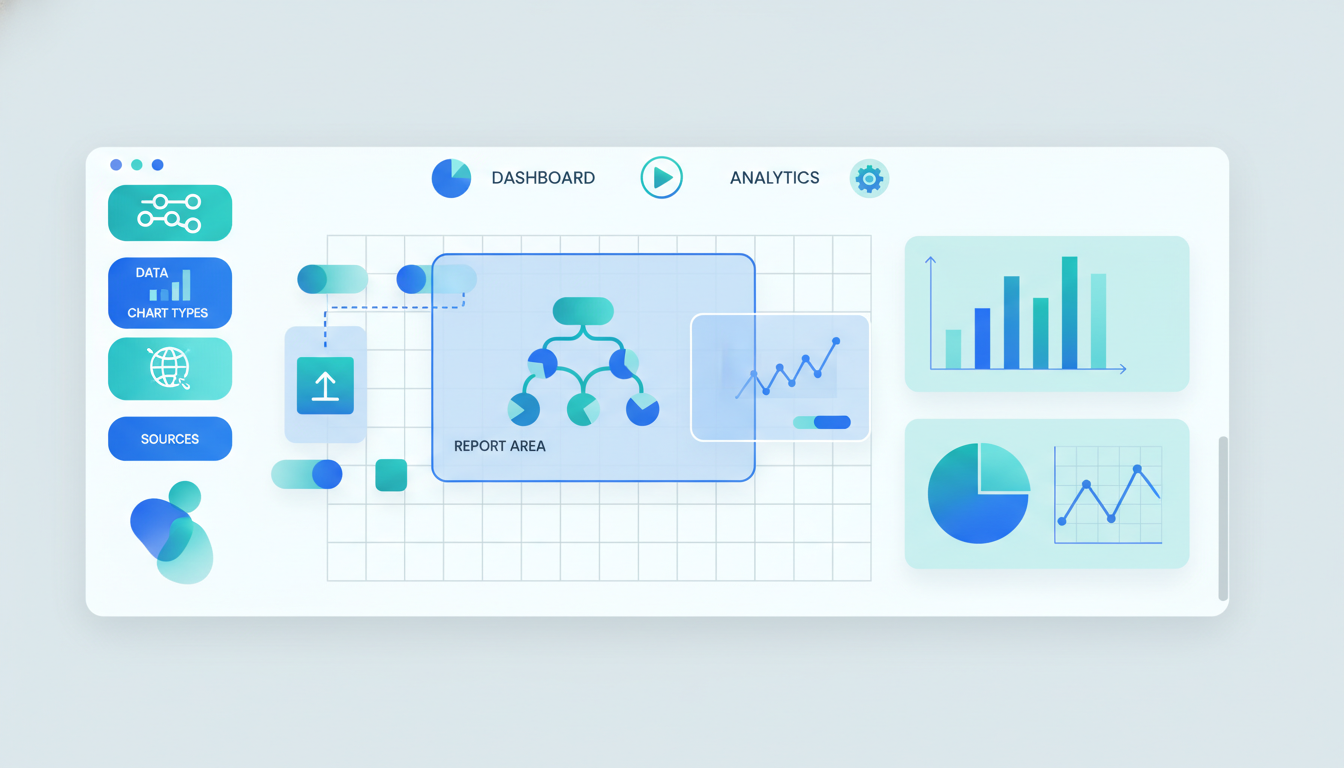
Self-Service BI: Empowering Teams to Build Their Own Reports
For decades, business intelligence sat firmly within the domain of IT departments and specialist data teams. If a marketing manager needed a breakdown of campaign performance by region, or a finance director required a custom variance analysis, they submitted a ticket, joined a queue, and waited - sometimes days, sometimes weeks - for a report that might not even answer the question they originally had in mind. In the modern UK business landscape, where agility and speed-to-insight can determine competitive advantage, this bottleneck has become untenable. Self-service business intelligence represents a fundamental shift in how organisations access, analyse, and act upon their data.
The concept behind self-service BI is deceptively simple: provide business users with intuitive tools, governed data sources, and sufficient training so they can explore data and build reports independently. In practice, however, the transition from a centralised reporting model to a self-service culture involves careful planning across technology, governance, training, and organisational change management. UK businesses that get this right unlock extraordinary value - faster decision-making, reduced IT backlogs, and a culture where evidence-based thinking becomes second nature.
This guide explores the full journey of implementing self-service BI within a UK organisation, from selecting the right tools and establishing governance frameworks to designing training programmes and managing the cultural shift that sustains self-service analytics.
The urgency of this transformation is driven by the sheer volume and velocity of data that modern businesses generate. UK organisations today produce more data in a single month than many produced in an entire year just a decade ago. Customer interactions, financial transactions, operational metrics, marketing attribution data, supply chain telemetry - the list grows constantly. When only a handful of people in the IT department have the skills and tools to interrogate this data, the vast majority of potential insights go undiscovered. Self-service BI addresses this fundamental bottleneck by distributing analytical capability to the people who understand the business context best: the teams on the front line making daily decisions.
Research from Gartner and Forrester consistently shows that organisations with mature self-service BI programmes make decisions 4 to 5 times faster than those relying on centralised reporting. More importantly, those decisions tend to be better - grounded in current data rather than stale reports, informed by the domain expertise of the person asking the question, and iteratively refined through interactive exploration rather than constrained by the fixed parameters of a pre-built report.
Understanding Self-Service BI: Beyond the Buzzword
Self-service BI is not simply about giving everyone access to a dashboard tool and hoping for the best. It is a structured approach that balances user autonomy with organisational control, enabling business professionals to answer their own data questions whilst maintaining data quality, consistency, and security. The self-service model typically operates across three tiers: casual consumers who view and filter pre-built dashboards, power users who create their own reports, and data stewards who manage the governed data layer.
Traditional reporting follows a request-deliver model where IT builds reports to specification. Self-service BI follows an explore-discover model where business users interact directly with curated data sets, apply filters, and create visualisations that answer their specific questions in real time. This shift redirects IT effort from building individual reports to maintaining the governed data infrastructure that makes self-service possible.
The distinction between these two models has profound implications for organisational agility. In a request-deliver model, every new question requires a new request, a new queue position, and a new development cycle. If the delivered report raises follow-up questions - as reports almost always do - the process starts again. In an explore-discover model, the follow-up question is answered in seconds by the same user who asked the original question, with no additional IT involvement. This compounding speed advantage means that self-service organisations can explore ten hypotheses in the time it takes a centralised organisation to answer one.
Most UK organisations fall somewhere on a spectrum from fully centralised (IT builds all reports) to fully democratised (any employee can query any data source). The optimal position for most businesses is a governed self-service model where IT manages the data layer, defines metrics and business rules, and provides curated datasets, whilst business users have freedom to explore and share insights within those governed boundaries.
Selecting the Right Self-Service BI Tools
The UK market offers a broad range of self-service BI platforms, each with distinct strengths, pricing models, and integration capabilities. Choosing the right tool requires a clear understanding of your organisation’s technical landscape, user skill levels, data complexity, and budget constraints. Microsoft Power BI has become the dominant choice for many UK businesses, particularly those already invested in the Microsoft ecosystem, with tight integration with Excel, Azure, and SQL Server making it a natural fit.
Tableau remains the preferred choice for organisations that prioritise visual analytics and have more complex data exploration requirements, whilst Qlik Sense appeals to businesses that value its associative data engine. For organisations on tighter budgets or with developer-friendly cultures, open-source tools like Metabase and Apache Superset offer capable self-service BI without significant licensing costs.
| Platform | Best For | UK Licensing (Per User/Month) | Learning Curve | Key Integration |
|---|---|---|---|---|
| Microsoft Power BI | Microsoft-centric organisations | £7.50 - £15.00 | Low to Medium | Azure, SQL Server, Excel |
| Tableau | Visual analytics and exploration | £50 - £85 | Medium | Multi-source, cloud-native |
| Qlik Sense | Associative exploration | £25 - £45 | Medium | SAP, enterprise connectors |
| Looker (Google) | Data modelling, Google Cloud | Custom pricing | Medium to High | BigQuery, Google Cloud |
| Metabase | Open-source, developer-friendly | Free / £7.50 (Cloud) | Low | PostgreSQL, MySQL |
Self-Service BI
Traditional Centralised Reporting
The contrast between self-service and traditional reporting models is not merely one of speed - it represents a fundamentally different relationship between business teams and their data. In a self-service environment, data becomes a conversation rather than a monologue. Users ask a question, explore the answer, refine their thinking, and arrive at insights that would never have emerged from a single static report. This iterative exploration is where the true strategic value of self-service BI lies, enabling the kind of evidence-based agility that distinguishes high-performing organisations from their competitors.
Building the Governed Data Layer
The single most important factor in self-service BI success is not the tool - it is the quality and governance of the underlying data. Without a well-structured, governed data layer, self-service BI degenerates into self-service chaos, where different users produce conflicting numbers from the same data because they apply different definitions, filters, or calculations. This phenomenon, sometimes called “multiple versions of the truth,” is the primary reason self-service BI initiatives fail.
A governed data layer sits between your raw data sources and your self-service users, providing curated, consistent, and well-documented datasets. This layer typically includes a data warehouse that consolidates data from multiple source systems, a semantic model that defines business metrics in business-friendly terms, and a data catalogue that helps users discover and understand available datasets.
Building this layer requires collaboration between IT and business stakeholders. IT brings the technical expertise to design efficient data pipelines, optimise query performance, and implement security controls. Business stakeholders bring the domain knowledge to define what metrics mean, how they should be calculated, and which data elements are relevant for different analytical scenarios. Neither group can build an effective governed data layer alone - it is the intersection of technical capability and business understanding that produces a data layer truly fit for self-service use.
Semantic Models and Business Definitions
A semantic model translates the technical complexity of your database schema into business concepts that non-technical users can understand. Instead of joining five tables and writing SQL, a user simply drags the “Net Revenue” measure into their report, confident that the calculation is correct and consistent. In Power BI, the semantic model uses DAX measures within a shared dataset. In Looker, the LookML modelling layer provides an exceptionally robust semantic layer. The principle is the same: define business logic once, centrally, and let users build on top of it.
The value of a well-designed semantic model cannot be overstated. Without one, two analysts in the same department might calculate “revenue” differently - one including VAT, the other excluding it; one counting returns as negative revenue, the other ignoring them entirely. These discrepancies erode trust in data and undermine the entire self-service programme. A semantic model eliminates this risk by codifying agreed-upon definitions into the data layer itself, ensuring that every user who references “Net Revenue” is working with exactly the same calculation regardless of which report or dashboard they are building.
Data Governance for Self-Service Environments
Data governance in a self-service context is fundamentally different from governance in a centralised environment. In a centralised model, governance is implicit - IT controls all report creation. In a self-service model, governance must be explicit, embedded in the platform and the data layer, because you cannot rely on individual users to apply business rules correctly every time.
Effective self-service data governance operates at multiple levels. At the data source level, only approved, quality-checked sources are available for exploration. At the metric level, key business measures are defined centrally and cannot be overridden. At the content level, reports and dashboards created by users are reviewed, certified, and shared appropriately.
A robust governance framework also includes clear ownership and accountability. Every dataset should have a designated data steward - typically a senior business user with deep domain knowledge - who is responsible for defining business rules, validating data quality, and certifying reports created from that dataset. This distributed stewardship model scales far better than a centralised approach where a small IT team tries to govern all data across the entire organisation.
Self-service BI creates particular challenges under UK GDPR. When business users can explore data freely, the risk of accessing or sharing personal data inappropriately increases. Mitigations include implementing row-level security, masking personally identifiable information in self-service datasets, maintaining audit logs of data access, and providing clear training on data protection responsibilities. The Information Commissioner’s Office expects organisations to maintain appropriate technical and organisational measures regardless of how data is accessed.
Designing Effective Training Programmes
Technology without training is a recipe for frustration. The most common reason self-service BI initiatives stall is insufficient investment in user enablement. UK organisations that succeed with self-service BI typically allocate as much budget to training and change management as they do to software licensing. Training should be continuous, role-appropriate, and practical, focusing on real business scenarios rather than abstract tool features.
Effective training goes beyond teaching people how to click buttons in a BI tool. It builds data literacy - the ability to read, interpret, and communicate with data. A user who knows how to create a bar chart but does not understand the difference between correlation and causation, or who cannot spot a misleading visualisation, is a risk rather than an asset. The best self-service BI training programmes weave data literacy fundamentals into tool-specific instruction, producing users who are not only technically capable but analytically thoughtful.
| User Tier | Typical Role | Skills Required | Training Duration | Ongoing Support |
|---|---|---|---|---|
| Consumer | All staff, senior leadership | View, filter, drill-down, export | 2 hours | Quick-reference guides |
| Creator | Analysts, managers | Build reports, create visualisations | 2 days + coaching | Monthly workshops |
| Power User | Senior analysts, BI champions | Advanced calculations, data modelling | 5 days + project work | Peer community |
| Data Steward | Data team, IT, domain experts | Governance, administration, quality | 3 days + ongoing | Governance forum |
Building a Community of Practice
The most effective self-service BI programmes foster a community of practice where users share knowledge. This might take the form of regular “BI showcase” sessions, a dedicated Teams or Slack channel for questions, a library of example reports, or an internal certification scheme. These community-driven approaches create a positive feedback loop where early adopters inspire later adopters.
Communities of practice also serve as an early warning system for governance issues. When users share their work with peers, inconsistencies in data interpretation surface quickly, prompting clarification of business rules and improvement of the governed data layer. This organic quality assurance mechanism is far more effective than top-down governance reviews, which tend to be infrequent and disconnected from the reality of day-to-day data use.
Managing the Cultural Shift
Self-service BI is as much a cultural change as it is a technology change. Resistance can come from IT teams who feel their role is being diminished, business users who see self-service as additional work, and managers who worry about losing control when anyone can create reports. Addressing these concerns requires empathy and clear articulation of benefits for each stakeholder group.
For IT teams, the message should be clear: self-service BI does not eliminate their role; it elevates it. Instead of spending 60% of their time building ad-hoc reports that are used once and discarded, IT professionals can focus on higher-value work - building the governed data infrastructure, optimising performance, implementing security controls, and developing advanced analytical capabilities that business users cannot create on their own. This shift from report factory to strategic data enablement is typically welcomed by IT professionals once they see it in practice.
The Champion Network
One of the most effective strategies for driving adoption is establishing a champion network - enthusiastic early adopters embedded within each business function who serve as local advocates and role models. Champions receive advanced training and direct communication channels with the BI team. In return, they promote self-service BI within their teams and demonstrate the art of the possible through their own innovative use of the tools.
Champion networks are most effective when they span different levels of seniority and different business functions. A champion in the finance team who builds a compelling cash flow dashboard inspires the marketing team to explore their own campaign analytics. A champion in operations who automates weekly reporting frees up hours that colleagues previously spent compiling data manually. These visible, tangible wins create momentum that no amount of top-down mandating can achieve.
Measuring the Return on Investment
One of the most common questions from UK organisations considering self-service BI is how to measure its return on investment. The answer requires looking beyond simple cost savings to capture the full spectrum of value that self-service analytics delivers. Direct cost savings include reduced IT time spent on ad-hoc reporting, lower dependency on external consultants for data analysis, and decreased licensing costs for legacy reporting tools that self-service platforms replace.
However, the most significant returns are typically indirect. Faster decision-making leads to more timely responses to market changes, competitive threats, and customer needs. Improved data literacy across the organisation reduces the frequency of decisions based on gut feeling or outdated information. And the cumulative effect of hundreds of small, data-informed decisions across every department compounds into a measurable improvement in overall business performance.
UK organisations that have been measuring self-service BI ROI for more than two years report an average payback period of 9 to 14 months, with ongoing annual returns of 3 to 5 times the total cost of ownership. These figures include platform licensing, training investment, and the internal effort required to build and maintain the governed data layer. For mid-market UK businesses, this typically translates to net annual savings of £150,000 to £500,000, depending on the scale of deployment and the maturity of the self-service programme.
Common Pitfalls and How to Avoid Them
Self-service BI implementations in the UK fail for predictable reasons. The most common failure mode is the “tool-first” approach - purchasing a platform, rolling it out broadly, and expecting users to figure it out. Without governed data and change management, this invariably produces inconsistent reports that erode trust. Another frequent pitfall is making every data source available simultaneously. A phased approach, starting with well-governed, high-value datasets and expanding gradually, is far more effective.
A third pitfall that deserves specific mention is neglecting the semantic layer. Organisations that skip this step - giving users direct access to raw database tables without a layer of business-friendly definitions - almost always regret it within six months. Users produce conflicting numbers, trust in data collapses, and the IT team ends up spending more time resolving discrepancies than they saved by eliminating ad-hoc report requests. Investing in a proper semantic model before opening self-service access to business users is not optional - it is a prerequisite for success.
Adoption metrics should go beyond simple login counts. Meaningful measures include the number of unique report creators, the ratio of self-service to IT-built reports over time, the average time from question to answer, user satisfaction scores, report quality ratings from data stewards, and the reduction in IT ad-hoc request tickets. Tracking these metrics monthly provides visibility into the health of your self-service programme.
A Phased Implementation Approach
For UK organisations embarking on a self-service BI journey, a phased approach typically delivers the best results. The first phase focuses on establishing foundations: selecting the platform, building the initial governed data layer, and training a pilot group. The second phase expands the programme to additional departments and data sources. The third phase focuses on optimisation and advanced capabilities, including predictive analytics and natural language querying.
Each phase should include clearly defined success criteria before progression. Phase one might require 80% of pilot users to create at least one report independently, with fewer than 5% of reports flagged for governance issues. Phase two might target 50% reduction in IT ad-hoc request tickets across newly onboarded departments. Phase three might aim for natural language query adoption by 30% of active users. These measurable milestones prevent the common trap of perpetual piloting - where organisations remain in phase one indefinitely, never achieving the scale of adoption needed to deliver meaningful organisational value.
The Future of Self-Service BI in the UK
The self-service BI landscape is evolving rapidly, driven by advances in artificial intelligence and natural language processing. The next generation of self-service tools will allow users to ask questions in plain English - “What were our top-selling products in the North West last quarter?” - and receive instant, accurate visualisations without needing to understand data models or calculation syntax. These capabilities are already emerging in tools like Power BI’s Q&A feature and Tableau’s Ask Data.
Beyond natural language querying, AI-driven anomaly detection is set to transform how business users interact with data. Rather than requiring users to actively explore dashboards looking for interesting patterns, the BI platform will proactively surface anomalies, trends, and opportunities - alerting a regional sales manager that one territory’s performance has diverged significantly from its historical baseline, or notifying a supply chain analyst that a key supplier’s delivery times are trending upward. This shift from pull-based to push-based analytics represents the next frontier of self-service BI, turning every business user into a data-informed decision-maker without requiring them to spend time actively querying dashboards.
Organisations that invest now in strong data foundations and data-literate cultures will be best positioned to take advantage of these AI-driven capabilities as they mature. Self-service BI is not a destination but a journey - one that requires sustained investment and genuine commitment to changing how organisations use data. The UK businesses that embrace this journey today will build the data culture, technical infrastructure, and analytical muscle that compound into a durable competitive advantage for years to come.
Transform Your Reporting Capabilities
Cloudswitched helps UK organisations design and implement self-service BI programmes that empower teams and deliver measurable improvements in decision-making speed, reporting quality, and data literacy across the organisation.
Cloudswitched helps UK organisations design and implement self-service BI programmes that deliver real business value. From tool selection and data governance to training programme design, our team brings deep experience in building self-service analytics capabilities across a wide range of industries. Whether you are starting from scratch or reinvigorating a stalled initiative, we can help you empower your teams and drive measurable improvements in decision-making quality.

CloudSwitched
London-based managed IT services provider offering support, cloud solutions and cybersecurity for SMEs.


